
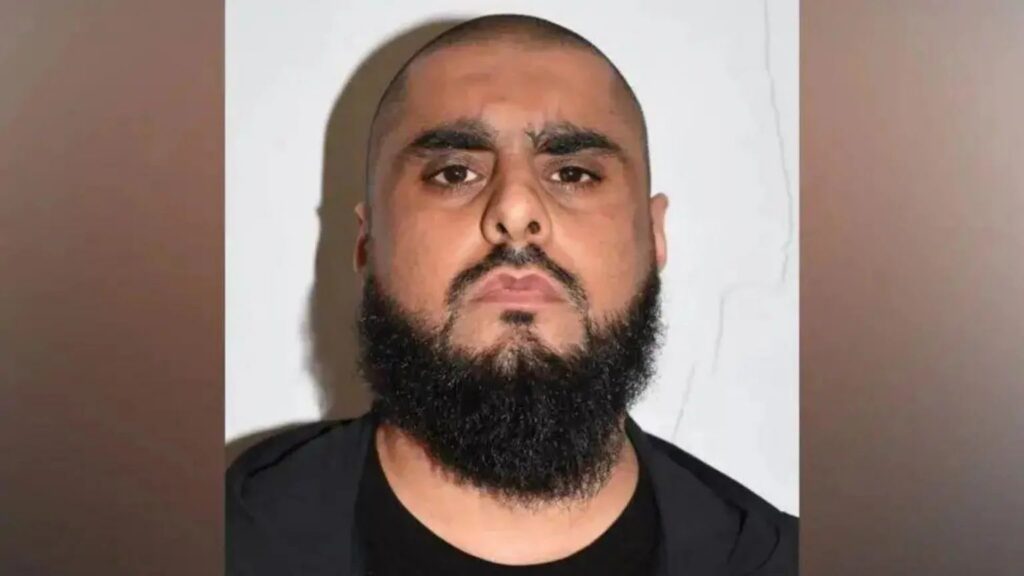
Image: from The Mercian X @TheMercianNews
By Open Chronicle News Desk with Agencies
A Manchester-born dual British-Pakistani national has been sentenced to life imprisonment after admitting to preparing a terrorist attack on a British military installation, in a case prosecutors described as exposing a sustained commitment to violent extremism and the potential for a mass-casualty attack.
Mohammad Asim Bashir, 31, pleaded guilty to preparing an act of terrorism under Section 5 of the UK Terrorism Act 2006 and was sentenced at Manchester Crown Court. He must serve a minimum of 16 years and 135 days before becoming eligible for parole.
The court heard that Bashir was a committed extremist who carried out reconnaissance of a military base and discussed acquiring weapons as part of preparations for a possible large-scale attack.
A man who planned a terror attack with Jihad Al-Shamie, who later attacked Heaton Park Synagogue in Manchester, has been sentenced to life with a minimum term of 17 years.
Mohammad Bashir, 31, drove Al-Shamie on a reconnaissance trip to the UK’s Defence Academy in Shrivenham. pic.twitter.com/pNCTdwJRyt
— GHR Oxfordshire News (@GHROxfordshire) July 23, 2026
Investigation uncovered long-term attack planning
According to prosecutors, Bashir was closely associated with Jihad Al-Shamie, who later carried out a separate terrorist attack on the Heaton Park Hebrew Congregation Synagogue in Manchester in October last year, killing two Jewish men.
Although Al-Shamie ultimately carried out that attack alone while Bashir was in Pakistan, investigators concluded that the two men had previously worked together in preparing for a potential mass-casualty operation.
The Crown Prosecution Service (CPS) described Bashir as “a determined jihadist and dangerous individual.”
In a statement, the CPS said:
“Mohammad Bashir is a determined jihadist and dangerous individual who was planning an attack that could have caused devastation. His actions demonstrate a deliberate and sustained commitment to violent extremism, including conducting reconnaissance, sharing extremist material, and discussing weapons and plans capable of causing significant harm.”
Prosecutors said the successful conviction followed close cooperation between the CPS and Counter Terrorism Policing (CTP).
Reconnaissance mission to military facility
The investigation found that Bashir and Al-Shamie travelled approximately 10 hours by road from Manchester to Swindon in August last year to conduct what investigators described as hostile reconnaissance of the UK Defence Academy.
During the visit, the pair examined security arrangements and gathered information that prosecutors argued could have been used in planning a future terrorist attack.
Assistant Chief Constable Rob Potts, who oversees Counter Terrorism Policing North West, said investigators uncovered extensive evidence despite attempts by the suspects to conceal their activities.
“He was caught on camera discussing carrying out a terrorist attack with a man who would later go on to conduct an attack himself,” Potts said.
He added that investigators recovered internet searches related to attack planning after the pair attempted to destroy evidence by disposing of their mobile phones.
CCTV and digital evidence
The court heard that Bashir and Al-Shamie regularly attended the same mosque and were captured on CCTV discussing weapons, including crossbows, while also speaking about saying goodbye to family members before carrying out an attack.
Digital evidence also revealed extensive extremist communications.
According to prosecutors, the pair exchanged voice messages discussing “jihad,” expressed a desire to travel to Syria to fight alongside the mujahideen, and shared numerous extremist materials through messaging platforms.
Bashir reportedly distributed more than 100 extremist files in a WhatsApp group, including videos and audiobooks by Anwar al-Awlaki, the late Al-Qaeda propagandist.
Investigators also recovered messages discussing:
- the “obligation of jihad”;
- extremist interpretations of Sharia law;
- rejection of democracy;
- rejection of mortgages;
- becoming physically stronger and “war ready.”
Prosecutors argued these conversations demonstrated a sustained extremist ideology that evolved into practical attack planning.
Separate synagogue attack
Seven weeks after the reconnaissance trip, Al-Shamie independently selected the synagogue in Manchester as his target and carried out the fatal attack while Bashir remained overseas.
Following the investigation into that incident, police identified Bashir as a key associate and arrested him after his return to the United Kingdom.
Counter Terrorism Policing described the investigation as one of significant scale, involving extensive forensic analysis, CCTV examination and digital evidence recovery.
Judge rejects claim of “change of heart”
During the sentencing hearing, Bashir’s defence argued that he had experienced a “change of heart” after the reconnaissance mission and no longer intended to participate in an attack.
Mrs Justice Bobbie Cheema-Grubb rejected that argument.
“I consider you remain dangerous,” the judge told Bashir.
“You have given no grounds that your attitude has really changed at all.”
The court concluded that Bashir continued to present a serious threat to public safety and imposed a life sentence because of the continuing danger he posed.
Authorities stress importance of early intervention
Police and prosecutors said the case illustrates the importance of disrupting terrorist plots during the planning stages before attacks can be carried out.
Although Bashir did not participate in the later synagogue attack, investigators concluded that his earlier actions—including reconnaissance, extremist communications and discussions about weapons—formed part of preparations for a potential mass-casualty incident.
Officials said the sentence reflects the seriousness of offences involving terrorist planning and serves as a warning to those considering involvement in violent extremism.