
By Open Chronicle with agencies
Rail services across large parts of the Netherlands were severely disrupted on Wednesday morning after railway infrastructure at multiple locations was deliberately interfered with, prompting police to open an investigation into suspected sabotage.
The incidents began at around 5:30 a.m. and affected at least 20 locations along railway lines, particularly across central and northern parts of the country.
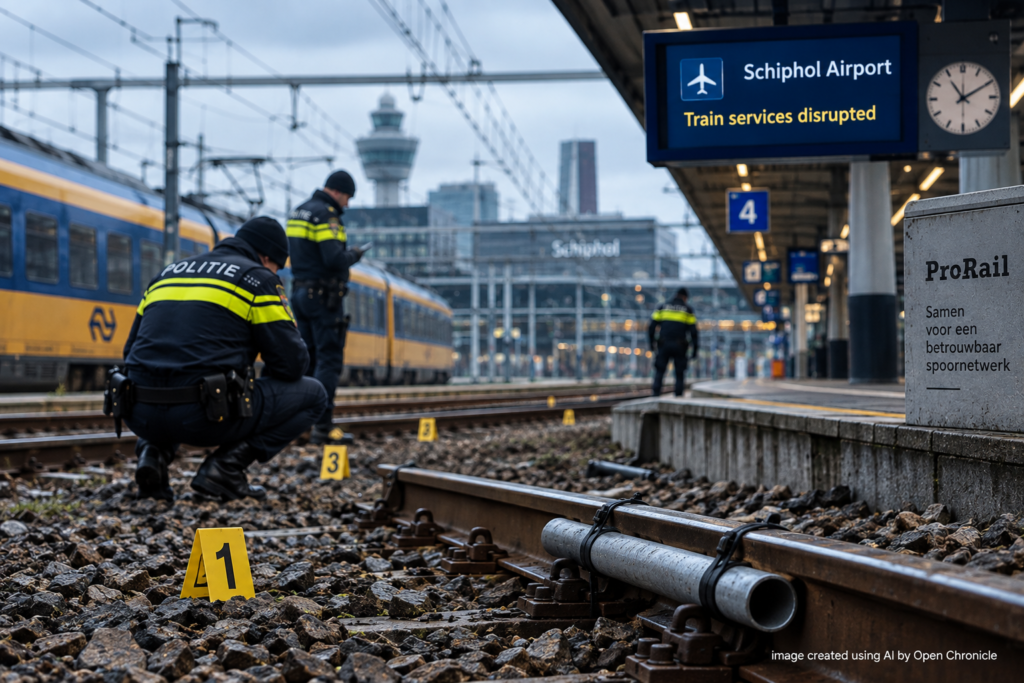
Dutch rail infrastructure manager ProRail said materials had been deliberately placed or attached to railway tracks, interfering with signalling systems and forcing trains to stop or operate at reduced speeds.
Devices attached to railway tracks
According to ProRail, pipes were deliberately attached to rails at several locations.
The objects caused the railway signalling system to detect sections of track as occupied even when no train was present. These false readings created what are known as section disruptions.
Because the signalling network is designed to prevent trains from entering potentially occupied sections of track, signals automatically turned red when the interference was detected.
The safety system worked as intended, but the resulting restrictions caused widespread disruption across the network.
Police were informed and launched an investigation into who was responsible and what motivated the coordinated incidents.
Services disrupted across several regions
Train services were reduced or suspended in several areas of the central, eastern and northern Netherlands as railway crews worked to inspect the affected infrastructure.
Connections to Amsterdam’s Schiphol Airport were among those disrupted, potentially affecting both domestic passengers and international travellers.
ProRail said restoring normal services was a priority, although repair crews and investigators also had to ensure that potential evidence was not disturbed while examining the affected locations.
Dutch passenger rail operator NS and ProRail advised travellers to check journey information before travelling.
However, the NS journey planning application itself experienced difficulties as large numbers of passengers attempted to access updated information. An NS spokesperson suggested the problems were probably caused by unusually heavy demand on the system.
Police investigate suspected coordinated sabotage
The discovery of deliberately attached objects at numerous locations raised questions about whether the disruption had been planned as part of a coordinated operation.
Authorities had not immediately identified any suspects or publicly established a motive.
There were also no immediate reports indicating that trains had been directly damaged or that passengers had been injured.
The nature of the interference nevertheless highlights the vulnerability of modern railway networks to relatively simple physical disruptions. Signalling systems are deliberately designed to default to the safest possible condition whenever abnormal track occupancy is detected, meaning interference with sensors or rails can rapidly affect traffic across a much wider network.
Disruption coincides with Budget Day
The incidents occurred on the same day the Dutch government was due to present its draft 2027 budget to parliament in The Hague.
There was no immediate evidence connecting the suspected sabotage to Budget Day, and authorities had not established any link between the two events.
The railway problems nevertheless complicated travel for people planning to attend events associated with the government’s budget presentation.
Investigators will now be seeking to determine whether the timing was deliberate or coincidental.
Previous railway sabotage raises security concerns
The latest disruption also comes after previous incidents involving Dutch railway infrastructure.
Rail services were affected by suspected sabotage around the time of the NATO summit in The Hague last year, adding to wider European concerns about the protection of transport networks and other critical infrastructure.
Wednesday’s incidents are likely to renew scrutiny of railway security, particularly because interference was discovered at numerous locations rather than at a single point on the network.
For now, Dutch authorities are concentrating on restoring services while police examine the affected sites and attempt to establish who was behind the disruption.