

How a contaminated Petri dish, an observant bacteriologist and years of scientific collaboration helped launch the antibiotic age
By Open Chronicle History Desk
One morning in a laboratory at St Mary’s Hospital in London, Alexander Fleming noticed something that could easily have been thrown away.
A culture plate containing Staphylococcus bacteria had become contaminated.
Mould was growing on it.
For many laboratory researchers, contamination meant failure. The experiment was spoiled. The obvious response was to discard the plate and begin again.
Fleming looked more closely.
Around the invading mould was a clear area.
The bacteria were not growing there.
Something produced by the mould appeared to be killing them, or preventing them from multiplying.
That observation became the beginning of one of the most consequential stories in the history of medicine.
Fleming eventually called the antibacterial substance penicillin.
But the familiar story of a lone scientist accidentally discovering a miracle medicine conceals a much richer history.
Fleming discovered the antibacterial phenomenon in 1928. He did not transform penicillin into the medicine that would eventually save millions of lives by himself.
That required another generation of researchers, including Howard Florey, Ernst Chain, Norman Heatley and Edward Abraham, followed by engineers, government laboratories and pharmaceutical manufacturers capable of producing the drug on an enormous scale.
The American Chemical Society and Royal Society of Chemistry later recognized this combined process, from Fleming’s discovery through clinical development and industrial production, as an International Historic Chemical Landmark.
The discovery of penicillin was therefore not one moment.
It was a chain of moments.
And it began with mould growing where it was not supposed to grow.
1. Medicine Before Antibiotics
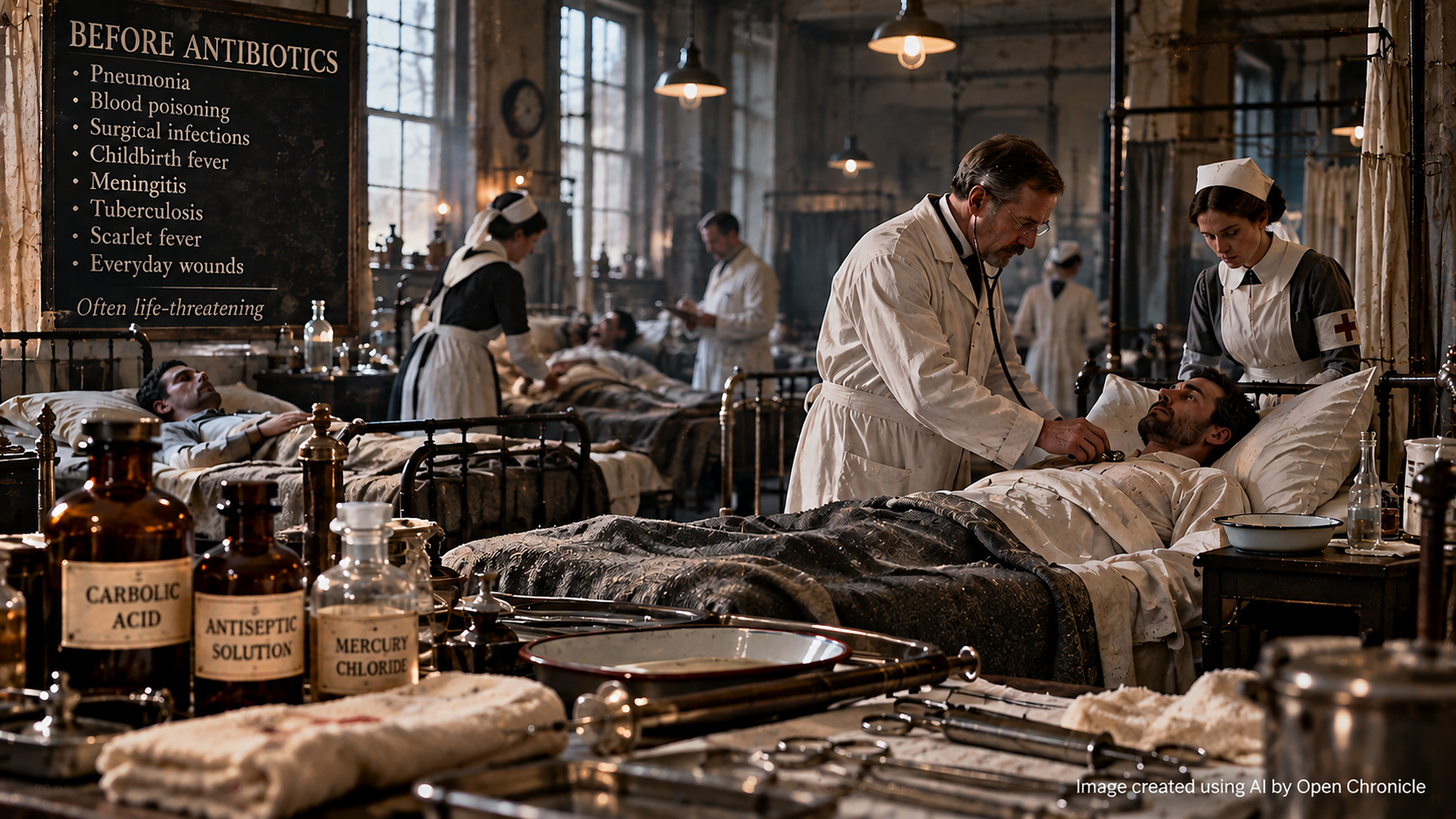
To understand why penicillin changed history, it is necessary to imagine medicine before antibiotics.
Today, bacterial infections are often treated with drugs so routinely that it is difficult to appreciate how dangerous ordinary infections once were.
A scratch could become infected.
A wound could develop into blood poisoning.
Pneumonia could kill an otherwise healthy person.
Childbirth could be followed by fatal bacterial infection.
Surgery always carried the danger that bacteria would invade the wound.
Diseases such as bacterial pneumonia, meningitis, gonorrhea and scarlet fever could be extraordinarily difficult to treat.
Doctors possessed antiseptics and other therapies, and the development of germ theory had revolutionized understanding of infectious disease.
But knowing that microorganisms caused disease was not the same as possessing a drug capable of selectively destroying bacteria inside the human body.
The American Chemical Society describes hospitals before penicillin as places where patients with severe bacterial infections could receive little effective treatment. American Chemical Society
Medicine understood the enemy.
It still lacked many of the weapons needed to defeat it.
2. Alexander Fleming
Alexander Fleming was born in Scotland in 1881.
He eventually trained in medicine and developed a career in bacteriology at St Mary’s Hospital in London.
His scientific interests focused heavily on infection and the interaction between microorganisms and substances capable of destroying them.
Fleming was therefore not simply a fortunate scientist who happened to notice an unusual Petri dish.
He was intellectually prepared to recognize why the observation mattered.
Years earlier, he had discovered lysozyme, an enzyme found in bodily secretions such as tears and saliva that possesses antibacterial properties.
His laboratory was already concerned with the relationship between microbes and substances capable of inhibiting them.
That background would become crucial in 1928.
3. A Laboratory at St Mary’s Hospital

By the late 1920s, Fleming was studying Staphylococcus bacteria.
These organisms could cause boils, abscesses and other infections.
His laboratory contained numerous culture plates on which bacterial colonies were grown.
Then Fleming left London for a holiday.
When he returned in early September 1928, he began examining the cultures that had remained in the laboratory.
The American Chemical Society dates his return to September 3, 1928.
Among the plates was one that had become contaminated by mould.
It was scientifically untidy.
It was also extraordinary.
4. The Petri Dish
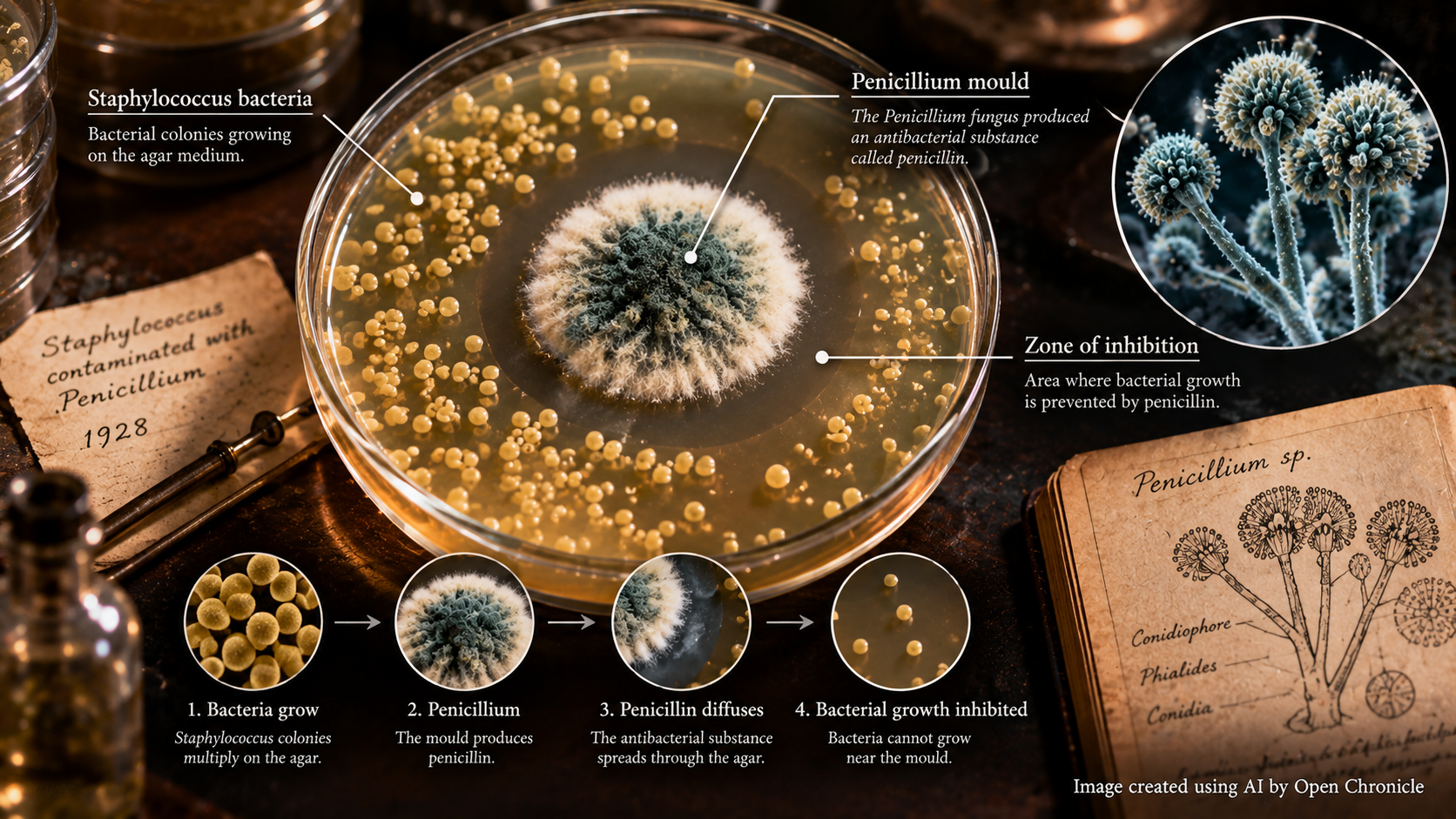
The mould had begun growing on the culture plate.
But the most important feature was not the mould itself.
It was the space around it.
Bacterial colonies covered much of the plate.
Yet near the mould was a clear zone where the Staphylococcus bacteria had disappeared or failed to grow.
Something was happening.
The fungus appeared to be producing a substance that diffused into the surrounding medium and inhibited bacterial growth.
This phenomenon is now commonly described as a zone of inhibition.
Fleming recognized that the contaminated culture deserved investigation rather than disposal.
That decision changed medical history.
The Science Museum describes how Fleming observed that the mould growing accidentally on the culture had produced a bacteria-free circle around itself.
The failed experiment had become the important experiment.
5. The Mould
Fleming investigated the contaminating fungus.
It belonged to the genus Penicillium.
He began experimenting with the material produced by the mould and found that it possessed remarkable antibacterial activity against several organisms.
The substance could inhibit bacteria associated with serious diseases.
Fleming eventually named it:
Penicillin.
The word derived from the mould that produced it.
The name would eventually become one of the most famous in medicine.
But in 1928, penicillin was not yet a medicine.
It was a laboratory phenomenon.
That distinction is essential.
6. Accident and Scientific Observation
Penicillin is often described as an accidental discovery.
That is true, but incomplete.
The contamination was accidental.
The observation was not.
Laboratories experience contamination constantly.
Microorganisms enter cultures.
Experiments fail.
Samples are discarded.
The historical significance of Fleming’s discovery came from his decision to examine something unexpected.
He saw that bacteria were disappearing around the mould and asked why.
Scientific discovery frequently occurs in precisely this way.
Chance produces an anomaly.
Knowledge allows someone to recognize its importance.
Curiosity turns the anomaly into a question.
Experiment turns the question into evidence.
The accident created the opportunity.
Fleming’s scientific judgment made the opportunity useful.
7. What Penicillin Actually Did
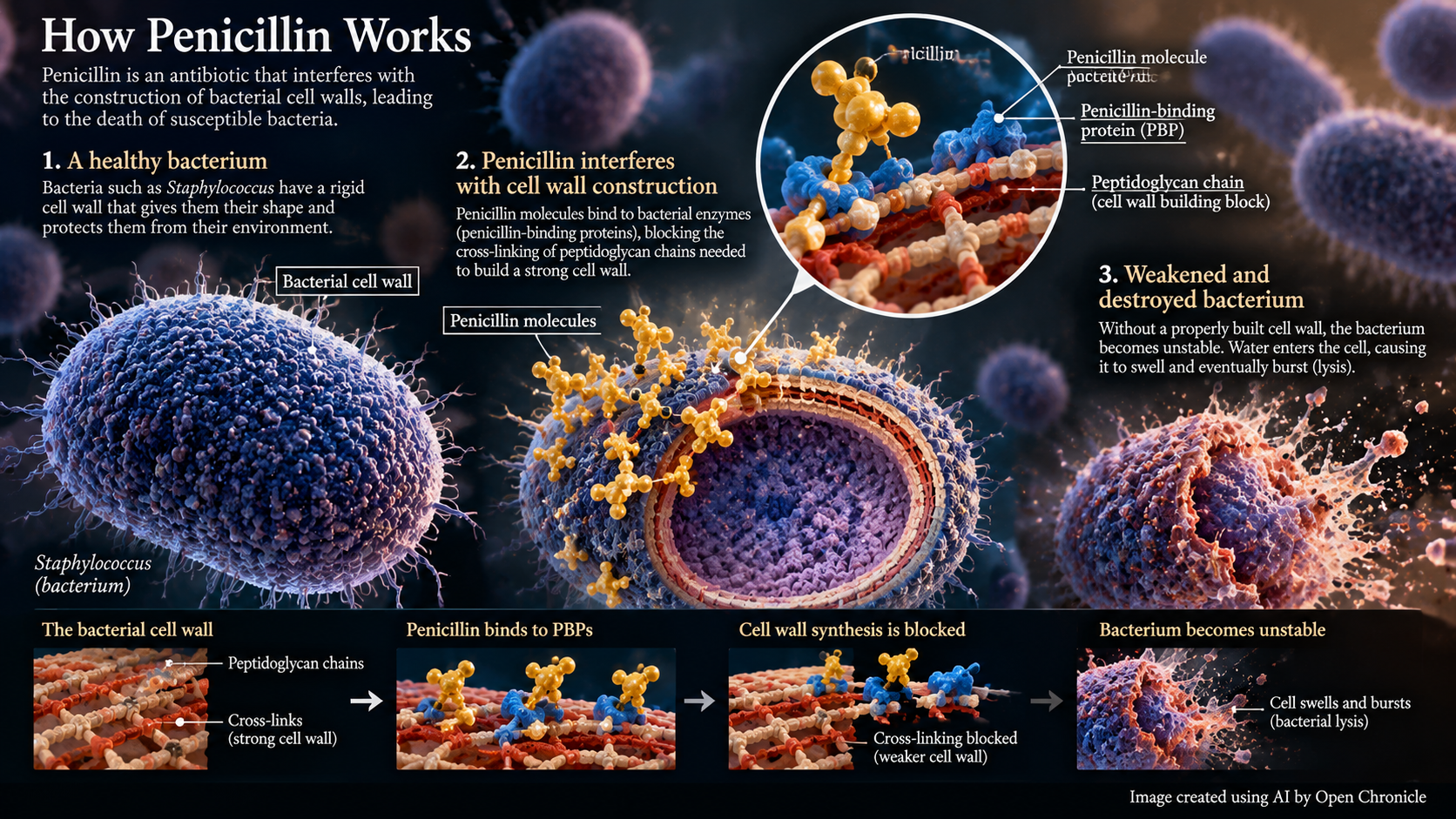
Bacteria are living organisms with biological structures and processes that can be disrupted.
Penicillin belongs to a family of drugs that interfere with the construction of bacterial cell walls.
For susceptible bacteria, that interference can be fatal.
The importance of such a mechanism is difficult to exaggerate.
The ideal antibacterial drug needs to attack the microorganism without producing comparable damage to the patient.
Penicillin would eventually prove extraordinarily effective against many bacterial infections while possessing relatively low toxicity for humans.
That combination made it revolutionary.
But Fleming did not yet possess purified penicillin in a form suitable for widespread medical treatment.
That problem would prove much harder to solve.
8. Fleming Publishes His Findings
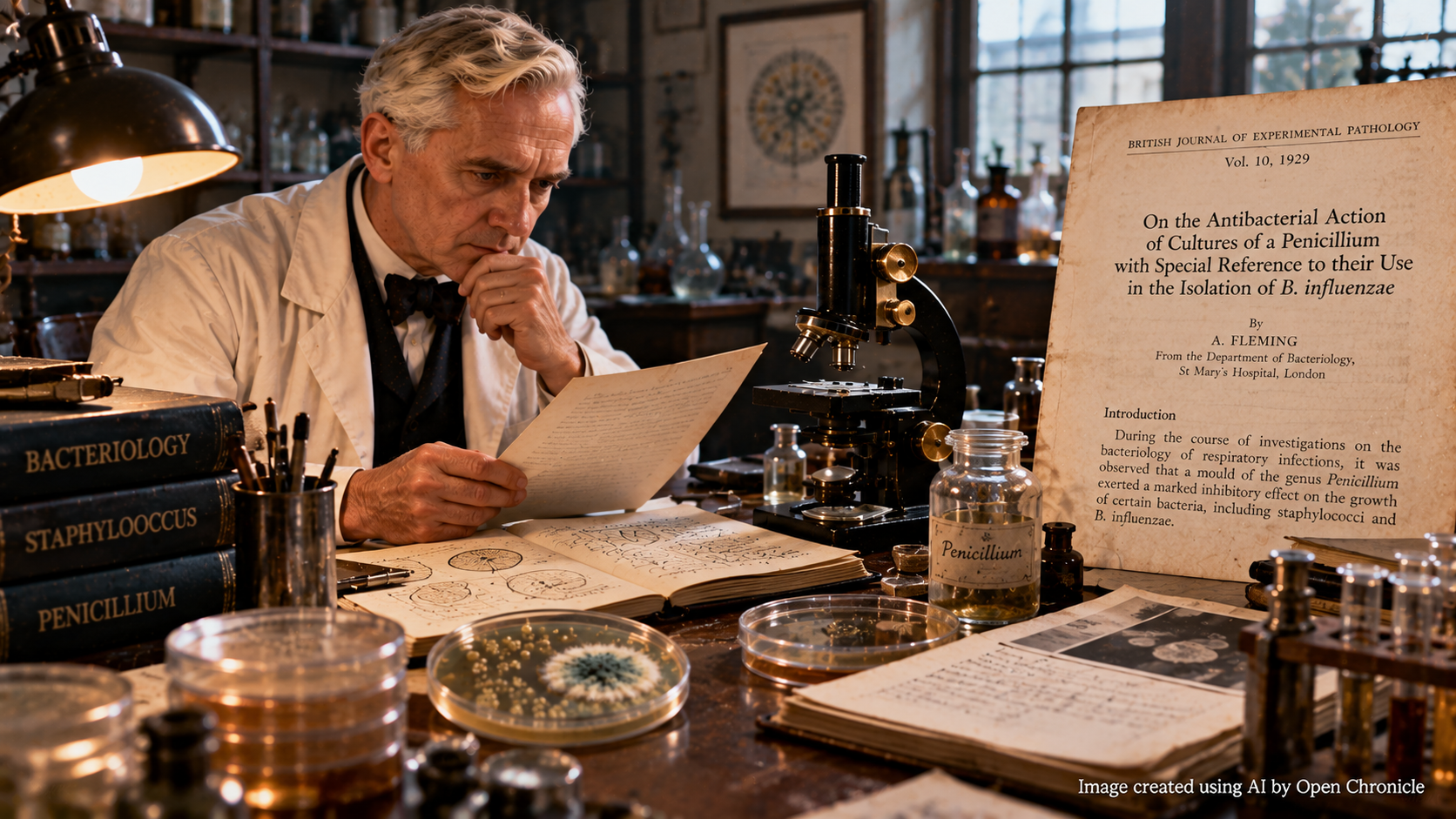
Fleming continued experimenting with the substance.
In 1929, he published his findings.
The paper described the antibacterial properties associated with the Penicillium mould.
The discovery was now part of the scientific literature.
But there was no immediate medical revolution.
Penicillin was unstable.
It was difficult to isolate.
It was difficult to purify.
And Fleming lacked the biochemical and production methods necessary to transform the substance into a reliable systemic medicine.
The discovery that would later symbolize modern medicine spent years largely on the margins of therapeutic development.
9. The Myth of the Instant Miracle Drug
Popular accounts sometimes compress the story into a simple sequence:
Fleming discovers penicillin in 1928.
Doctors begin treating patients.
Millions of lives are saved.
That is not what happened.
More than a decade separated Fleming’s initial observation from penicillin’s transformation into a practical therapeutic drug.
The Science Museum notes that Fleming did not fully develop penicillin for systemic treatment and faced major difficulties concerning its instability and purification. Science Museum Blog
The crucial second phase of the story occurred at Oxford.
10. Oxford Rediscovers Penicillin

During the late 1930s, researchers at the University of Oxford began investigating antibacterial substances.
Two figures became especially important:
Howard Florey, an Australian pathologist,
and
Ernst Boris Chain, a German-born biochemist who had left Germany after the Nazi rise to power.
Chain encountered Fleming’s earlier work.
Together with Florey and a wider research team, he began investigating penicillin’s potential much more systematically.
Among the other crucial members of the group was Norman Heatley, whose experimental ingenuity would prove indispensable in extracting, purifying and producing the substance.
The forgotten laboratory observation of 1928 was about to become something very different.
11. Norman Heatley and the Problem of Production
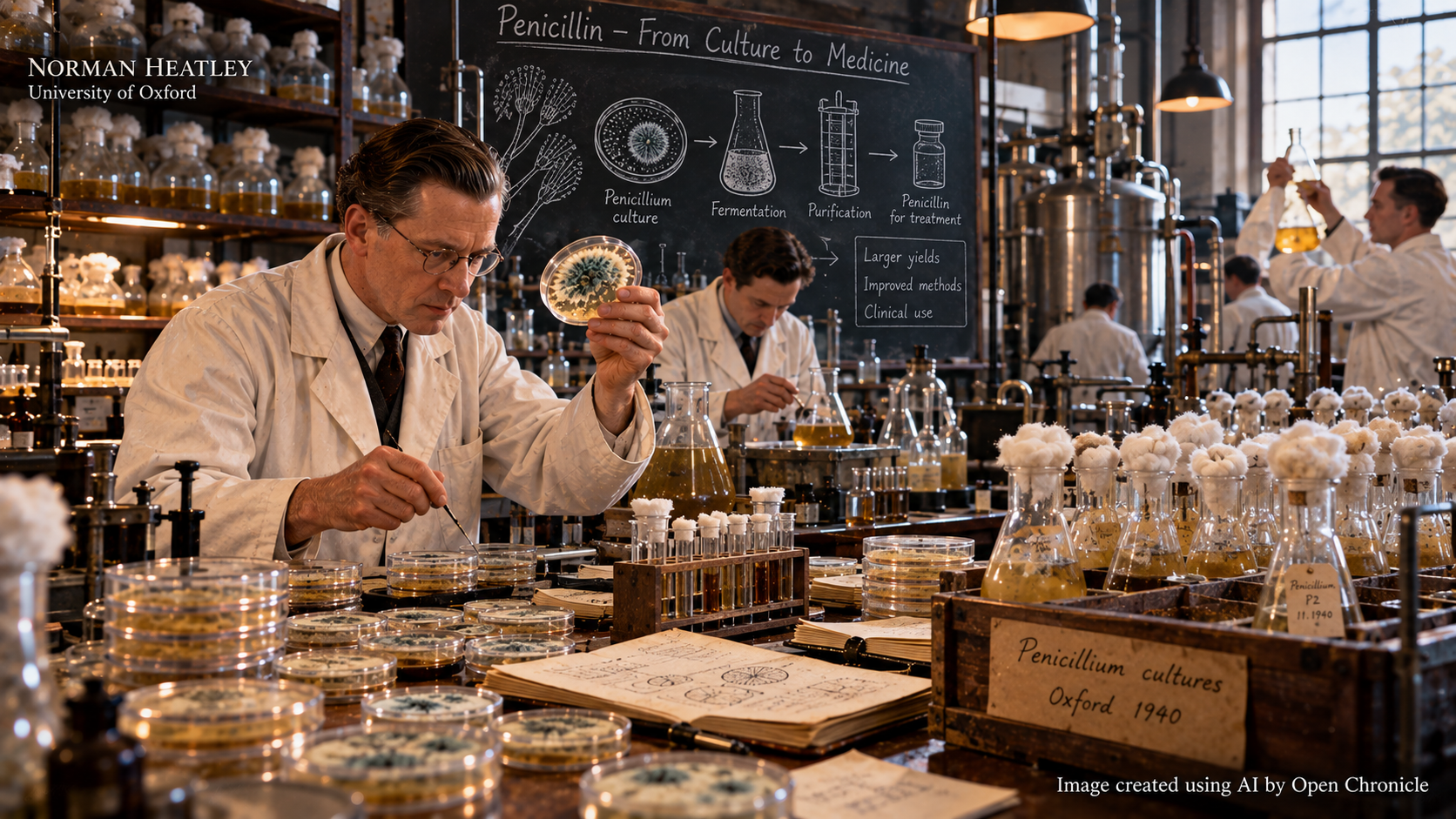
Discovering an antibacterial substance was one problem.
Producing enough of it was another.
Penicillin existed in tiny concentrations in mould cultures.
Researchers needed to grow large quantities of mould, extract the active substance and purify it without destroying its activity.
Norman Heatley developed practical methods and equipment that helped make this possible.
The Oxford team improvised.
Containers normally associated with everyday life were adapted for growing cultures.
The Science Museum records that biscuit tins and other vessels were among the equipment used before specially designed ceramic containers became available.
This was not glamorous science.
It was laborious biological production.
But without it, penicillin could never have moved from the Petri dish to the patient.
12. Penicillin Becomes a Medicine
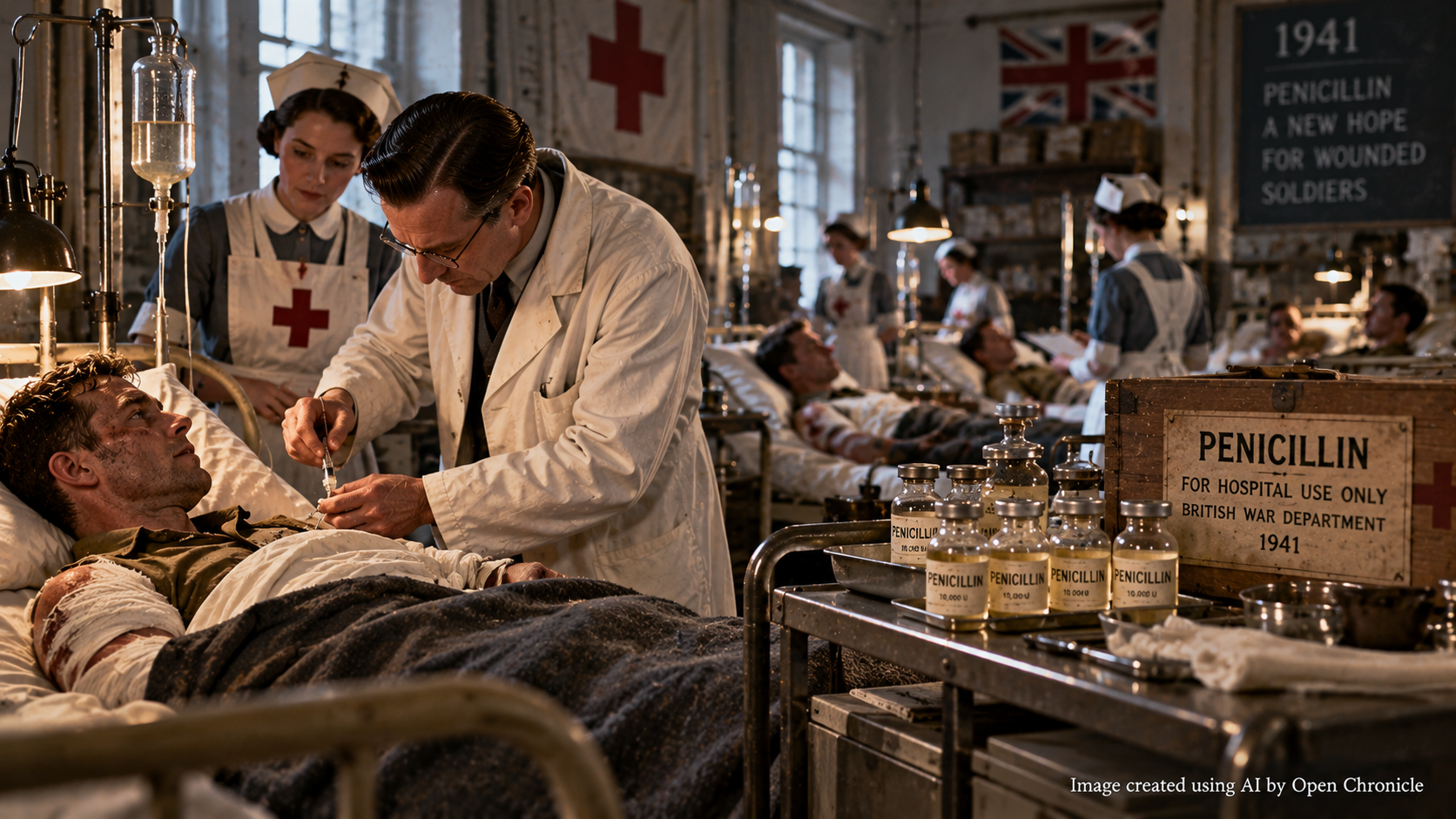
By 1940, the Oxford researchers had demonstrated penicillin’s remarkable effects in experimental infections.
The next step was human treatment.
In 1941, one of the best-known early patients was Albert Alexander, a policeman suffering from a severe infection.
Penicillin initially produced a dramatic improvement.
But supplies were desperately limited.
The researchers could not produce enough drug to complete his treatment.
Alexander eventually died.
The episode demonstrated both the extraordinary promise of penicillin and the enormous production problem confronting researchers.
A medicine capable of saving lives had effectively been discovered.
There simply was not enough of it.
The Science Museum’s account of the early clinical work emphasizes this shortage.
13. War Changes the Scale
The Second World War transformed the urgency of the project.
Military medicine faced enormous problems from infected wounds.
A soldier might survive a bullet, shell fragment or surgical operation only to die later from bacterial infection.
If penicillin could be produced in sufficient quantities, its military and civilian significance would be immense.
Britain, however, was fighting a total war and possessed limited industrial capacity for a project of this scale.
Attention increasingly turned toward the United States.
What followed was one of the great collaborations between academic science, government research and industrial manufacturing in modern medical history.
14. America and Mass Production
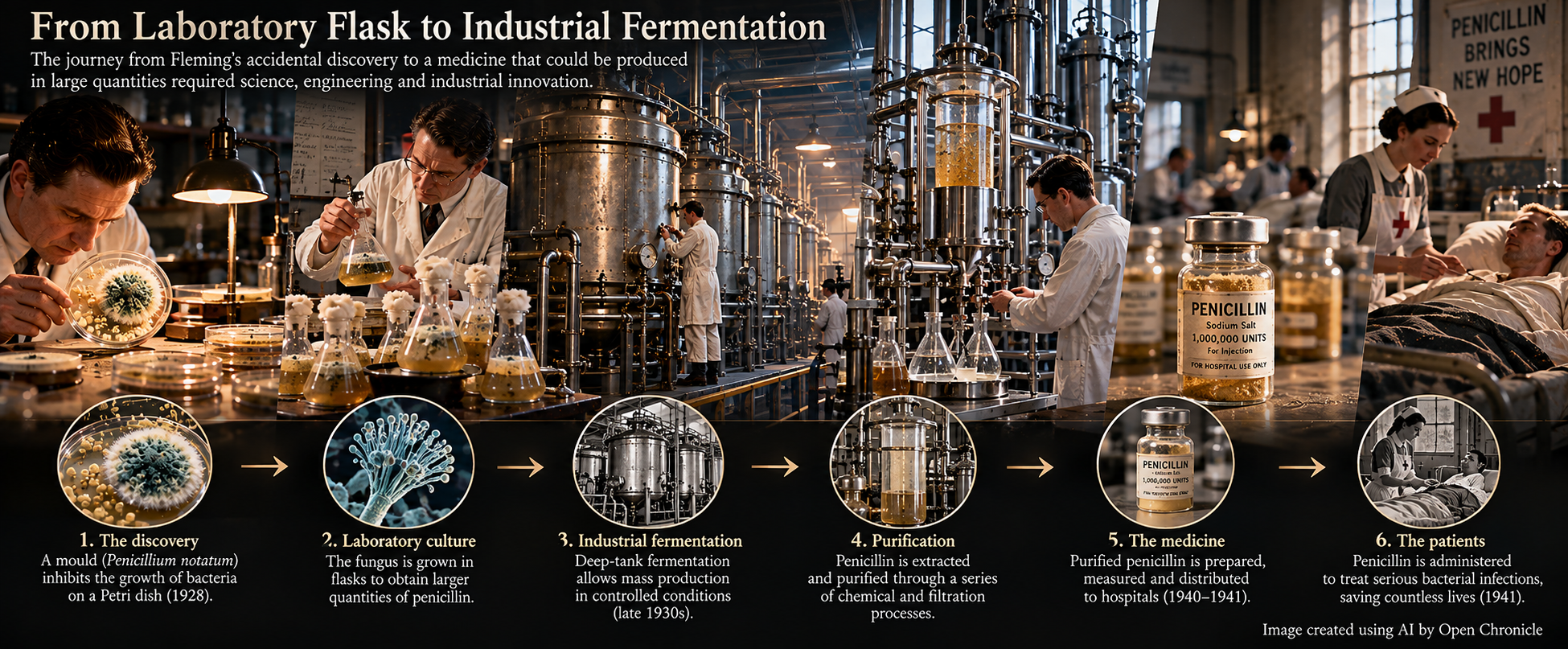
American researchers and pharmaceutical companies began tackling the problem of producing penicillin at industrial scale.
Government laboratories contributed fermentation expertise.
New strains of Penicillium were investigated.
Nutrient media were improved.
Fermentation methods became dramatically more efficient.
One major development was deep-tank fermentation.
Instead of cultivating mould only in relatively shallow containers, manufacturers could grow penicillin-producing cultures in large industrial fermentation tanks under carefully controlled conditions.
The result was transformative.
The American Chemical Society notes that large-scale production in the United States turned penicillin from a scarce laboratory substance into an increasingly available medicine during the war.
15. The Mouldy Cantaloupe
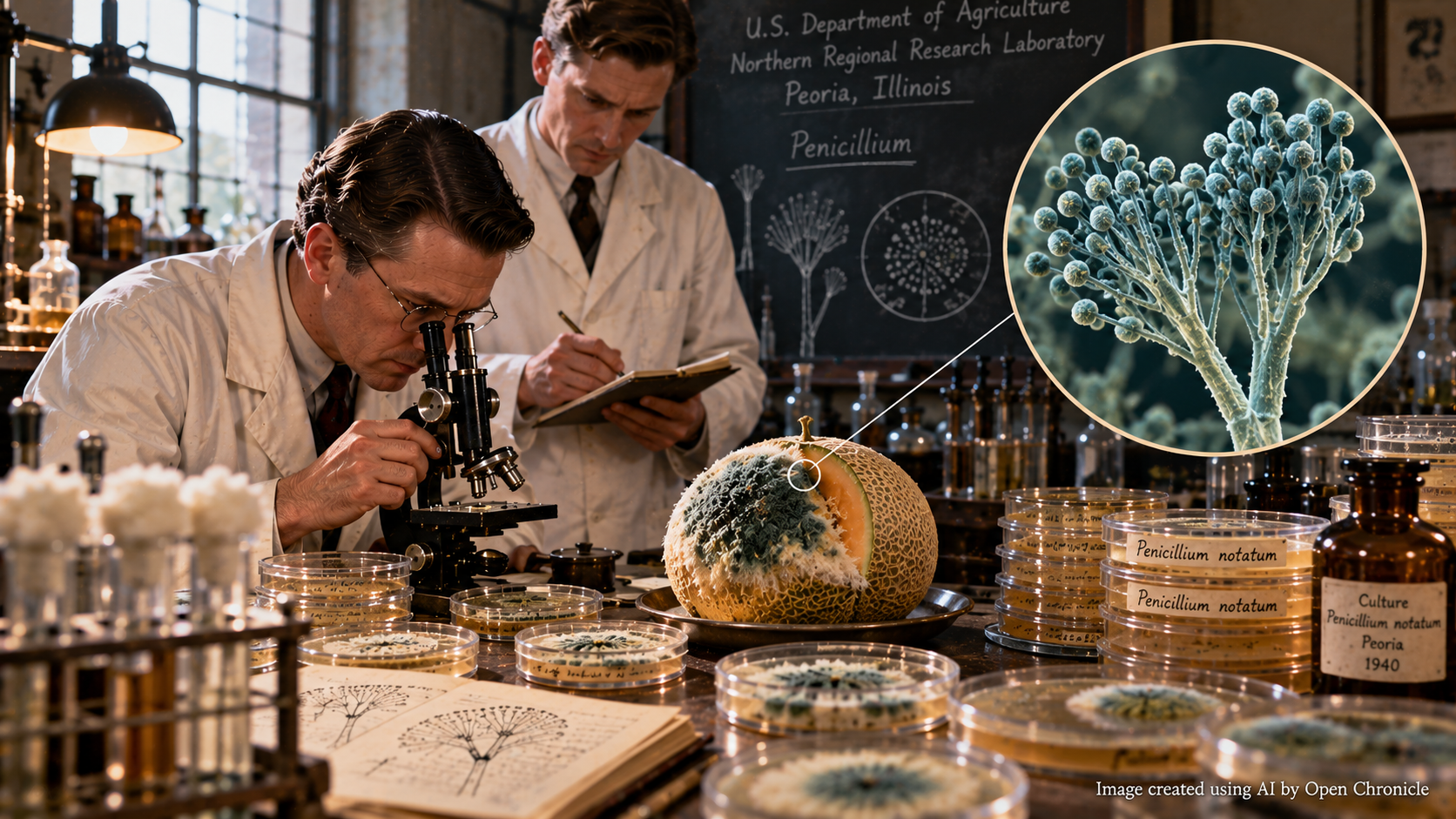
One of the most memorable episodes in the development of penicillin involved another piece of biological luck.
Researchers searched for strains of Penicillium capable of producing larger quantities of the drug.
A particularly productive strain was isolated from a mouldy cantaloupe obtained in Peoria, Illinois.
That strain and its descendants became important in improving production yields.
The story perfectly captures the unusual history of penicillin.
A contaminated Petri dish had begun the discovery.
A mouldy fruit helped accelerate industrial production.
But neither would have mattered without scientists capable of understanding and exploiting the biology behind them.
16. Penicillin Goes to War
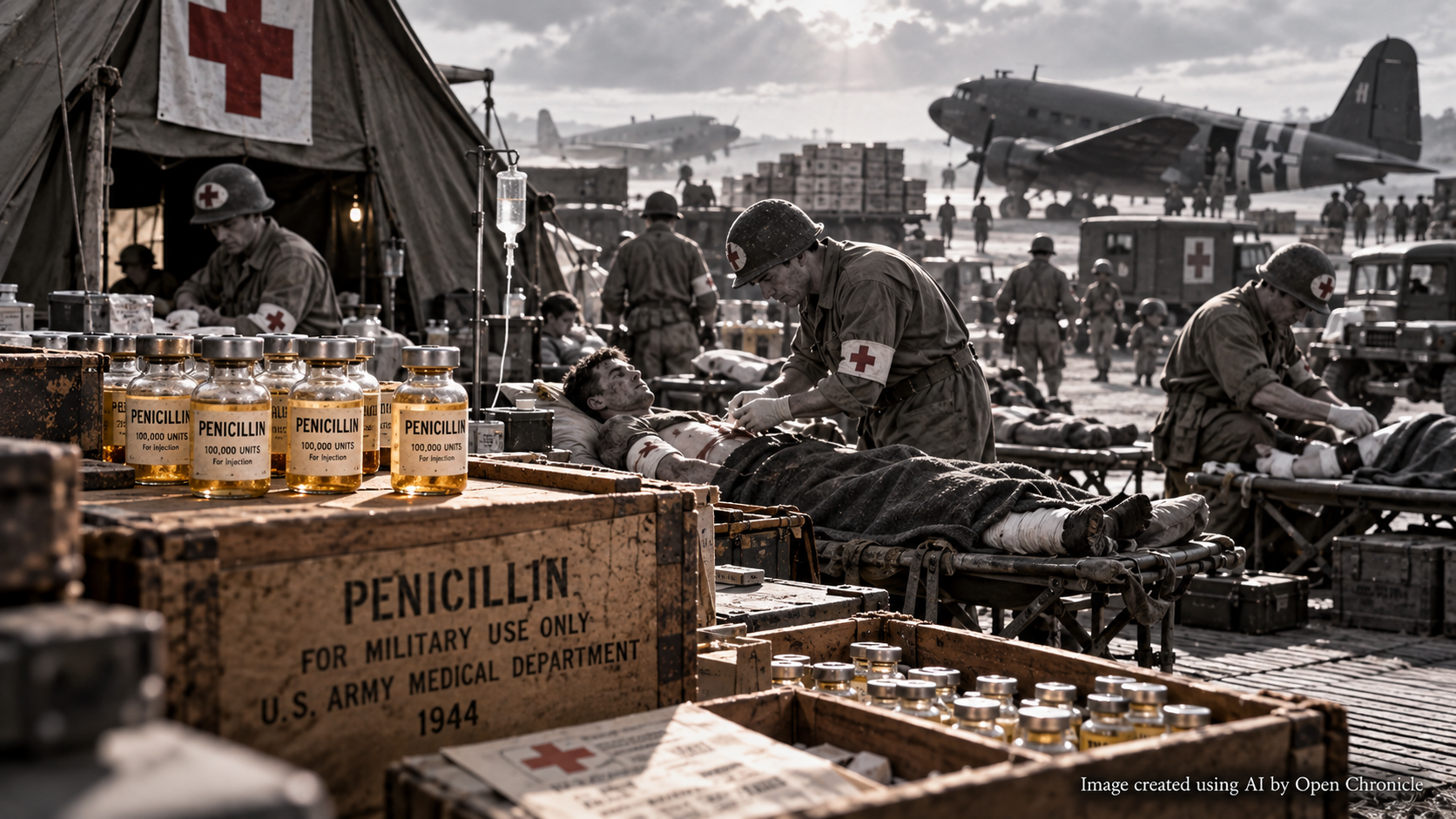
By 1943 and 1944, penicillin production was expanding rapidly.
The timing was crucial.
Allied forces were preparing for the invasion of Western Europe.
Military planners understood that thousands of soldiers would suffer wounds vulnerable to bacterial infection.
Penicillin became increasingly available to military medical services.
The drug did not eliminate the dangers of battlefield wounds.
But it dramatically improved doctors’ ability to combat many bacterial infections that previously could have become fatal.
The antibiotic age had entered the battlefield.
17. D-Day and the Antibiotic Age
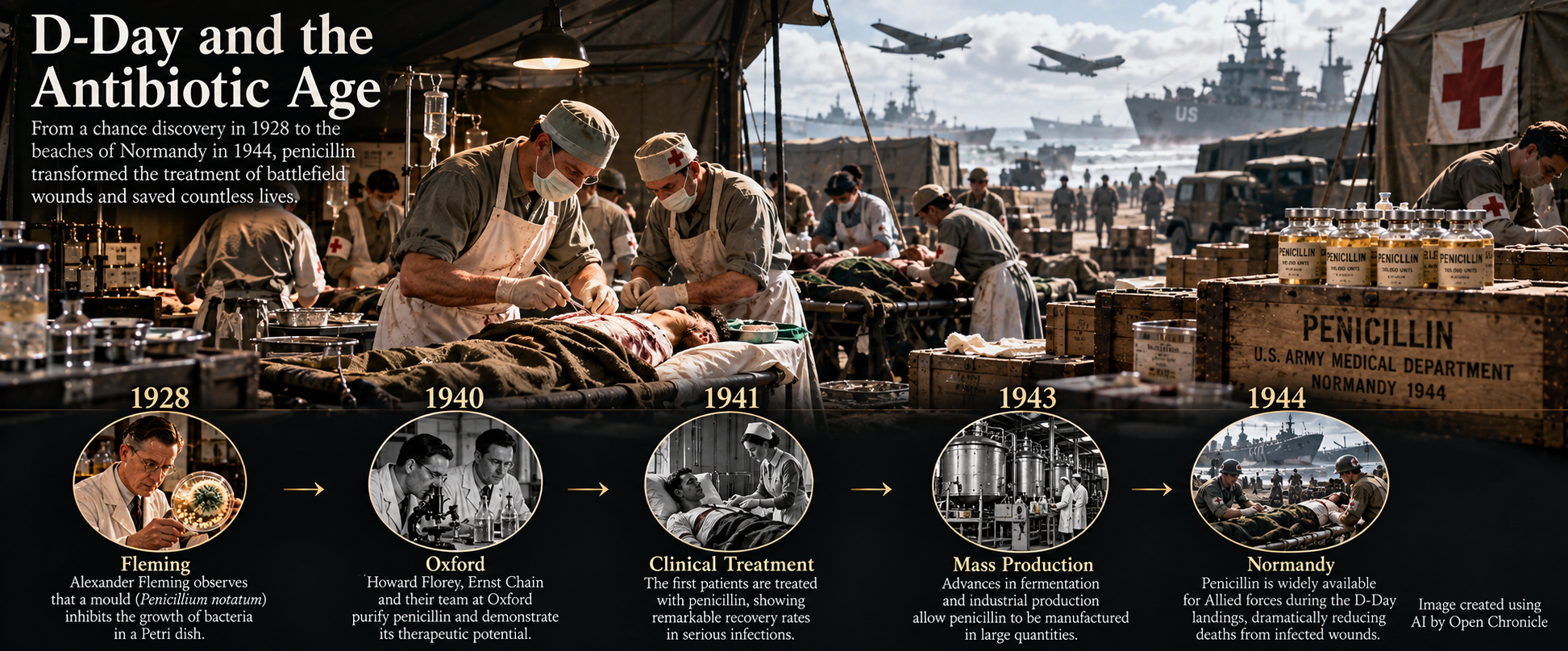
When Allied forces landed in Normandy on June 6, 1944, medicine had changed from the world Fleming had known in 1928.
Doctors now possessed a powerful antibacterial drug capable of treating many wound infections.
Industrial production continued expanding.
What had once existed in microscopic quantities around a patch of mould was becoming a mass-produced pharmaceutical.
The transformation was astonishing:
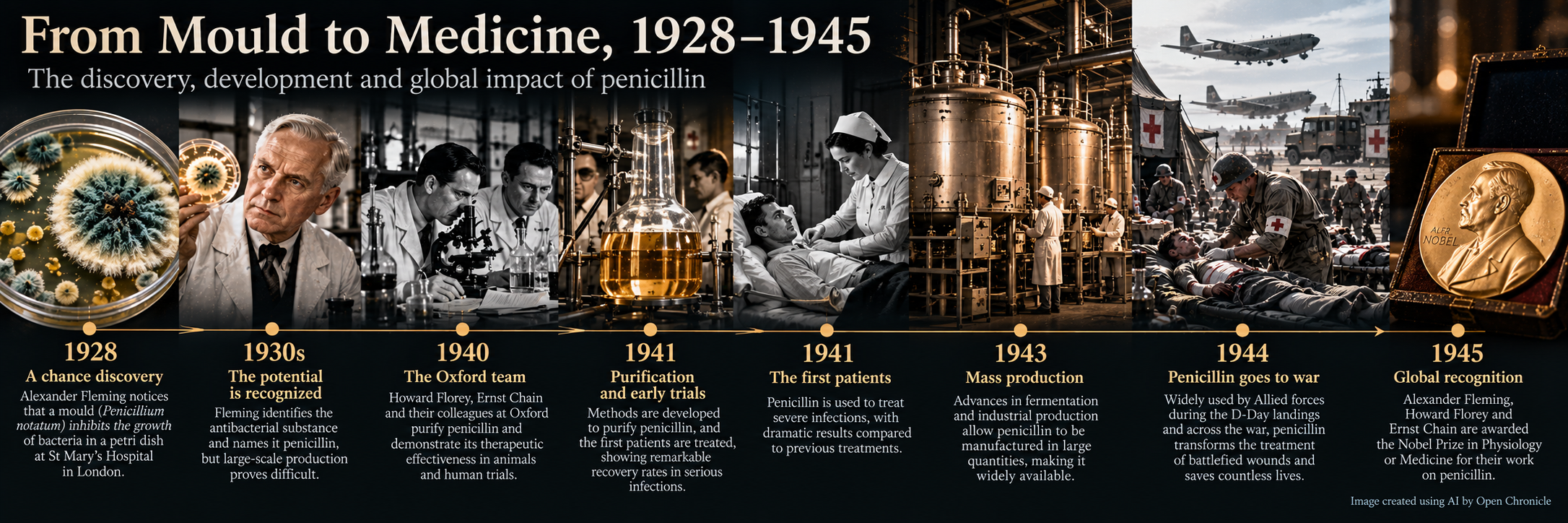
1928: observation
1929: publication
late 1930s: renewed investigation
1940: experimental proof
1941: early clinical treatment
1943–1944: industrial production
The history of penicillin illustrates how long the journey can be between scientific discovery and technological transformation.
18. Fleming, Florey and Chain
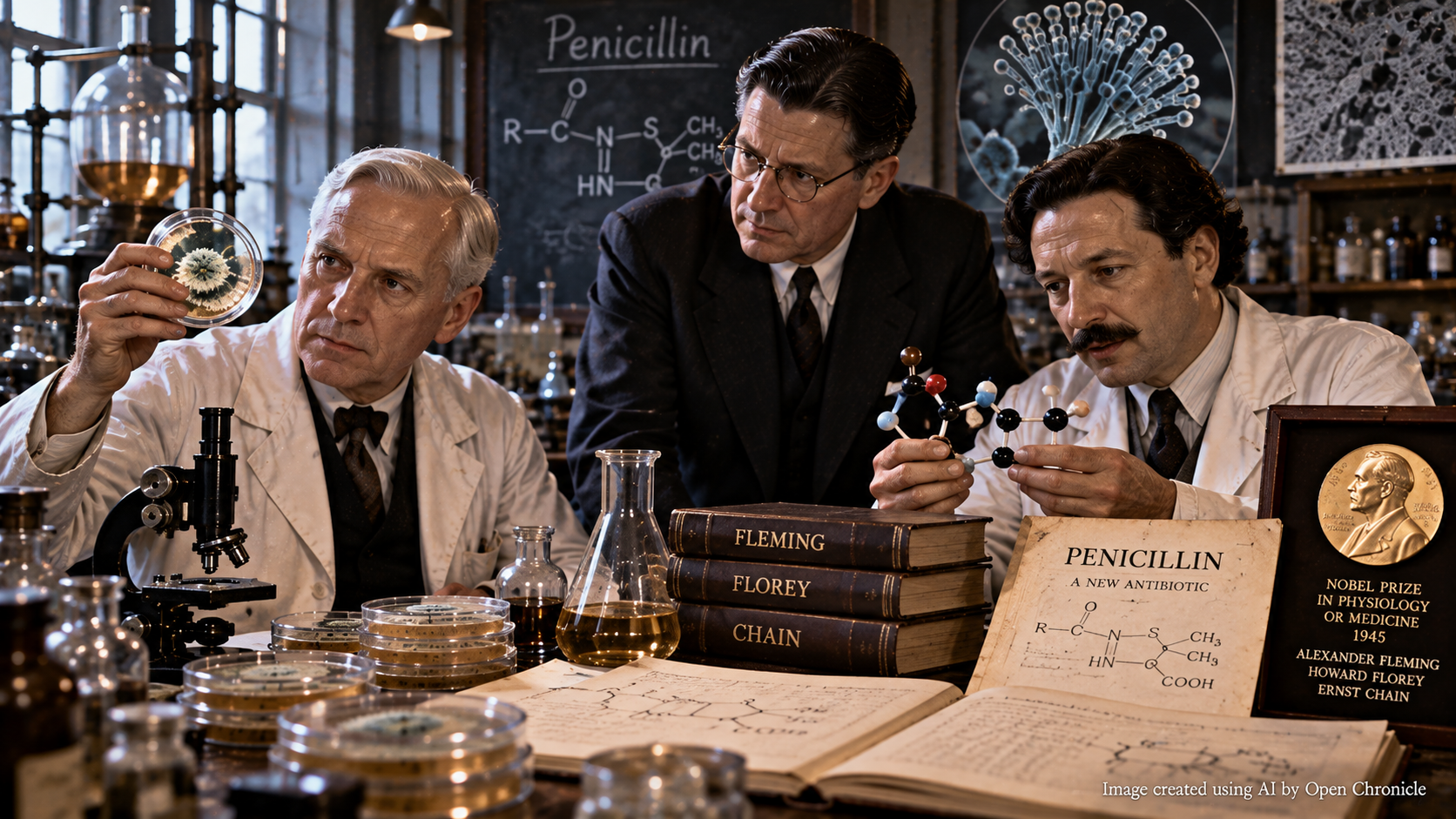
As penicillin became famous, the question of credit inevitably followed.
Fleming had made the original discovery.
Florey and Chain led the Oxford work that demonstrated its therapeutic potential.
Heatley and other researchers developed crucial experimental and production techniques.
American laboratories and pharmaceutical manufacturers helped solve the enormous challenge of mass production.
The history therefore resists the idea of a single heroic inventor.
In 1945, the Nobel Prize in Physiology or Medicine was awarded jointly to:
Alexander Fleming
Ernst Boris Chain
Howard Walter Florey
for the discovery of penicillin and its curative effect in infectious diseases.
The prize recognized that the medical revolution had required both discovery and development.
19. Medicine After Penicillin
The success of penicillin helped transform expectations about infectious disease.
Researchers intensified the search for additional antibiotics.
New drugs followed.
Streptomycin became especially important in the treatment of tuberculosis.
Tetracyclines, cephalosporins and other antibiotic families expanded the medical arsenal.
Conditions that had once terrified doctors became increasingly treatable.
Surgery became safer.
Treatment of battlefield wounds improved.
Maternal infections became more manageable.
Pneumonia could often be treated effectively.
The survival prospects of patients with bacterial infections changed dramatically.
The world had entered the antibiotic age.
20. A Revolution Beyond Hospitals
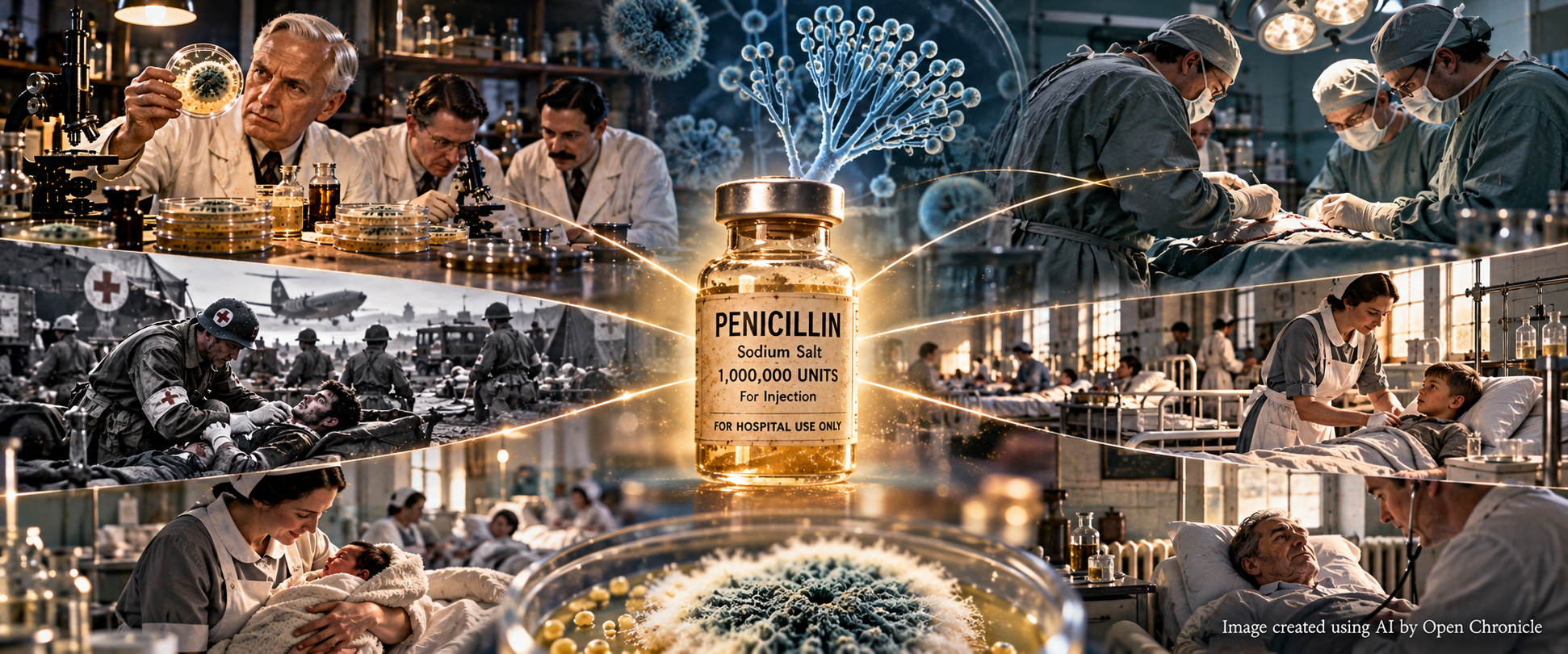
Antibiotics influenced much more than infectious disease wards.
Modern medicine increasingly depended upon them.
Major surgery became safer partly because postoperative bacterial infections could be treated.
Cancer therapies that suppress the immune system became more feasible because infections could sometimes be controlled.
Organ transplantation similarly relied on the ability to manage bacterial disease in vulnerable patients.
Intensive care medicine depended heavily on antimicrobial drugs.
The antibiotic revolution became one of the foundations upon which much of twentieth-century medicine was constructed.
21. Fleming’s Warning
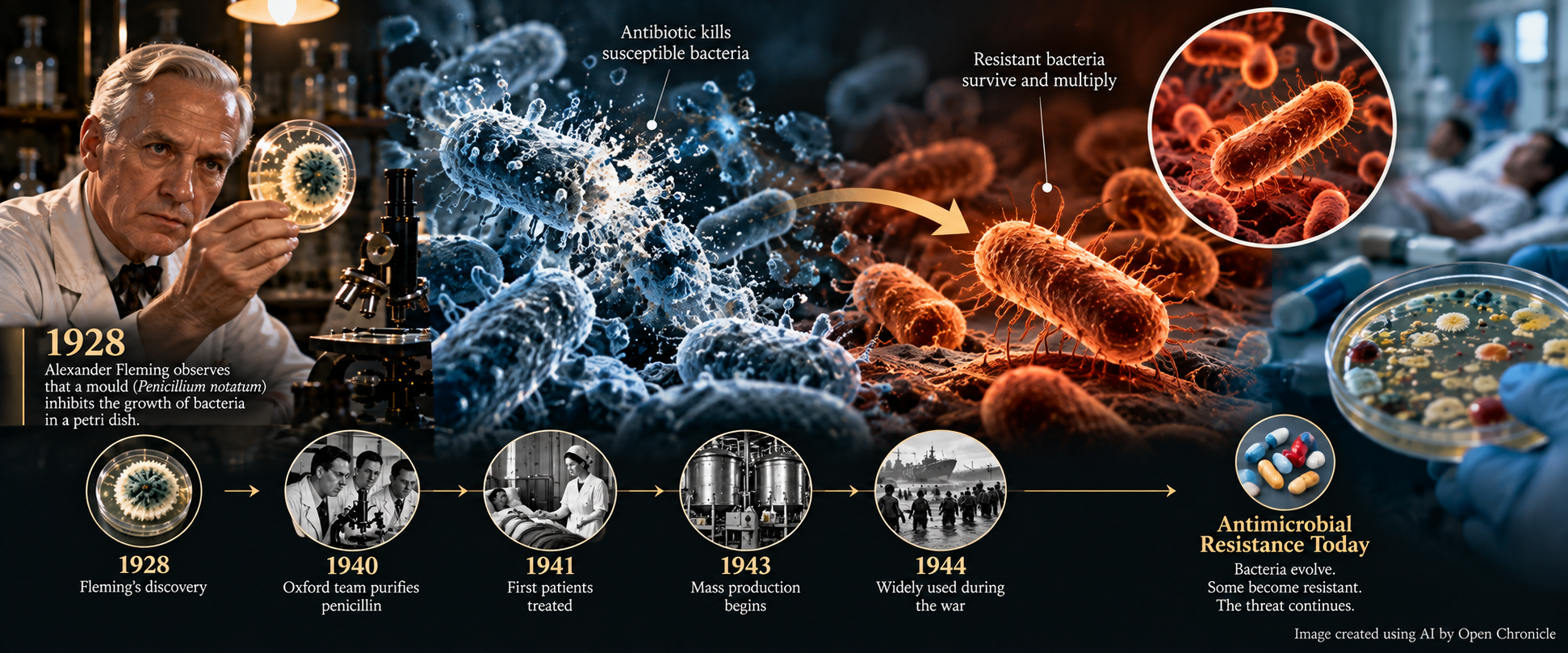
There was, however, another side to the story.
Bacteria evolve.
When antibiotics kill susceptible bacteria, resistant organisms can survive and reproduce.
Repeated or inappropriate antibiotic exposure can therefore contribute to the selection of resistant strains.
The danger became increasingly apparent even during the early antibiotic era.
Fleming himself warned about the consequences of inadequate use of penicillin.
The miracle drug was never evolution-proof.
The same biological adaptability that had allowed microorganisms to survive for billions of years did not disappear when humans discovered antibiotics.
22. Antimicrobial Resistance
Today, antimicrobial resistance is one of the central challenges facing medicine.
Bacteria resistant to multiple drugs can make infections much more difficult to treat.
The problem demonstrates a remarkable historical paradox.
The discovery of antibiotics transformed medicine because they could kill bacteria.
Their enormous success encouraged widespread use.
That widespread use created powerful evolutionary pressures favoring resistant organisms.
The story of penicillin therefore has no final chapter.
The scientific contest between antimicrobial medicine and microbial evolution continues.
23. Was Penicillin the First Antibiotic?
The phrase “first antibiotic” requires some historical care.
Humans had used moulds and naturally derived substances against wounds long before scientists understood microorganisms.
Synthetic antibacterial compounds also preceded the therapeutic use of penicillin.
Paul Ehrlich’s Salvarsan, introduced in the early twentieth century against syphilis, represented an important milestone in antimicrobial chemotherapy.
Later, sulfonamide drugs also became powerful antibacterial treatments.
Penicillin nevertheless occupies a distinctive position.
It demonstrated the enormous therapeutic potential of naturally produced antibacterial substances and helped inaugurate the modern antibiotic era on a vast scale.
Its influence on subsequent drug discovery was profound.
24. The Laboratory Accident That Changed the World
There is something deeply compelling about the physical simplicity of Fleming’s original observation.
No enormous machine.
No expedition.
No supercomputer.
No vast industrial laboratory.
Just a culture plate.
Bacteria.
Mould.
And a clear zone between them.
Yet inside that tiny biological interaction was a principle capable of transforming global medicine.
Microorganisms had been fighting chemical wars against one another for immense periods of evolutionary time.
Humans had finally begun learning how to use some of those weapons.
25. Why September 28 Matters
The date traditionally associated with Fleming’s discovery survives because the story represents one of the defining transformations of modern medicine.
But history benefits from precision.
The surviving institutional accounts do not establish September 28 as the certain day on which Fleming first noticed the contaminated plate. The American Chemical Society instead records that Fleming returned from holiday on September 3, 1928, when he began sorting his cultures and noticed the unusual dish.
That does not diminish the significance of September 28 in historical commemoration.
It makes the story better.
Because the real history of penicillin is not a magical moment on a single morning.
It is a story about observation, forgotten research, rediscovery, collaboration, biochemical ingenuity, wartime urgency and industrial engineering.
Fleming opened the door.
Others carried the discovery through it.
September 28, 1928: From a Contaminated Petri Dish to the Antibiotic Age
The famous Petri dish represented only the beginning.
Alexander Fleming recognized that a Penicillium mould was producing something capable of suppressing bacteria.
Howard Florey and Ernst Chain recognized that Fleming’s observation might become a powerful medicine.
Norman Heatley and colleagues helped solve the practical problems of extracting and producing it.
Researchers in Britain and the United States developed methods capable of manufacturing it.
Industrial companies transformed laboratory production into mass production.
Doctors brought it to patients.
Together, those steps changed medicine.
The discovery of penicillin is therefore more remarkable than the simplified legend.
It demonstrates that scientific revolutions are rarely produced by discovery alone.
Someone must notice.
Someone must understand.
Someone must prove.
Someone must manufacture.
And someone must find a way to place the discovery into the hands of those who need it.
From a patch of mould in a London laboratory emerged one of the technologies that defined twentieth-century medicine.
Nearly a century later, the antibiotic age that followed remains one of science’s greatest achievements, and one of its most important responsibilities.
Historical Sources and Further Reading
The history of penicillin extends far beyond Alexander Fleming’s original observation.
The following institutional resources document the discovery, the Oxford research programme,
the surviving scientific material and the industrial innovations that transformed penicillin
from a laboratory phenomenon into a practical medicine.
American Chemical Society
A detailed historical account tracing penicillin from Fleming’s observation in 1928
through the work of the Oxford researchers and the subsequent development of methods
capable of producing the antibiotic on a large scale.
Science Museum
An exploration of the work carried out at Oxford to transform Fleming’s discovery
into a usable therapeutic drug, including the contribution of Norman Heatley and
the practical difficulties involved in producing sufficient quantities of penicillin.
Science Museum
Historical material examining Fleming’s laboratory work and the surviving scientific
evidence associated with the mould that led to the identification of penicillin’s
antibacterial properties.
American Chemical Society
A history of the technological advances that enabled penicillin to move from limited
laboratory production to industrial manufacturing, helping make large quantities of
the antibiotic available during the Second World War.
Open Chronicle History treats the development of penicillin as a multi-stage scientific
achievement. Alexander Fleming identified the antibacterial effect associated with
Penicillium in 1928, but the transformation of that observation into a practical
medicine depended upon subsequent research, purification, clinical experimentation,
engineering and industrial production. The work of Howard Florey, Ernst Chain,
Norman Heatley and numerous other researchers and manufacturers therefore forms an
essential part of the history of the antibiotic revolution.