
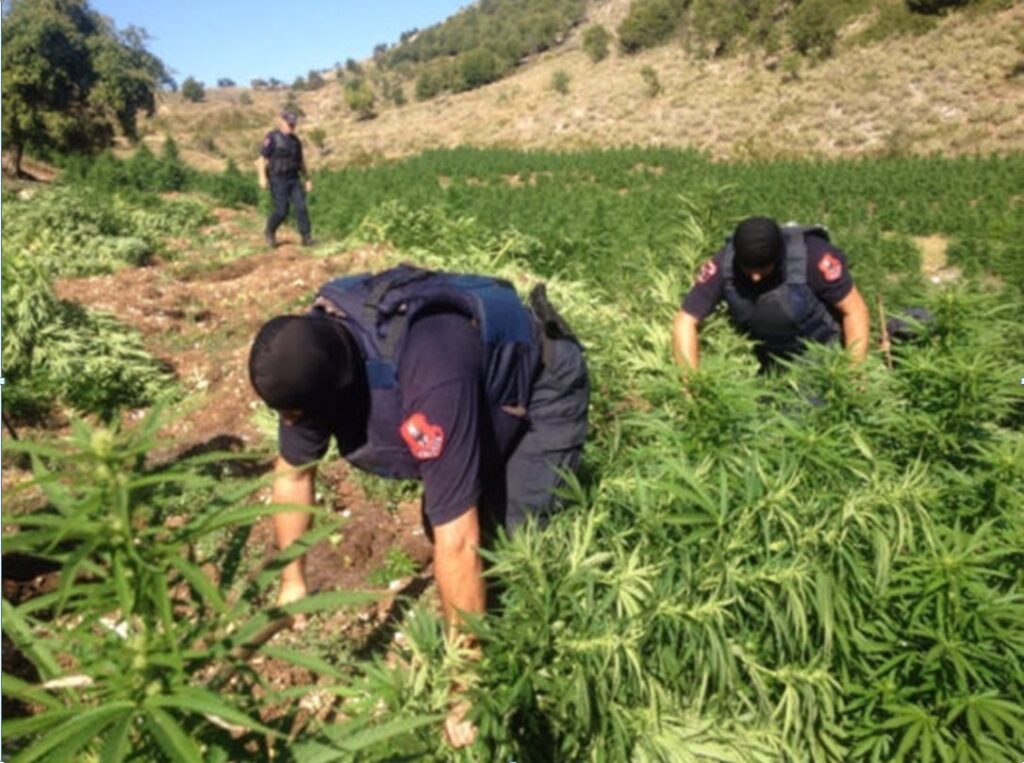
Image: from Tirana Times X@TiranaTimes
By Emma Cole | Staff Writer with Agencies
In a major development in Albania’s ongoing battle against illicit cannabis cultivation, the Albanian police have reported the destruction of over 200,000 cannabis plants in the first ten months of 2025. The country’s authorities have been working tirelessly to combat the growing cannabis industry, with the Albanian police managing to uncover and destroy 203,960 plants so far this year. A total of 106 people have been arrested in connection with these operations, and 32 more remain at large.
The operations have been concentrated in some of the country’s most remote regions, particularly in the northern district of Shkodra, which has seen the largest share of destroyed cannabis plants. While the Albanian winter will likely reduce reports of large-scale cannabis field discoveries, the police continue to make regular seizures of the drug. Cannabis, grown mainly in rural and difficult-to-reach areas, is often transported across the Adriatic Sea to Italy and smuggled through Montenegro and Serbia, fueling the illegal drug trade in Europe.
The massive increase in cannabis production in Albania this year has not gone unnoticed. The country has long been a known source of cannabis, but 2025 has seen a notable boom in production. Experts suggest that many farmers, particularly those in rural and impoverished areas, are growing cannabis out of economic necessity. The Albanian government under Prime Minister Edi Rama has faced criticism for not doing enough to reduce poverty and unemployment, leading some to believe that the cultivation of cannabis is a result of a lack of viable alternatives for income.
According to Deutsche Welle, the cannabis industry provides a lifeline for many Albanians in need of work. “We earned bread for our children there,” said Mira, a 50-year-old woman who worked in a cannabis processing lab for ten euros a day. “It’s the only job available for many of us,” she added. Her words echo the sentiments of many rural Albanians who find themselves caught in the complex web of poverty and illicit drug production.
While Albania has made strides in dismantling the cannabis trade, the profits from illegal cannabis cultivation continue to provide ample financial incentives for drug lords. Farmers who manage to evade detection can earn up to 200 euros per kilogram of cannabis, which is often grown in remote fields where surveillance is minimal. In fact, some farmers have even gone as far as installing irrigation systems and arming themselves to protect their crops.
The Albanian opposition has been vocal in its criticism of the government’s inability to curb cannabis cultivation. Ljulzim Başa, the president of the opposition Democratic Party, has pointed out that many Albanians are left with no choice but to engage in illegal activities like drug cultivation due to the lack of support for rural development. “The government does not support rural areas. People can choose – no bread for their children or growing drugs. Unfortunately, many opted for the second alternative,” Başa said.
Adding to the controversy, some believe that there are deep-seated links between state institutions and the drug trade. Investigative journalists, such as Elvis Naboli, editor-in-chief of Rozafa TV in Shkodër, have raised concerns about corruption within the police force, suggesting that some officers are complicit in allowing cannabis fields to remain untouched. “Yes, the police destroy a lot of fields, but the ones under special protection remain untouched,” Naboli stated, claiming that powerful figures with ties to state authorities control the illicit cannabis industry.
Despite these claims, Altin Kato, the director for security in the Albanian police, has denied that there is widespread corruption within the force. He acknowledged that there are isolated incidents involving police officers, but insisted that they are not representative of the larger effort to combat the drug trade. “Out of 9,000 operations this year, we identified only 40 cases involving police officers and drugs,” Kato said, adding that eight officers had been arrested for their involvement.
With winter now settling in, the public focus will likely shift to the ongoing seizures of cannabis, rather than the discovery of new fields. Yet, the impact of the cannabis trade in Albania remains a persistent and growing concern. The opposition warns that Albania is on the brink of becoming the “Colombia of Europe,” a reference to the country’s long-standing role as a hub for drug production and trafficking.
Yet for people like Rita and Mira, who worked in the cannabis labs, the situation is about survival. “If we could, we would do the same thing again,” they admit. While they were initially released by the police because they claimed to be unaware of the nature of the work, the consequences of their involvement with the drug trade remain unclear. In Albania, as they see it, making ends meet is more important than any political or legal concerns.
Albania’s struggle with cannabis cultivation and trafficking is far from over. Despite significant police efforts and large numbers of destroyed plants, the underlying social and economic conditions that drive many Albanians to cultivate drugs remain unchanged. As winter takes hold, the focus will shift from cannabis fields to the ongoing seizures, but the bigger issue – the government’s inability to address poverty and unemployment , continues to fuel the cannabis boom. Until these systemic issues are addressed, it seems that the cannabis trade will remain a major problem in Albania for years to come.