
By Benjamin Foster | Staff Writer with Agencies
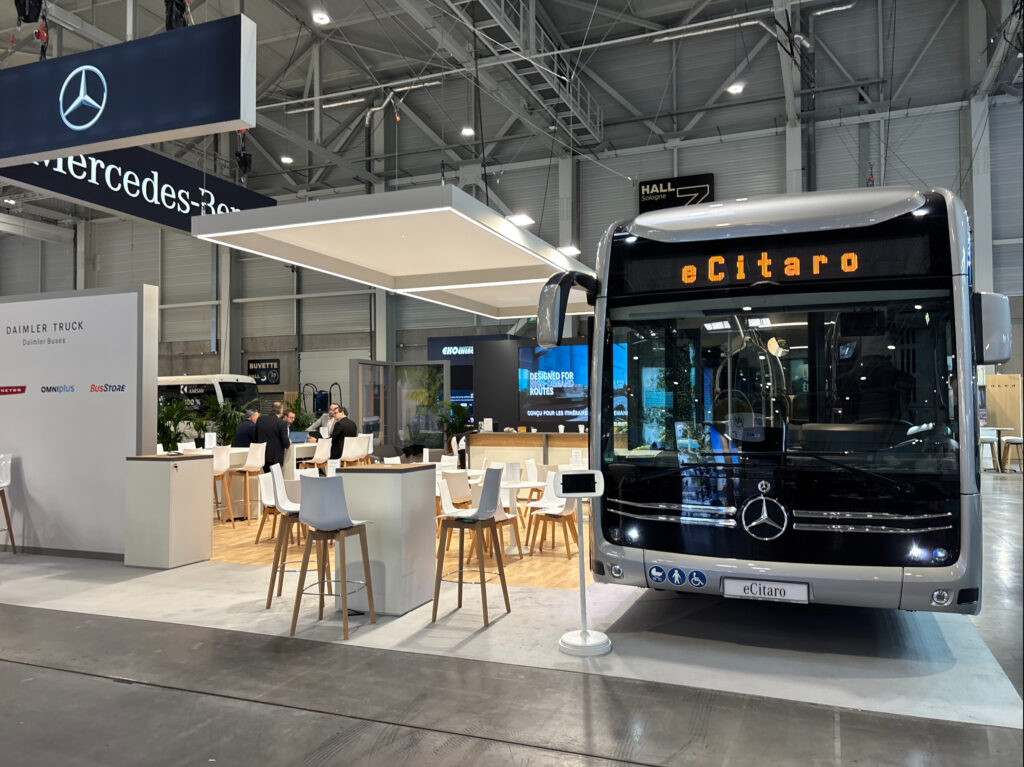
The Bern and Solothurn regions of Switzerland are set to make a major leap toward sustainable public transport with the introduction of 39 new electric buses from Daimler Buses Switzerland. The joint procurement, announced by Regionalverkehr Bern-Solothurn (RBS) and Busbetrieb Solothurn Grenchen und Umgebung (BSGU), marks one of the country’s most significant electric fleet investments to date.
The new Mercedes eCitaro buses, which include both standard and articulated models, are scheduled to enter service between 2027 and 2028. Under the current framework, both RBS and BSGU have the option to order up to 46 additional vehicles by 2032, potentially expanding the total fleet to 85 units.
The eCitaro models are built to perform reliably in Switzerland’s challenging climate and terrain, offering minimum operational ranges of 250 kilometers for standard units and 210 kilometers for articulated versions. Charging will primarily occur overnight at depots, with the flexibility for daytime top-ups during off-peak hours.
The procurement process was conducted through an open public tender that emphasized both performance and sustainability. Evaluation criteria included vehicle quality, passenger comfort, safety, environmental impact, and total cost, with pricing accounting for 45% of the final assessment. Real-world test drives on RBS and BSGU routes and third-party expert reviews helped ensure that the buses met rigorous standards.
RBS plans to introduce 17 standard eCitaro buses starting in mid-2027 from its Worblaufen and Zuchwil depots. The operator aims to fully electrify its Worblaufen network by 2032 and extend electric service to the Lyss-Messen area by 2040.
BSGU will receive 18 eCitaro buses—13 standard and five articulated—between 2027 and 2028. The company is also preparing infrastructure upgrades at its Zuchwil depot to support the transition, targeting a fully electric fleet by 2035. Additionally, four more standard eCitaro buses will be deployed at BSGU’s Grenchen site in 2028, alongside plans for expanded garage capacity.
This initiative underscores Switzerland’s growing commitment to zero-emission transport. By 2035, Bern and Solothurn expect to run largely carbon-free bus networks, setting an example for other European regions aiming to modernize public transport while cutting greenhouse gas emissions.