
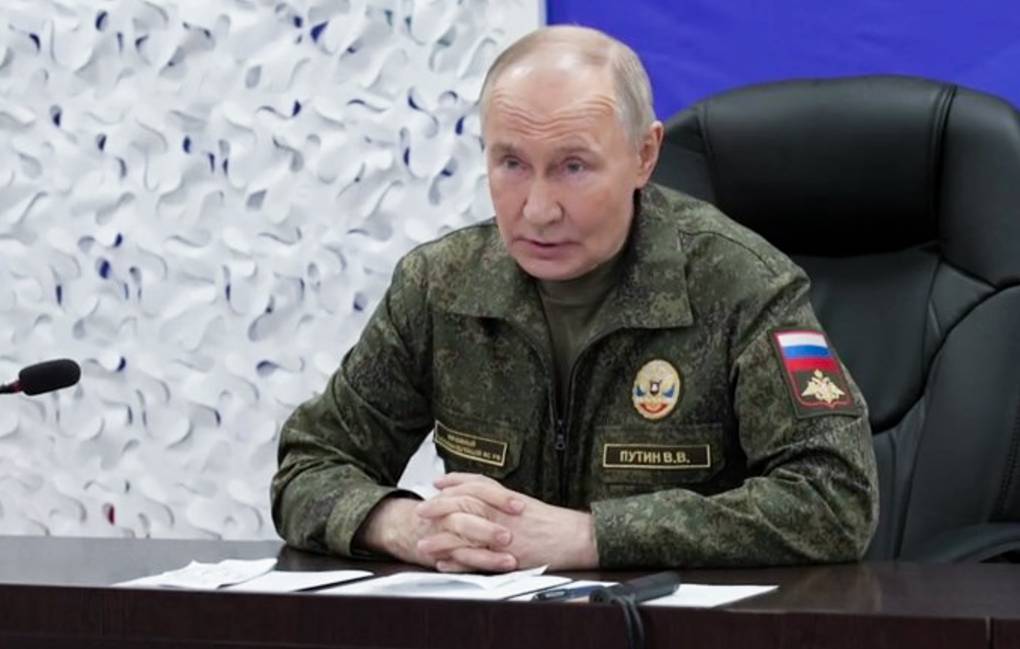
Image: from BRICS+TODAY X@Afrijustice4all
By Lucas Reid | Staff Writer with Agencies
In a fiery statement on Tuesday, Russian President Vladimir Putin accused European countries of sabotaging US-led peace negotiations aimed at resolving the ongoing conflict in Ukraine. He warned that Russia was fully prepared to respond if Europe were to initiate hostilities, while also labeling the proposals from European states as “unacceptable” for Russia.
Speaking to reporters, Putin emphasized Russia’s readiness for any escalation, stating that Russia would not initiate conflict with Europe but would be prepared for immediate retaliation if Europe were to “suddenly want to fight us.” “There can be no doubt about that,” he declared, as quoted by the Russian news agency Tass. His warning was clear: while Russia seeks to avoid confrontation with Europe, it is prepared to defend itself if provoked.
Putin’s remarks are the latest in a string of accusatory statements directed at European governments, which he claimed have obstructed efforts to reach a peaceful resolution to the conflict. According to the Russian president, European states have removed themselves from the negotiation process, only to begin undermining the diplomatic efforts of US President Donald Trump.
“European countries have excluded themselves from this process first,” Putin said, adding that their dissatisfaction with the results of the talks had led them to hinder the current US administration’s peace initiatives. “They have begun to hinder both the current US administration and President Trump from achieving peace through negotiations,” he continued.
Putin also claimed that European attempts to amend the terms of peace presented by the US were specifically designed to derail the process altogether. “All these changes are aimed at only one thing, to block the entire peace process, to put forward demands that are absolutely unacceptable for Russia, and they understand this,” he noted.
A key point in Putin’s statements was his assertion that European governments were upset about being excluded from the peace negotiations, but he argued that this exclusion was a result of their own actions. “No one excluded them; they excluded themselves,” Putin said.
He further opened the door for European countries to rejoin the peace talks, but with conditions. According to Putin, if European governments wish to be part of the diplomatic process, they must first “take into account the realities on the ground,” implying that any future proposals must align more closely with Russia’s strategic objectives and political demands.
Amidst the rising tensions over the stalled peace talks, Putin also addressed the issue of maritime security in the Black Sea. He accused Ukraine of engaging in “piracy” after a reported drone attack on a Russian tanker, the MIDVOLGA-2, which was struck by an unmanned aerial vehicle (UAV) while sailing in the Black Sea. The incident, which took place in the special economic zone of another state, prompted strong condemnation from Moscow.
“Attacks on tankers, not even in neutral waters, but in the special economic zone of another state, a third state, is piracy,” Putin stated. In response to this alleged attack, the Russian government announced plans to increase strikes on Ukrainian ports and vessels entering them.
However, Ukrainian officials quickly rejected these claims. A spokesperson for Ukraine’s Foreign Ministry asserted that Kyiv had “nothing to do” with the reported drone strike on the Russian tanker. The official also raised questions about the logic behind the tanker’s alleged route, further casting doubt on Moscow’s accusations.
The situation in Ukraine has continued to be a focal point of tension between Russia and the West, with each side accusing the other of escalating the conflict. The US and European allies have been providing Ukraine with significant military support, while Russia has ramped up its military operations in the region.
Putin’s recent comments underscore the increasing rift between Russia and Europe, with the Russian president framing European efforts to modify the peace talks as an attempt to undermine Russia’s position in the ongoing war. As the conflict drags on, the prospect of a negotiated settlement remains uncertain, with both sides entrenched in their respective demands.
The question of how and when peace talks might resume, if at all, remains one of the central dilemmas of the international community. As Putin continues to call out Europe’s role in hindering progress, the geopolitical landscape around Ukraine remains volatile, with no immediate end in sight to the tensions between Moscow and Western capitals.
With Russia maintaining its stance and accusing Europe of derailing peace efforts, the road to a peaceful resolution appears more difficult than ever. If Europe remains out of the negotiation process, the conflict may continue to drag on, deepening the divide between Russia and the West.
At the same time, Putin’s threats of retaliation and the ongoing maritime tensions in the Black Sea point to the increasingly high stakes of the ongoing conflict. The situation continues to evolve, and the international community remains on edge, hoping for a diplomatic breakthrough but fearing further escalation.