
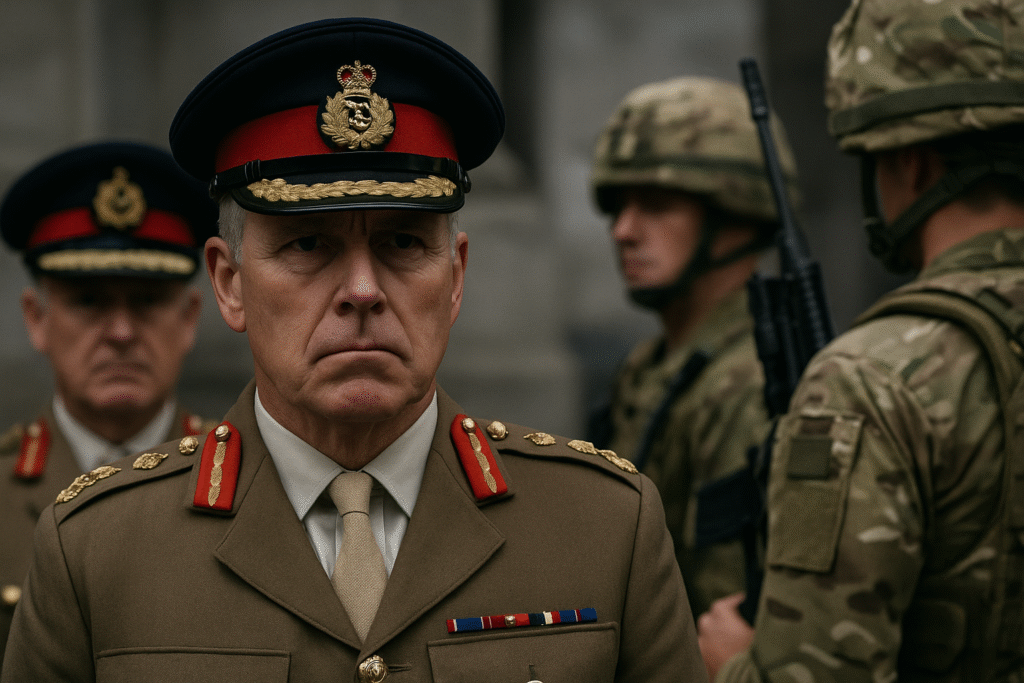
Image Credentials: Image Title: UK Ex-Special Forces Chiefs Accused of Suppressing Evidence of War Crimes in Afghanistan: A Dark Chapter of the SAS Source: (sora.openai) Date: November 2025. Attribution: This image was created using AI-generated imagery (sora.openai) and does not depict a real-world scene.
By Lucas Reid | Staff Writer with Agencies
In an explosive development that continues to shake public trust in the UK’s Special Forces, two former heads of the UK’s Special Air Service (SAS) have been accused of suppressing evidence of war crimes during the conflict in Afghanistan. The allegations, which are at the heart of an ongoing public inquiry, claim that SAS units unlawfully killed detainees, unarmed civilians, and even children during night raids.
The Independent Inquiry into Afghanistan has been examining these accusations, and the testimony of a former high-ranking officer, known only as N1466, has revealed the disturbing extent of the alleged cover-up. According to N1466, two directors of UK Special Forces, including one in 2011 and another in 2012, failed to act on reports that suggested war crimes were being committed by SAS troops. In some cases, they actively suppressed information that could have exposed unlawful killings.
Allegations of War Crimes and a Systematic Cover-Up
The inquiry’s focus is on incidents during night raids, where SAS units allegedly killed Afghan men—many of whom were unarmed and non-combatants—without just cause. According to N1466, these killings were often carried out as part of a systematic approach to eliminating any “fighting-age” males, regardless of whether they posed a direct threat. Some of these deaths occurred during raids in which few weapons were recovered, raising further suspicion about the true nature of the operations.
In one particularly troubling incident in February 2011, nine Afghan men were killed in a raid, but only three weapons were found, prompting an internal investigation. N1466 claimed that this was not an isolated incident and that there were several operations where SAS troops boasted about killing “all fighting-age males,” irrespective of the threat they posed.
The former officer told the inquiry that in 2011, he provided “explosive” evidence of criminal behavior to the then-director of Special Forces, but the leadership chose to suppress the evidence instead of taking appropriate action. N1466 also claimed that the subsequent director, who took over in 2012, was well aware of the problem but failed to report it to the Royal Military Police (RMP) as required by law. The law, according to former Director of Service Prosecutions Bruce Houlder KC, places a clear duty on military commanders to report suspected crimes, including murder.
The Aftermath of the Allegations: A Deepening Crisis
In 2015, N1466 finally reported the evidence to the Royal Military Police, but he expressed regret at not doing so sooner. According to the former officer, the delay allowed further unlawful raids to take place, including one in which two Afghan parents were shot dead in their beds alongside their toddlers. He described this as an example of “deliberate execution,” with the deaths of these civilians never justifiable under the rules of engagement.
The inquiry’s findings are a devastating blow to the SAS’s storied reputation. Known for its elite status and long history of special operations, the SAS has long been viewed as a symbol of military excellence. However, these revelations suggest that a darker, more disturbing side to its operations has been deliberately hidden.
Whistleblower Testimonies and Reactions from Afghan Families
The inquiry has placed a strong emphasis on examining the “deliberate execution” of Afghan males rather than split-second combat decisions, which are sometimes part of the chaotic nature of war. The inquiry is investigating whether SAS units violated the Geneva Conventions and international humanitarian law, which prohibit the killing of unarmed civilians.
Afghan families, who have been waiting for justice for years, have expressed gratitude to N1466 for his candid testimony. However, they are concerned by the reluctance of many soldiers to come forward and provide evidence. Lawyer Tessa Gregory, who represents several Afghan families, stated that her clients were particularly concerned that many soldiers are refusing to testify, which only deepens the sense of injustice.
The two former heads of the UK Special Forces implicated in this cover-up have not yet responded to the inquiry’s findings. The 2012 director has denied the allegations, refuting the claims of war crimes, while the 2011 director has remained silent. Their failure to act, however, has led to calls for accountability and transparency.
The Long Shadow of the Cover-Up
As the inquiry progresses, the public is left grappling with the implications of these revelations. If the allegations are proven, it will cast a long shadow over the reputation of the UK military and Special Forces. The inquiry has already exposed significant failings in the oversight and accountability of military operations in Afghanistan, but whether this will result in meaningful consequences for those responsible remains to be seen.
For N1466, the task of seeking justice has come at great personal cost. His decision to blow the whistle has come with risks, including potential damage to his own reputation and career. However, as he stated, it was a matter of “great regret” that he did not come forward sooner. His courage in speaking out may prove pivotal in holding those responsible for these alleged atrocities to account.
As the UK Special Forces’ dark history in Afghanistan unfolds, the question remains: will those responsible for these war crimes face justice, or will the cover-up continue? Only time will tell.
Sources:
-
BBC News Report: “UK ex-special forces chiefs accused of suppressing evidence of war crimes in Afghanistan”
-
The Independent Inquiry relating to Afghanistan
-
Testimony of N1466, Former High-Ranking UK Special Forces Officer
-
Royal Military Police Protocol on Reporting War Crimes