
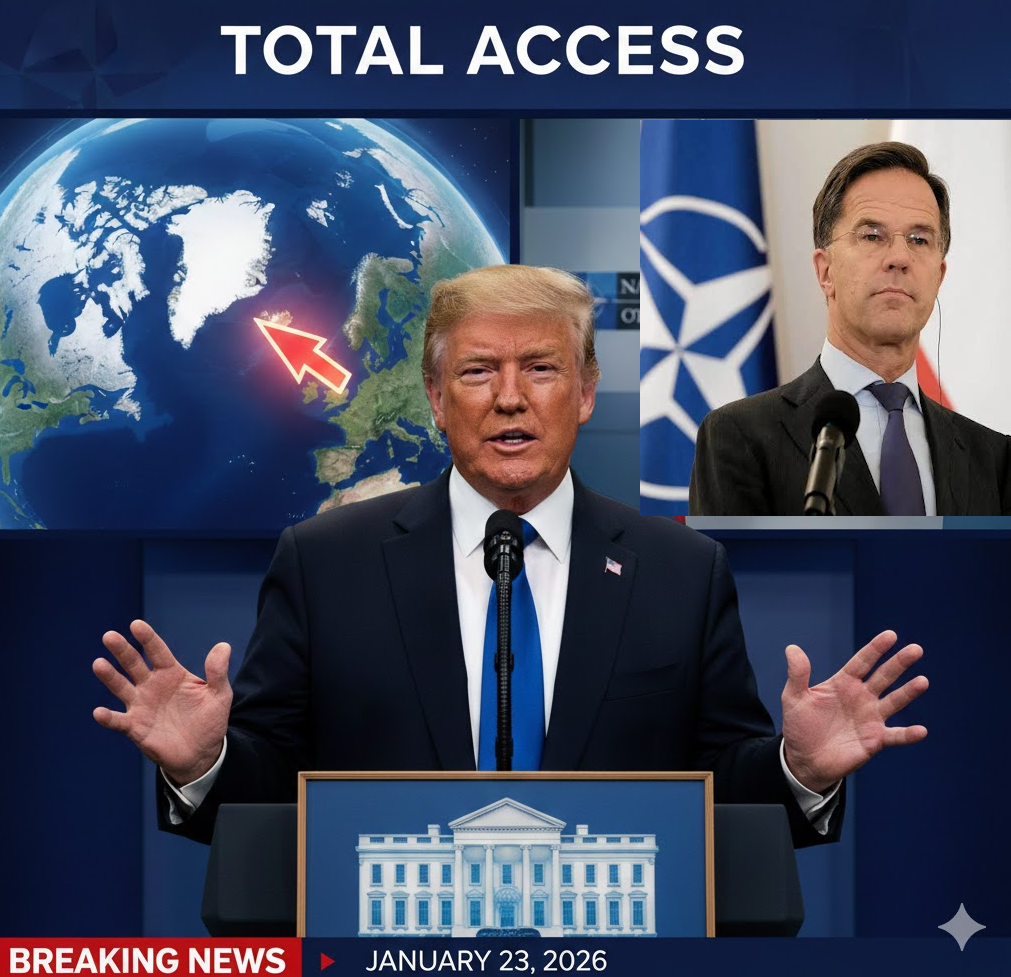
Image Credentials: Image Title: Trump Claims “Total Access” to Greenland as NATO Chief Clarifies Sovereignty Was Not Discussed Source: (Gemini) Date: January 2026. Attribution: This image was created using AI-generated imagery (Gemini) and does not depict a real-world scene.
By Open Chronicle News Desk
BRUSSELS — A diplomatic whirlwind has followed a high-stakes meeting between U.S. President Donald Trump and NATO Secretary General Mark Rutte, as both leaders offered differing interpretations of a new “framework” involving Greenland. While President Trump announced that the United States would gain “total access” to the Arctic territory, Rutte moved quickly to reassure European allies that the island’s sovereignty remains unchanged.
Following their meeting at the White House, President Trump characterized the agreement as a milestone for North American and Western security. He asserted that the deal would allow the U.S. to utilize Greenland’s strategic location and vast resources to counter growing Russian and Chinese influence in the Arctic. “We are going to have total access to Greenland,” Trump told reporters, framing the move as a necessity for the defense of the “entire Western world.”
However, speaking from Brussels, NATO Secretary General Mark Rutte provided a more nuanced account of the deliberations. Rutte emphasized that the discussions focused strictly on “security and defense cooperation” rather than any transfer of land or political authority. “We did not talk about sovereignty,” Rutte stated firmly, clarifying that Greenland remains an autonomous territory under the Kingdom of Denmark.
The discrepancy in rhetoric has caused concern among European leaders. The Danish government and Greenlandic authorities have consistently maintained that the island is “not for sale.” Analysts suggest the “total access” mentioned by Trump likely refers to expanded military infrastructure at Thule Air Base (now Pituffik Space Base) and potential exclusive rights to critical mineral deposits, rather than a territorial purchase.
The White House proposal has sparked a broader debate within NATO regarding Arctic strategy. While the U.S. views the framework as a proactive measure to secure a volatile region, some European allies fear it could set a precedent for undermining the territorial integrity of smaller nations.
As the administration continues to push its “America First” security agenda, the status of Greenland has once again become a flashpoint in Transatlantic relations, testing the balance between strategic necessity and national sovereignty.