
Image: from George Roussos X@baphometx
By Open Chronicle News Desk
ST. PAUL, MN – Minnesota Governor Tim Walz has ordered the activation of the Minnesota National Guard following a fatal shooting involving federal law enforcement officers in Minneapolis, a move that underscores deepening friction between state leadership and federal authorities amid ongoing immigration enforcement operations.
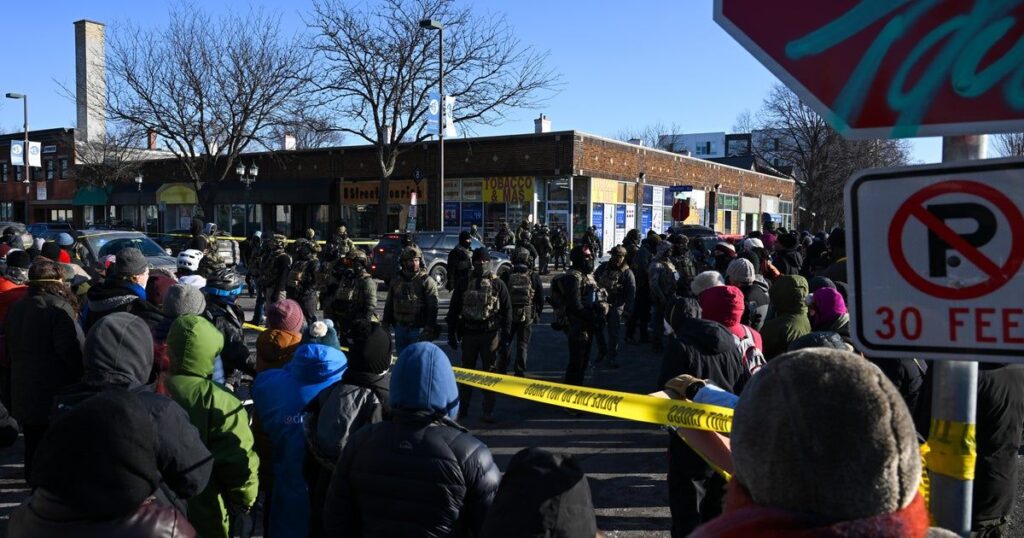
The decision came late Saturday afternoon after a federal immigration agent shot and killed a 37-year-old man in south Minneapolis during an immigration enforcement action. The Hennepin County Sheriff’s Office requested assistance to support deputies at the Whipple Federal Building so county forces could be reallocated where needed, prompting the governor’s order to activate Guard units. The troops are tasked with assisting local law enforcement to protect life and preserve property, as well as support community safety following the incident.
Governor Walz publicly condemned the federal operation, part of a larger deployment known as Operation Metro Surge under the Department of Homeland Security, calling for its end and for federal agents to be withdrawn from Minnesota. He characterized the federal response as an “occupation” that has exacerbated conflict and claimed another life in the state.
Minneapolis requests National Guard assistance – Federal agents shot & killed another person in Minneapolis Saturday. Shooting comes as tensions over a surge in ICE enforcement actions & the earlier fatal shooting of Renee Good have the area on high alert. https://t.co/d50iN2d6rI pic.twitter.com/XudsmUaqtd
— George Roussos (@baphometx) January 24, 2026
This shooting marks the second such fatal encounter between federal agents and Minnesota residents in recent weeks, adding to already heightened tensions. Earlier in January, another federal agent-involved incident in Minneapolis sparked widespread outrage and protests, further straining relations between local communities, state officials, and federal law enforcement.
Walz also criticized reported obstacles in the investigation, alleging that federal officials have denied state law enforcement access to the scene and evidence following this latest shooting. He announced that Minnesota will pursue its own independent investigation through the state justice system, underscoring deep mistrust of the federal account of events.
Community response has varied. Large crowds took to the streets of Minneapolis on Saturday, reflecting both anger over the latest death and broader disillusionment with federal immigration enforcement tactics. Protests have drawn attention to public safety concerns, civil liberties, and questions about the appropriate role of federal agents operating in local jurisdictions.
President Donald Trump, who has deployed thousands of immigration enforcement agents to major cities, including Minneapolis, sharply criticized Gov. Walz and Minneapolis city leadership in social media posts, accusing them of “inciting insurrection” and impeding law enforcement operations. Trump’s comments reflect the intense political dimension of the standoff between state and federal actors.
Amid the unfolding crisis, calls for stronger responses have emerged from national political voices on both sides of the aisle. Some commentators have urged even more robust use of the National Guard to counter federal actions, while others emphasize the need for de-escalation and a sustainable path forward.
As protests continue and legal inquiries advance, Minnesota finds itself at the center of a broader national debate over federal authority, immigration enforcement, and state sovereignty. The activation of the Minnesota National Guard, positioned to support local law enforcement rather than engage directly with protestors or federal officers, signals a significant escalation in how state officials are navigating this contentious moment.