
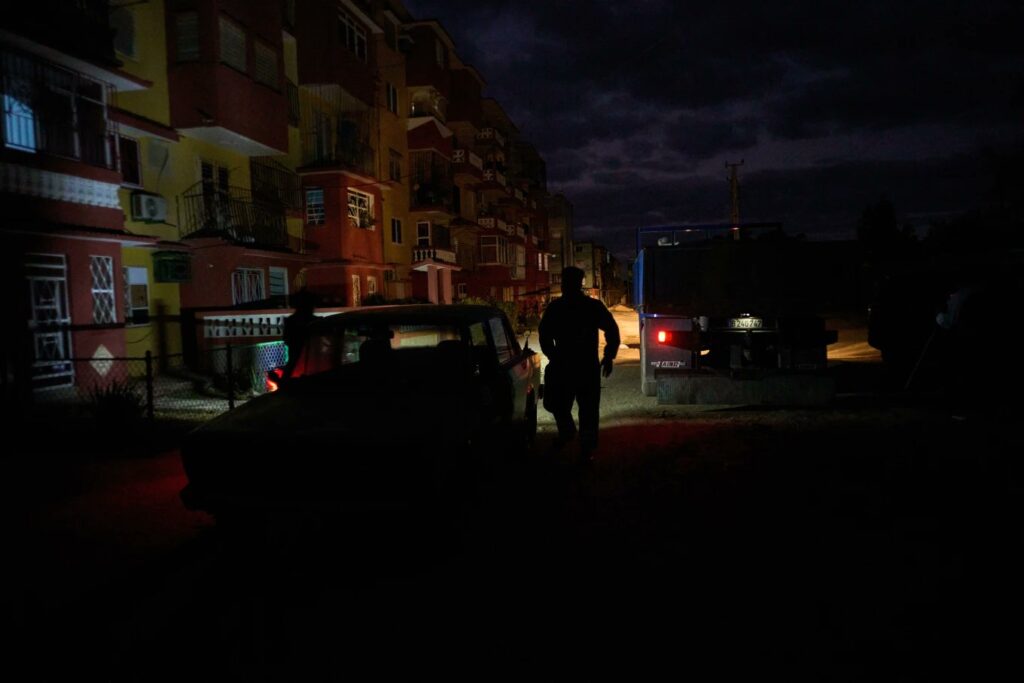
Image: from Sucede News X@SucedeNews
By Open Chronicle Staff | Friday, February 6, 2026
HAVANA — Cuba’s fragile energy infrastructure suffered another major blow this week as a partial collapse of the national electric system plunged the eastern region of the island into darkness. The outage, which occurred late Wednesday night, has affected approximately 3.4 million people, nearly a third of the nation’s population.
According to the state-owned utility Unión Eléctrica (UNE), the crisis was triggered by a sudden failure in a 220-kilovolt high-voltage transmission line in the province of Holguín. The technical malfunction caused a domino effect, leading to the immediate shutdown of the Felton thermoelectric plant, the largest power-generating facility in eastern Cuba.
The blackout hit hardest in the provinces of Holguín, Granma, Santiago de Cuba, and Guantánamo. In Santiago de Cuba, the island’s second-largest city, residents reported a familiar sense of resignation. “It went out around 5:00 PM, but since it happens all the time, I didn’t even realize it was a widespread collapse until later,” said one resident.
Díaz-Canel: "Estado de guerra de ser necesario". 🪖
La realidad: 3.4 millones de cubanos sin luz, sin comida y un sistema energético en ruinas. 🕯️
El régimen prefiere fusiles antes que transformadores. La agonía de una dictadura. 🇨🇺🆘 pic.twitter.com/l2kWDtR8kO— News Day Mundo (@NewsDayMundo) February 6, 2026
A System on the Brink
This latest failure underscores the catastrophic state of Cuba’s energy grid, which has been plagued by decades of underinvestment and a chronic lack of spare parts. Experts estimate that stabilizing the system would require an investment of between $8 billion and $10 billion, funds that the cash-strapped communist government simply does not have.
While authorities managed to synchronize the eastern provinces back to the national grid by Thursday morning, the relief is likely to be short-lived. UNE warned that generation capacity remains severely limited, with nine of the country’s 16 thermoelectric units currently offline for maintenance or due to breakdowns.
Geopolitical Strangles
The energy crisis has been exacerbated by a shift in regional dynamics. Following the recent political upheaval in Venezuela, Cuba’s primary supplier of subsidized oil, shipments have slowed to a trickle. Furthermore, U.S. President Donald Trump recently issued an executive order classifying Cuba as an “unusual and extraordinary threat,” threatening tariffs on any nation, including Mexico, that provides the island with oil.
In a televised address, President Miguel Díaz-Canel expressed a willingness to engage in “equal and respectful” dialogue with the Trump administration to resolve the crisis but maintained that the U.S. embargo remains the “principal obstacle” to the island’s development.
Meanwhile, humanitarian concerns are mounting. UN Secretary-General António Guterres warned this week that without a steady supply of fuel, the island faces a “humanitarian collapse” that could affect water distribution, food preservation, and medical services.
As the sun sets over a dimly lit Havana, the people of Cuba remain caught between a crumbling domestic infrastructure and a tightening international vice, waiting to see if the next flip of a light switch will bring illumination or more darkness.