
Image: from Hamas Atrocities X@HamasAtrocities
By Open Chronicle Staff | Friday, February 6, 2026
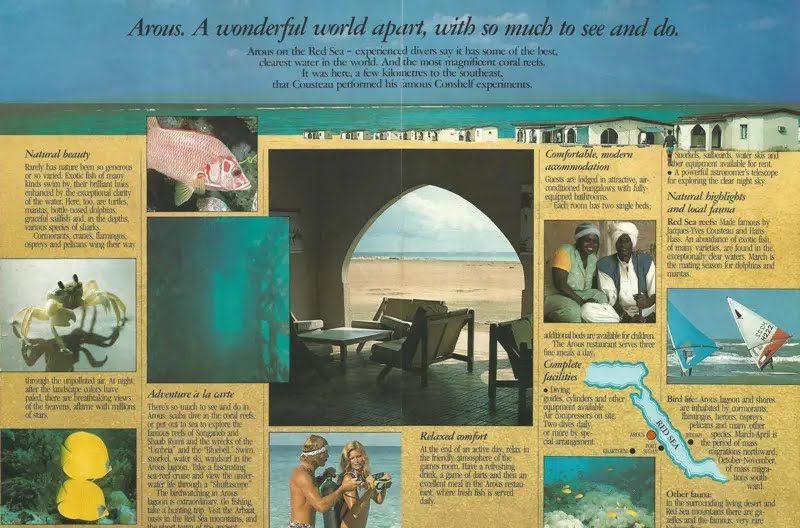
In the early 1980s, travelers flipping through European holiday brochures might have stumbled upon an unlikely destination: a luxury dive resort on Sudan’s Red Sea coast. Known as the Arous Holiday Village, it promised pristine reefs, clear waters, and isolation far from crowded tourist circuits. What those glossy pages did not reveal was that the resort was not merely a business venture. It was a covert operation run by Israel’s intelligence service, Mossad.
At the time, Sudan was officially hostile to Israel, and any Israeli presence on its territory was strictly illegal. Yet Mossad operatives managed to establish and operate the resort openly for years, serving real tourists, advertising internationally, and paying local authorities, all while conducting one of the most audacious humanitarian intelligence missions of the Cold War era.
A cover built on credibility
The idea was simple but risky. A tourist resort provided the perfect cover, foreign staff, unexplained equipment, nighttime activity, and boats coming and going would not automatically arouse suspicion. Mossad agents posed as European diving instructors, hotel managers, and logistics staff. They welcomed guests, organized excursions, fixed generators, and maintained the illusion of a struggling but legitimate tourism venture.
The Sudanese government had little reason to look closely. Tourism was rare but welcome, and the remote coastal area was far from Khartoum’s daily concerns. As long as taxes were paid and guests arrived, the resort was left alone.
The real mission after dark
Once night fell, the resort’s true purpose began. Mossad used the site as a staging point to smuggle Ethiopian Jews, fleeing civil war and famine, out of Sudan. Thousands of Ethiopian Jews had crossed the border into Sudan on foot, often surviving extreme hardship, with the hope of eventually reaching Israel.
From refugee camps, Mossad operatives covertly transported groups to the coast. Under the cover of darkness, inflatable boats ferried them from the beach to Israeli naval vessels waiting offshore in the Red Sea. From there, they were taken to Israel.
Between 1981 and 1984, around 7,000 Ethiopian Jews were rescued through these operations, later known as Operation Brothers and related missions. The success depended entirely on secrecy. Discovery would not only have ended the mission, but could have led to severe diplomatic fallout and the likely execution of those involved.
A fragile balance
The operation required an extraordinary balancing act. By day, agents had to convincingly play the role of hoteliers, dealing with tourists, complaints, and equipment failures. By night, they coordinated clandestine extractions in a hostile country.
Ironically, the presence of real tourists strengthened the cover. Vacationers returned home with genuine stories of a quirky but beautiful Sudanese dive resort, reinforcing its legitimacy. Some guests later recalled odd behavior, unexplained absences, or military-like discipline among staff, but nothing conclusive enough to trigger alarm at the time.
The end of the illusion
The operation eventually became too dangerous to sustain. A political shift in Sudan, coupled with growing suspicion from security services, increased the risk of exposure. Mossad decided to abandon the resort and extract its operatives.
Not long after, Israel conducted Operation Moses, an overt airlift that brought thousands more Ethiopian Jews directly from Sudan to Israel. That operation was cut short when it became public, again underscoring how fragile secrecy was in such missions.
Legacy of an improbable operation
The Arous resort operation has since become legendary within intelligence history. It demonstrated how espionage in the Cold War era was not only about spies and secrets, but about logistics, deception, and human rescue on a massive scale.
More than anything, it showed how intelligence agencies could exploit the ordinary and the mundane. A holiday resort, a place associated with leisure and escape, became a lifeline for thousands fleeing war and persecution.
In retrospect, the most remarkable aspect of the operation may be how long it worked. For years, Mossad ran a luxury dive resort in an enemy country, under the eyes of local authorities and international tourists alike, turning sunbeds and scuba tanks into tools of one of the boldest covert humanitarian missions of the twentieth century.