
Image: from UAVoyager X @NAFOvoyager
OPEN CHRONICLE | Global Perspective. Unfiltered Truth
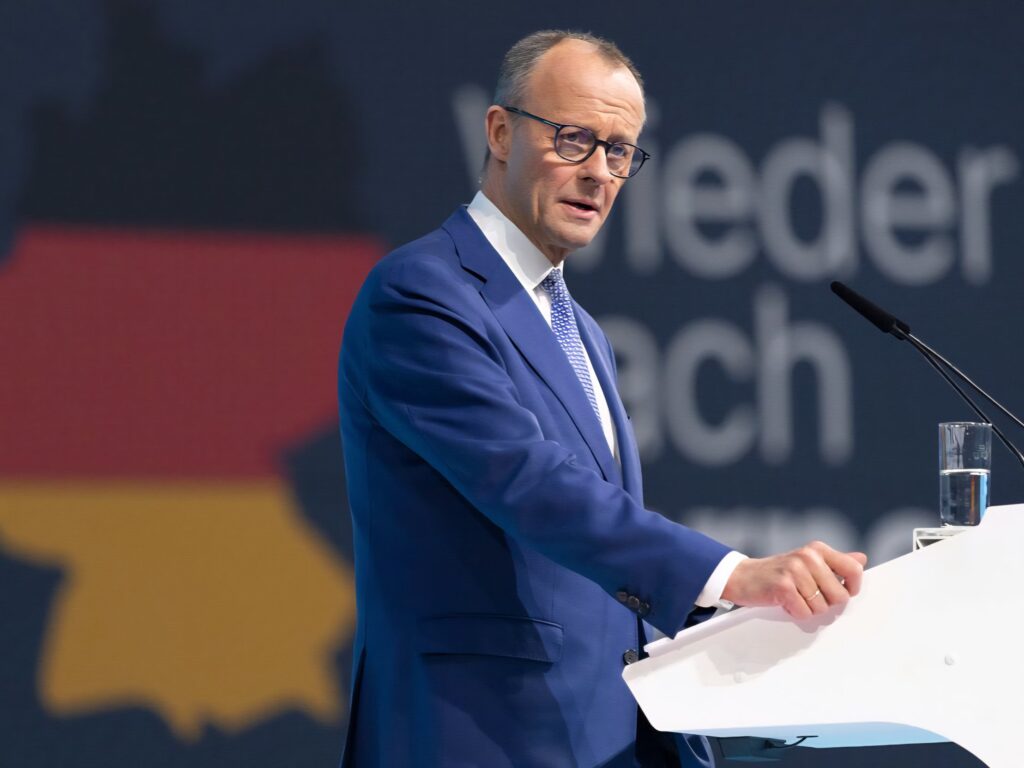
MUNICH — In a somber and historic opening to the annual Munich Security Conference, German Chancellor Friedrich Merz issued a stark warning to the international community, declaring that the traditional rules-based world order “no longer exists.”
Addressing an audience of nearly 50 world leaders, Merz’s keynote speech painted a picture of a fragmenting globe where “freedom is not guaranteed,” and big-power politics have once again taken center stage. The Chancellor’s remarks underscore a growing sense of urgency in Europe as the continent faces a dual challenge: the ongoing war in Ukraine and a deteriorating relationship with its longest-standing ally, the United States.
BREAKING 🚨 🚨
German Chancellor Friedrich Merz warned Friday about the growing divide between Europe and the United States under President Trump’s leadership, saying that in the new era of superpower rivalry, even the U.S. is reaching the limits of its power.
“In the era of… pic.twitter.com/InFo1tAily
— WORLDINTEL24🛜 (@WORLDINTEL24) February 14, 2026
The Great Transatlantic Divide
Perhaps the most striking portion of the Chancellor’s address was his blunt assessment of the “deep divide” between Europe and the U.S. under the current Trump administration. Merz explicitly referenced the “culture war” of the MAGA movement, distancing European values from the current American political trajectory.
“We do not believe in tariffs and protectionism, but in free trade,” Merz stated, directly challenging President Donald Trump’s recent trade policies and his administration’s skepticism of the NATO alliance.
The friction has reached a fever pitch following President Trump’s recent pledges to annex Greenland—a move the White House claims is vital for national security against Russian and Chinese interests in the Arctic. While Trump told reporters on Friday that “Greenland’s gonna want us,” Danish Prime Minister Mette Frederiksen has characterized the move as a threat to sovereignty, seeking urgent talks with U.S. Secretary of State Marco Rubio.
A European Nuclear Pivot?
In a move that signaled a significant shift in European defense strategy, Chancellor Merz announced that “confidential talks” are currently underway with French President Emmanuel Macron regarding the development of a joint European nuclear deterrent.
For decades, Germany and its neighbors have relied on the American “nuclear umbrella.” However, with U.S. commitments to NATO being openly questioned by Washington, Merz suggested that Europe must be ready to make “sacrifices” to ensure its own security.
President Macron, following Merz on stage, echoed this sentiment of self-reliance. He urged Europe to “learn to become a geopolitical power” and to accelerate rearmament in the face of the “existential challenge” posed by Russia’s invasion of Ukraine.
The American Response
U.S. Secretary of State Marco Rubio, representing the American delegation, remained composed as he listened to the European critiques. Earlier in the day, Rubio described the current climate as a “new era in geopolitics,” one that necessitates a comprehensive reevaluation of international roles.
While Merz appealed to the U.S. to “repair and revive transatlantic trust,” the presence of the MAGA movement’s ideology, voiced a year prior at this same conference by Vice-President JD Vance, continues to loom large over the proceedings.
As the conference continues through the weekend, the agenda remains packed with discussions on the Russia-Ukraine war, tensions with China, and the fragile state of nuclear diplomacy with Iran. However, the shadow of a fractured West remains the primary concern for the leaders gathered in Munich.