
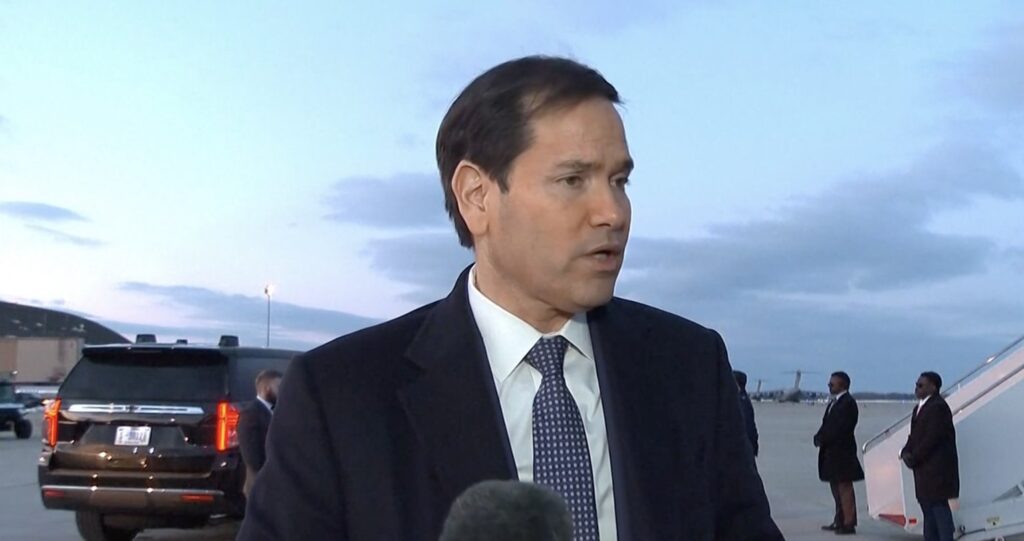
Image: from Jakub Krupa X @JakubKrupa
OPEN CHRONICLE | Global Perspective. Unfiltered Truth
MUNICH — The landscape of global diplomacy underwent a tectonic shift on Friday as U.S. Secretary of State Marco Rubio declared that the “old world is gone,” signaling a definitive end to the post-World War II international order.
His comments, delivered as he arrived for the high-stakes Munich Security Conference, provided a blunt American counterpart to the warnings issued hours earlier by German Chancellor Friedrich Merz. While Merz lamented the collapse of a “rules-based order,” Rubio characterized the current upheaval not as a tragedy, but as an inevitable transition into a “new era of geopolitics.”
🖥️ US Secretary of State Marco Rubio on global change: The old world is gone, and we all need to rethink our role in the "new era of geopolitics."
"The world is changing very quickly, right before our eyes. The old world is gone—frankly, the one I grew up in. We are living in a… pic.twitter.com/qpTJgALqxs
— GEORGE MAMSUROV (@GEORGEMAMSUROV) February 14, 2026
A Defining Moment for Alliances
Rubio, leading the U.S. delegation amid a year of unprecedented friction with European allies, described the current moment as “defining.” He urged nations to move past nostalgia for the 20th-century security architecture and instead “re-examine” their roles in a world increasingly defined by raw power dynamics and bilateral negotiations.
“The world I grew up in is gone, frankly,” Rubio told reporters. “We live in a new era, and it’s going to require all of us to sort of re-examine what that looks like and what our role is going to be.”
The Secretary’s rhetoric reflects the “America First” posture of the Trump administration, which has prioritized national sovereignty and economic protectionism over traditional multilateralism.
The Greenland Shadow
The conference is being held under the long shadow of President Donald Trump’s recent ambitions to acquire Greenland, a move that has stunned European capitals and strained ties with Denmark, a founding NATO member.
While Rubio sought to strike a somewhat more conciliatory tone than Vice President JD Vance’s combative appearance at the same forum last year, the underlying message remained clear: the United States is charting a course that prioritizes its own strategic security interests, even when they clash with the sensitivities of its oldest partners.
Europe’s Existential Choice
The “Old World” that Rubio bid farewell to was one where Europe could depend almost entirely on the American security umbrella. In response to this new reality, Chancellor Merz and French President Emmanuel Macron have begun discussing the once-unthinkable: a joint European nuclear deterrent and a continent that functions as an independent “geopolitical power.”
As world leaders gather for a weekend of intense debate, the consensus in Munich is no longer about how to save the old order, but about who will write the rules for the new one.