
Image: from NahBabyNah X @NahBabyNahNah
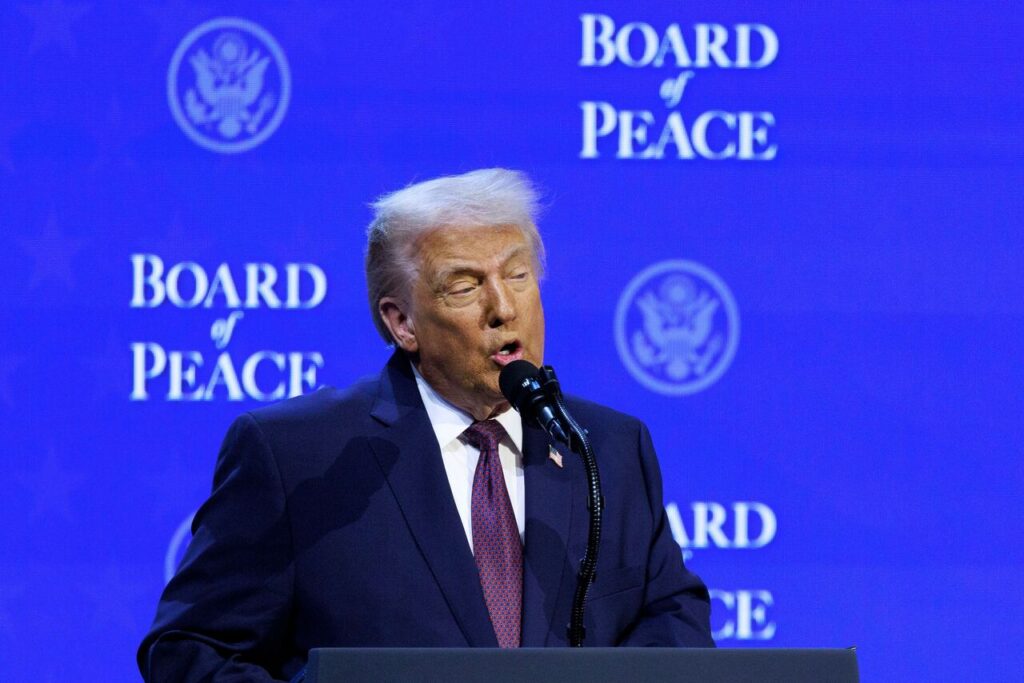
PALM BEACH / WASHINGTON — In a bold move that signals a dramatic shift in Middle Eastern diplomacy, U.S. President Donald Trump announced on Sunday that member states of his newly established “Board of Peace” have committed more than $5 billion toward the reconstruction and humanitarian relief of the Gaza Strip.
The announcement, made via the President’s Truth Social platform, sets the stage for a high-stakes meeting this coming Thursday at the newly renamed Donald J. Trump Institute of Peace. The gathering will mark the first official session of the Board, an organization the administration claims will be a “nimble and effective” alternative to traditional international bodies.
A New Marshall Plan for Gaza?
The pledged funds are intended to jumpstart the rebuilding of the Palestinian enclave, which has been devastated by over two years of conflict. Beyond financial aid, President Trump revealed that member nations, which reportedly include regional powers such as Türkiye, Egypt, Saudi Arabia, Qatar, and Israel, have committed thousands of personnel to a UN-authorized stabilization force and local Palestinian police units.
“This is the Greatest and Most Prestigious Board ever assembled,” Trump stated, emphasizing that the Board will oversee post-conflict governance and transform Gaza into what he has previously described as a potential “seaside metropolis.”
The “Board of Peace” vs. The United Nations
The Board of Peace has already sparked intense debate within the halls of global diplomacy. Unlike the United Nations, the Board operates under a unique charter where permanent membership is reportedly secured through a $1 billion contribution. President Trump serves as the inaugural chairman and holds veto power over its membership.
While the administration maintains that the Board will work “in cooperation” with the UN, critics worry the body is a direct challenge to the United Nations’ role in conflict resolution. Traditional Western allies have remained cautious, while the “five permanent members” of the UN Security Council have yet to sign on to the new framework.
Fragile Peace on the Ground
The $5 billion pledge comes at a critical time. Although a US-backed peace plan facilitated a ceasefire in October 2025, the situation remains volatile. Gaza’s Health Ministry reports that hundreds of Palestinians have been killed in sporadic violence since the truce ostensibly took effect.
The success of the Board’s mission hinges on two major hurdles: Israel’s demand for the full disarmament of Hamas and the Palestinian demand for a definitive timetable for Israeli military withdrawal, neither of which has been fully resolved.
As delegations from over 20 countries prepare to arrive in the U.S. for Thursday’s summit, the world is watching to see if this “business-first” approach to peace can deliver stability where decades of traditional diplomacy have failed.