
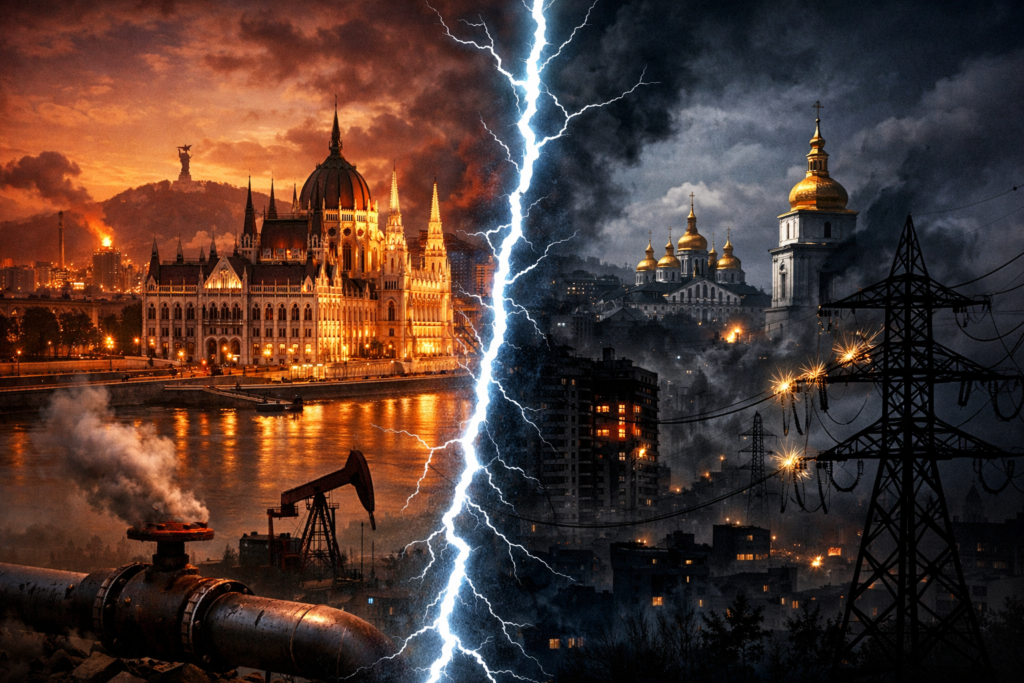
Image Credentials: Image Title: ENERGY WAR: BUDAPEST THREATENS TO CUT POWER TO KYIV AMID OIL STANDOFF Source: (sora.openai) Date: Feb 2026. Attribution: This image was created using AI-generated imagery (sora.openai) and does not depict a real-world scene.
By Chronicle Staff with Agencies
BUDAPEST — In a significant escalation of energy tensions in Central Europe, Hungary has warned it may halt electricity and gas exports to Ukraine if Kyiv does not facilitate the resumption of Russian crude oil flows through the Druzhba pipeline.
The ultimatum, delivered Thursday by Gergely Gulyás, Chief of Staff to Prime Minister Viktor Orbán, marks a new low in the increasingly fractured relationship between Ukraine and its western neighbors, Hungary and Slovakia. Both nations remain heavily dependent on the Soviet-era pipeline for their energy needs.
The Druzhba Disruption
The crisis began on January 27, when oil flows through the Druzhba, one of the world’s largest pipeline networks, were halted. Kyiv maintains the stoppage was caused by a Russian drone strike that severely damaged critical infrastructure. However, officials in Budapest and Bratislava have expressed skepticism, accusing Ukraine of using the technical failure as “political blackmail” to pressure the two Moscow-leaning governments.
“We are considering the option of stopping power and gas shipments towards Ukraine,” Gulyás told reporters, noting that any such move would be strictly coordinated with Slovakia.
The threat is particularly potent given that Ukraine’s domestic energy grid has been decimated by years of Russian strikes, leaving it reliant on emergency power imports from EU neighbors to keep its civilian infrastructure functioning during the winter months.
Strategic Reserves Tapped
With the pipeline remaining dry for weeks, both Hungary and Slovakia have begun tapping into their 90-day strategic oil reserves. On Wednesday, the Slovak government approved a loan of 250,000 tonnes of crude to keep its refineries operational, while Hungary’s energy giant MOL has also requested access to state stockpiles.
In a retaliatory move before Thursday’s announcement, Hungary and Slovakia had already suspended diesel exports to Ukraine, a vital resource for both the Ukrainian military and its logistics sectors.
Geopolitical Friction
The standoff highlights the deep political divide within the European Union regarding the war. While the majority of the bloc has moved to sever energy ties with Moscow, Prime Minister Orbán and his Slovak counterpart Robert Fico have maintained a pragmatic, if controversial, relationship with the Kremlin.
Brussels is currently reviewing a request from the two nations for an emergency exemption to import Russian oil via maritime routes through Croatia. However, with Croatia and other EU members urging a total pivot away from Russian energy, a diplomatic resolution remains elusive.
As the standoff continues, the threat of a “dark winter” looms not just for the refineries of Central Europe, but for the millions of Ukrainians who rely on cross-border energy flows to keep the lights on.