
Image: from Chay Bowes X @BowesChay
BRUSSELS — The European Commission has called for an emergency meeting of energy coordination experts as a deepening dispute over oil transit through Ukraine threatens to fracture the bloc’s unified front and destabilize energy security in Central Europe.
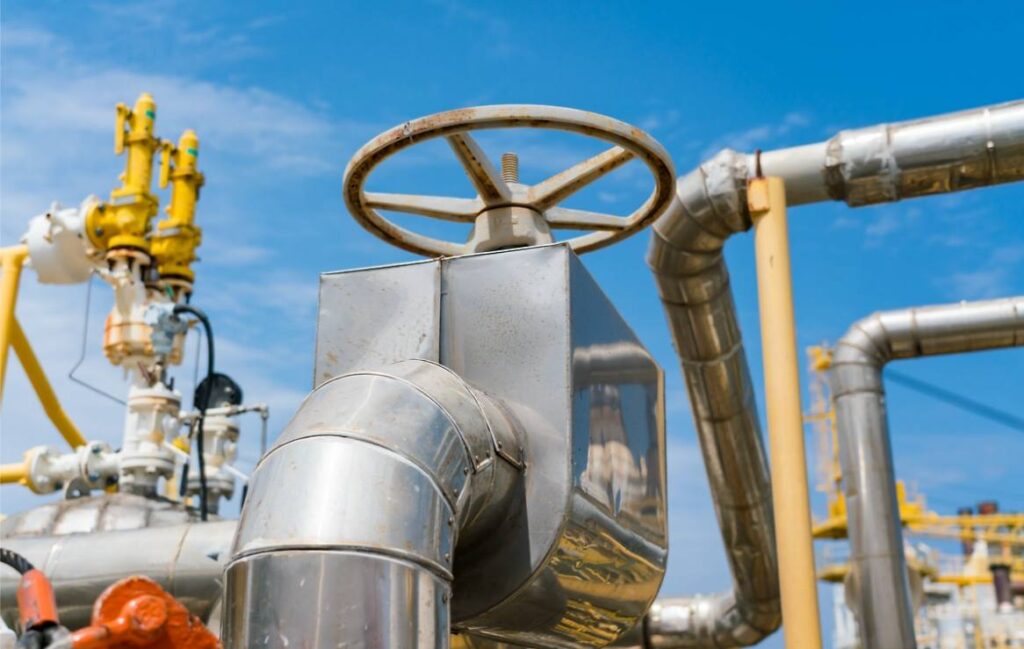
The crisis, which reached a fever pitch on Thursday, centers on the Druzhba pipeline, a critical Soviet-era artery that has supplied Russian crude to landlocked Hungary and Slovakia for decades. Flows through the pipeline have been halted since January 27, following what Kyiv describes as a Russian drone strike on critical infrastructure. However, Budapest and Bratislava have countered with accusations of “political blackmail,” alleging that Ukraine is deliberately obstructing repairs to exert pressure on the two Moscow-leaning governments.
🇭🇺 @FM_Szijjarto says Hungary’s oil supply remains secure, backed by 96 days of strategic reserves and two pipeline routes: Druzhba (via Ukraine) as the main line, with Adria (Croatia) as a supplement.
🛢️ He noted Hungary imported ~4.9 million tons via Druzhba last year vs… pic.twitter.com/kn623x1iMH
— Zoltan Kovacs (@zoltanspox) February 18, 2026
Tit-for-Tat Escalations
The standoff took a sharp turn on Wednesday when Hungary and Slovakia announced a suspension of diesel exports to Ukraine. The move strikes at a vital lifeline for the Ukrainian military and civilian population, which has been grappling with a precarious power grid amidst the winter cold.
“We are also considering the option of stopping power and gas shipments towards Ukraine,” warned Gergely Gulyas, Chief of Staff to Hungarian Prime Minister Viktor Orbán, during a Thursday briefing. He added that the measures are being closely coordinated with Bratislava.
Slovak Prime Minister Robert Fico echoed the sentiment, suggesting that emergency electricity supplies—which help stabilize Ukraine’s war-torn grid, could be the next to be cut if the oil flow does not resume.
The Battle for Alternatives
While Brussels maintains there is “no short-term risk” to supply, noting that both member states hold the mandatory 90-day strategic reserves, the long-term outlook is fraught with legal and logistical hurdles.
Hungary and Slovakia have formally requested an emergency exemption to import Russian oil via the Adria pipeline in Croatia. While EU sanctions generally ban seaborne Russian crude, landlocked nations previously secured “carve-outs” for pipeline oil. Budapest argues that because the pipeline is non-functional, it is legally entitled to receive the same Russian crude via maritime routes.
The proposal has met stiff resistance from Zagreb. Croatian Economy Minister Ante Susnjar stated that while the Adria pipeline has the capacity to assist, “a barrel bought from Russia helps fund war and attacks on Ukrainian people,” urging the two nations to seek non-Russian alternatives instead.
A Fractured Union
The energy row is unfolding against a backdrop of broader geopolitical shifts. Both Viktor Orbán and Robert Fico have been vocal critics of EU military aid to Kyiv and have frequently clashed with Brussels over the bloc’s “REPowerEU” plan, which seeks to phase out Russian energy entirely by 2027.
In Budapest, the timing of the crisis is particularly sensitive. Prime Minister Orbán faces a pivotal election on April 12, and any sustained energy shortage or spike in utility prices could threaten his sixteen-year hold on power.
As the emergency meeting in Brussels nears, the European Commission finds itself in a delicate balancing act: upholding its commitment to Ukraine’s defense while preventing two of its own member states from falling into a full-scale energy emergency, or drifting further into Moscow’s orbit.