
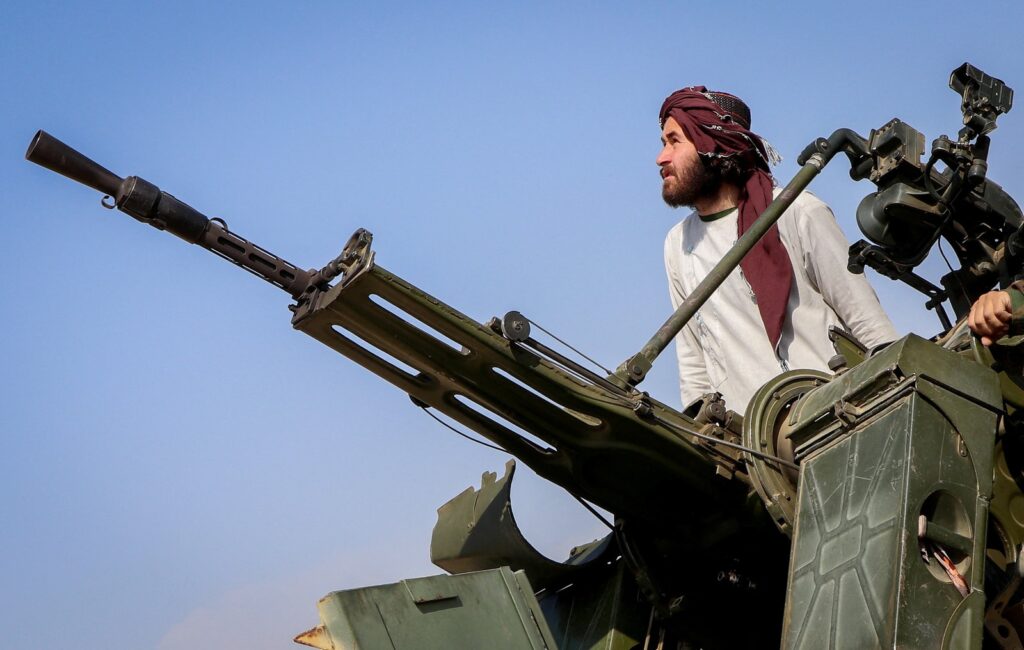
Image: from Al Jazeera English X @AJEnglish
KABUL — Following a dramatic escalation in hostilities that saw Pakistani fighter jets strike multiple targets across Afghanistan, the Taliban government has signaled a willingness to resolve the burgeoning conflict through diplomatic channels.
The overture from Kabul comes as Pakistan’s Defence Minister, Khawaja Asif, declared a state of “open war” on Friday, February 27, 2026. The declaration followed overnight air raids on major Afghan cities, including the capital, Kabul, as well as Kandahar and Paktika.
JUST IN:
Taliban calls for "dialogue" with Pakistan to end ongoing fighting.
-BRICSNews pic.twitter.com/ZZ7hLmemeM
— BABS D (@Barbara14130169) February 27, 2026
Calls for Dialogue Amid “Open War”
Despite the heavy bombardment and soaring rhetoric, Taliban spokesperson Zabihullah Mujahid stated that the Islamic Emirate remains committed to a peaceful resolution.
“We have repeatedly emphasized a peaceful solution and still want the problem to be resolved through dialogue,” Mujahid was quoted as saying by Al Jazeera.
However, the tone from Kabul remains complex. Moments before calling for talks, Mujahid vowed that Afghanistan would respond to “every evil act” and claimed that Taliban forces had already targeted critical military sites within Pakistan, asserting that their “hand can reach [Pakistan’s] necks.”
The Escalation: Operation “Ghazab Lil Haq”
Pakistan launched its military offensive, named Ghazab Lil Haq (Wrath for Truth), in the early hours of Friday. Islamabad justified the strikes as a response to “unprovoked firing” and ongoing support for the Tehreek-e-Taliban Pakistan (TTP).
Reported Impacts of the Strikes:
-
Locations Hit: 22 sites across Afghanistan, including Kabul, Kandahar, Paktia, and Khost.
-
Casualty Claims: Pakistan claims to have killed over 130 Taliban fighters and destroyed 27 border posts.
-
Afghan Counter-Claims: The Taliban government reported at least 55 Pakistani soldiers killed in retaliatory border clashes and noted civilian casualties, including 13 deaths in earlier strikes this week.
A Fragile History of Ceasefires
The current conflict marks the total collapse of a ceasefire brokered by Qatar and Turkey in October 2025. Relations have deteriorated steadily as Pakistan accuses the Taliban of harboring militants. At the same time, the Taliban points to Pakistan’s internal security failures and its growing engagement with India as the true sources of tension.
Former Afghan President Hamid Karzai urged both nations to choose the path of “good neighborliness,” warning that Pakistan cannot free itself from violence by creating more of it.
Global Reaction
The international community has reacted with alarm to the prospect of a full-scale war between the two neighbors.
-
United Nations: Secretary-General António Guterres called for “maximum restraint” and the protection of civilians.
-
Russia & Iran: Both nations have offered to mediate talks to prevent further regional destabilization.
-
India: Condemned the air strikes, describing them as an attempt by Pakistan to “externalize its internal failures.”
As both sides maintain high-alert military postures along the 1,600-mile Durand Line, the success of any potential dialogue hinges on whether Islamabad views the Taliban’s offer as a genuine path to peace or a tactical delay.