
Image: from Open Source Intel X @Osint613
By Open Chronicle Staff with Agencies
Rising instability in the Middle East continues to dominate global headlines as Gulf states tighten security, diplomatic rifts widen, and economic risks mount. Saudi Arabia has pledged decisive defensive measures, Qatar says it has dismantled Iran-linked cells, and Washington has escalated tensions with Spain over military base access.
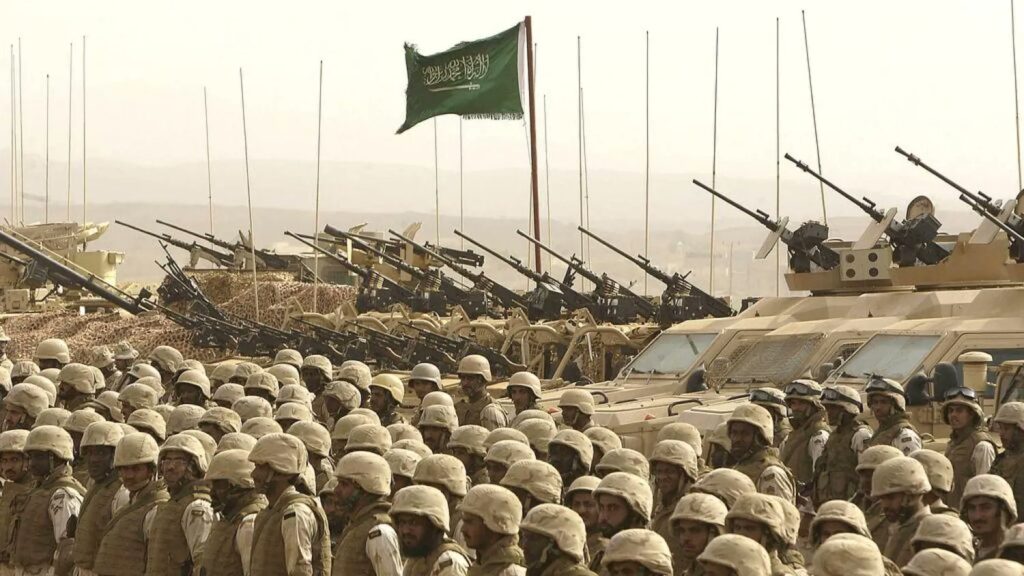
Saudi Arabia Vows to Defend Its Security
Saudi Arabia’s Cabinet said it will take all necessary measures to defend the kingdom’s security and protect its territory, citizens, and residents amid deepening regional turmoil.
The virtual Cabinet session was chaired by Crown Prince Mohammed bin Salman, according to the Saudi Press Agency. Ministers reviewed the impact of ongoing US-Israeli attacks on Iran and Tehran’s retaliatory strikes on regional and international stability.
The Cabinet also examined diplomatic outreach related to the crisis and praised statements by leaders of friendly countries condemning what it described as Iranian attacks on Saudi Arabia, other Gulf Cooperation Council states, and Jordan.
Qatar Says It Dismantled IRGC-Linked Cells
Qatar announced it had dismantled two cells linked to Iran’s Islamic Revolutionary Guard Corps operating inside the country.
According to the Qatar News Agency, state security forces arrested 10 suspects following surveillance operations. Seven were allegedly tasked with espionage missions targeting vital and military facilities, while three others were accused of preparing sabotage operations and had received drone training.
Authorities said they seized coordinates of sensitive sites, communication devices, and technological equipment. The announcement underscores heightened security concerns across Gulf states as regional hostilities intensify.
Trump Moves to Sever Trade With Spain
US President Donald Trump said he will cut off all trade with Spain after Barcelona prohibited the US from using bases on its territory to conduct attacks on Iran.
Speaking in the Oval Office alongside German Chancellor Friedrich Merz, Trump said Washington no longer wants trade ties with Spain in response to the refusal.
Madrid rejected the claim, stating that the US has neither used nor will use Spanish military bases to carry out strikes against Iran and reaffirming that it maintains full sovereign control over its facilities. The dispute risks widening transatlantic tensions at a time of already fragile global alliances.
Regional Developments
Turkish President Recep Tayyip Erdogan held talks with Pakistani Prime Minister Shehbaz Sharif on bilateral relations and regional developments. Turkish Foreign Minister Hakan Fidan criticized Iran’s strategy of targeting Gulf countries indiscriminately, calling it deeply misguided.
US Secretary of State Marco Rubio said all personnel were accounted for after a drone struck a parking lot adjacent to the US Consulate in Dubai.
French President Emmanuel Macron voiced disapproval of the US-Israeli strikes on Iran, saying they fall outside the framework of international law.
In Lebanon, two people were killed in an Israeli airstrike targeting a motorcycle in the south. Hezbollah said it downed an Israeli drone and struck a Merkava tank. The United Nations Interim Force in Lebanon reported Israeli soldiers crossing into border areas, describing the move as a violation of UN Security Council Resolution 1701.
Oman said two drones were intercepted in Dhofar Governorate and another crashed near Salalah Port, while the US Embassy in Beirut announced it would close until further notice due to escalating tensions.
Business and Economic Fallout
Energy and industrial sectors are feeling the strain of the widening conflict.
QatarEnergy announced it is suspending production of several downstream products, including urea, polymers, methanol, and aluminum, after previously halting liquefied natural gas production in Ras Laffan and Mesaieed due to military attacks.
At the Milken Institute’s Future of Finance event in Washington, IMF First Deputy Managing Director Daniel Katz warned that the Middle East conflict poses serious risks to global inflation and economic growth. While the global economy had been expected to expand at a solid pace before the escalation, he said the duration and intensity of the conflict will determine the ultimate economic impact.
Meanwhile, OpenAI said it is revising a recently announced agreement to provide artificial intelligence tools to the US Department of Defense after criticism that the deal was rushed and raised concerns over domestic surveillance.
Growing Uncertainty
As diplomatic strains deepen and military operations continue, Gulf states are reinforcing security while global markets brace for further disruption. The interplay between defense measures, alliance tensions, and economic pressures will shape the trajectory of the crisis in the days ahead.