
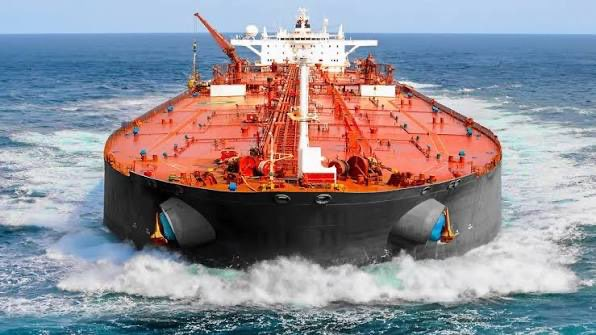
Image: from Washington Eye X @washington_EY
By Open Chronicle Staff with Agencies | March 11, 2026
PARIS / WASHINGTON, D.C. — In a historic, unanimous move, the International Energy Agency (IEA) has authorized the release of 400 million barrels of oil from global strategic reserves, the largest coordinated intervention in the organization’s 52-year history. The decision reflects the growing desperation of world leaders as the U.S.-Israeli war with Iran enters a critical phase, effectively severing the world’s most vital energy artery.
IEA Executive Director Fatih Birol characterized the release as a “decisive act of solidarity” intended to stabilize markets that have been whipsawed by the effective closure of the Strait of Hormuz. “Energy security is our founding mandate,” Birol stated. “While this release is unprecedented, the most important factor for stability remains the resumption of transit through the Strait.”
THE SCALE OF INTERVENTION
The 400-million-barrel surge is more than double the volume released during the 2022 Ukraine crisis. Analysts note that this volume is equivalent to roughly 20 days of the oil typically flowing through the Strait of Hormuz.
-
Japan: Pledged the largest individual share outside the U.S., announcing the release of 80 million barrels starting March 18.
-
Germany: Will contribute 19.5 million barrels.
-
United Kingdom: Set to release 13.5 million barrels from its emergency stocks.
MARKET WHIPSAW: THE “WRIGHT” BLUNDER
The IEA’s announcement comes on the heels of a chaotic 24 hours for global oil traders. On Tuesday, markets were sent into a “tailspin” after U.S. Energy Secretary Chris Wright posted a claim on X (formerly Twitter) that the U.S. Navy had successfully escorted a tanker through the Strait of Hormuz.
The news caused WTI crude futures to plummet 15% in minutes, only to rebound violently when the White House issued a categorical denial, blaming the post on a “staffing error” and an “incorrect caption.” Hedge fund managers have since accused the administration of “market manipulation,” as the “fear premium” returned to oil prices alongside a new layer of skepticism toward official U.S. communications.
THE DEPLETED SHIELD
While the IEA release provides a temporary buffer, experts warn that the global “shield” is thinning. The U.S. Strategic Petroleum Reserve (SPR) currently sits at approximately 415 million barrels, barely 58% of its total capacity, following years of drawdowns and slow replenishment efforts hampered by damage to the salt cavern storage facilities.
“This release can help the world weather a closure for 45 to 50 days,” warned Homayoun Falakshahi, an analyst at Kpler. “But if this war continues into mid-April, the reserves alone cannot prevent a global economic crisis.”
TRUMP’S MIXED SIGNALS
The market volatility is being exacerbated by conflicting rhetoric from the White House. While President Trump has described the war as a “little excursion” that is “pretty much complete,” Defense Secretary Pete Hegseth signaled Wednesday that the “aggressive phase” of the air campaign is only just beginning.
With oil prices currently hovering around $90 per barrel—easing from a peak of $120 earlier this week—the IEA’s gamble is clear: they are buying time for a diplomatic or military resolution before the global tanks run dry.