
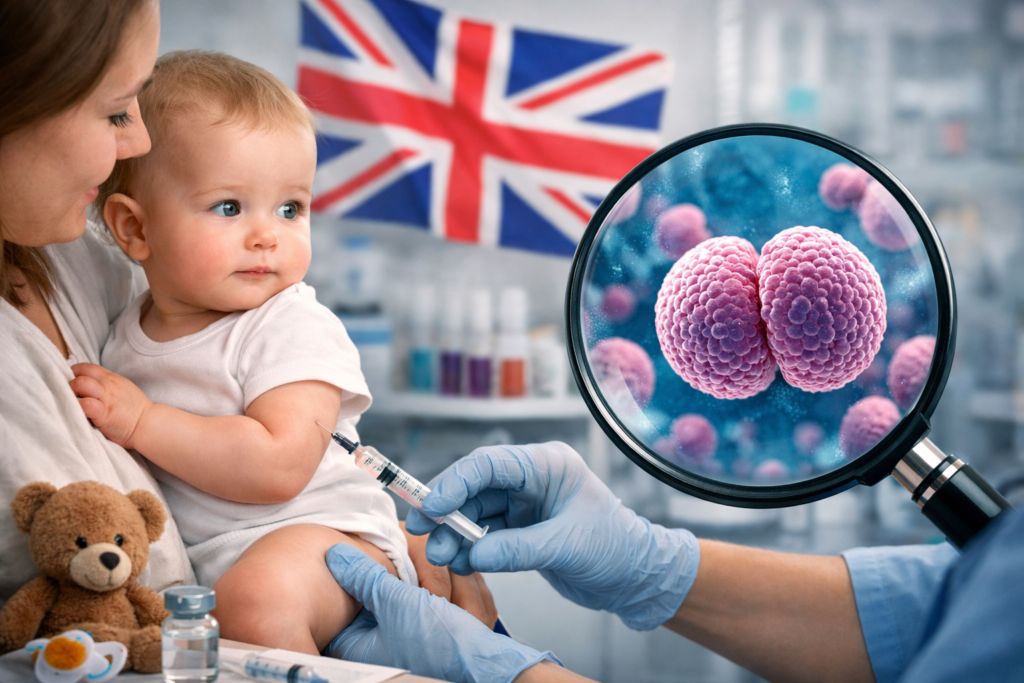
Image Credentials: Image Title: THE DEFENSE BEGINS AT INFANCY: UK’S UNIVERSAL MENINGITIS B VACCINATION UNDER THE MICROSCOPE Source: (sora.openai) Date: March 2026. Attribution: This image was created using AI-generated imagery
AS CAMPUS OUTBREAKS SPARK ALARM, EXPERTS REVISIT THE SUCCESS OF THE WORLD-FIRST INFANT IMMUNIZATION PROGRAM
By OPEN CHRONICLE STAFF
LONDON — As the recent tragic events at the University of Kent bring the dangers of Meningitis B back into the national spotlight, public health officials are pointing to the UK’s landmark infant vaccination program as the primary line of defense for the next generation. Since 2015, the UK has led the world in offering the MenB vaccine as part of its routine childhood immunization schedule, a policy that has significantly altered the landscape of pediatric medicine.
The vaccine, known commercially as Bexsero, is administered to babies at two months, four months, and one year of age. While the recent campus outbreak involves young adults who were born just before the universal rollout, the data for those within the vaccinated age bracket tells a story of remarkable success.
A “Killer” Held at Bay
Meningitis B is a devastating bacterial infection that causes inflammation of the brain and spinal cord lining. It is notoriously fast-moving, with the ability to kill an otherwise healthy child within 24 hours. For those who survive, the long-term consequences can include limb amputations, hearing loss, and brain damage.
“The introduction of the MenB vaccine into the routine schedule was a watershed moment for child health in the UK,” said Dr. Helen Arkwright, a specialist in pediatric infectious diseases. “Before 2015, MenB was the leading cause of bacterial meningitis in this country. Since then, we have seen a dramatic and sustained reduction in cases among the immunized cohorts.”
The “Gap” Generation
The current anxiety on university campuses highlights a “protection gap.” The students currently in higher education were mostly born between 2004 and 2007, missing the 2015 universal rollout by nearly a decade. While many parents opted for private vaccinations during their teenage years, the lack of a catch-up program for that specific generation has left them vulnerable to the “carrier” nature of the bacteria, which often circulates harmlessly in the throats of adolescents before turning invasive.
Public health advocates are now calling for the government to consider expanding the MenB program to include a booster for school-leavers, similar to the existing MenACWY vaccine currently given to teenagers.
Managing Post-Vaccination Fever
One of the most common concerns for parents since the program’s inception has been the “fever spike” associated with the MenB shot. Unlike other routine vaccinations, the MenB jab is known to cause a high temperature in more than half of infants.
The NHS currently recommends that all babies receiving the MenB vaccine be given infant paracetamol immediately after the appointment. “It’s a small price to pay for protection against such a lethal disease,” said a spokesperson for the Meningitis Research Foundation. “We urge parents not to be deterred by the fever; it is a sign that the baby’s immune system is learning how to fight the bacteria.”
A Global Model
The UK remains one of the few countries to offer the MenB vaccine for free to all infants. The program’s success is being closely monitored by health ministries across Europe and North America, many of whom still reserve the vaccine only for “high-risk” individuals due to the high cost of the Bexsero drug.
As the University of Kent works to contain its current cluster, the message from health officials is clear: the goal is a future where “ghost town” campuses are a thing of the past. By starting protection at eight weeks old, the UK is attempting to build a wall of immunity that follows children into adulthood.