
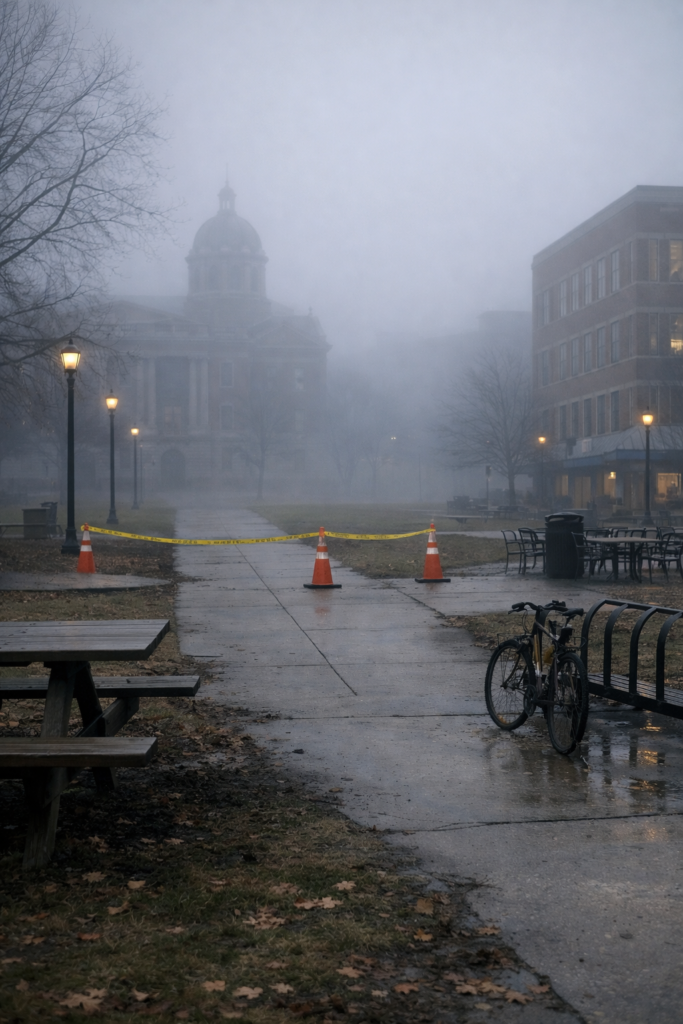
Image Credentials: Image Title: CAMPUS CLOUDED BY FEAR: MENINGITIS OUTBREAK TURNS UNIVERSITY INTO “GHOST TOWN” Source: (sora.openai) Date: March 2026. Attribution: This image was created using AI-generated imagery
TWO DEAD, 13 HOSPITALIZED AS KENT STUDENTS FLEE SUDDEN MENINGITIS B SURGE
By OPEN CHRONICLE STAFF with Agencies
CANTERBURY — The University of Kent resembled a desolate relic of the 2020 pandemic Tuesday morning as a deadly outbreak of Meningitis B triggered a mass exodus of the student population. With two confirmed deaths and 13 others currently battling the infection in local hospitals, the campus has been transformed into an “eerily quiet” landscape of abandoned courtyards and shuttered lecture halls.
The crisis, which appeared with terrifying speed, has forced the cancellation of all exams and prompted a frantic emergency medical response as students and staff scramble for preventative antibiotics.
Meningitis outbreak declared a national incident.
Information from UKHSA 👉 https://t.co/Y3Z9UoZyFh
Important information in threads for young people and families
1/ https://t.co/pO5aVyLAxy pic.twitter.com/HelH9sIhmG
— Safe Air Schools UK (@SafeAirSchoolUK) March 17, 2026
A Pre-Dawn Retreat
The sounds of trundling suitcases on pavement replaced the usual morning chatter as undergraduates headed for Canterbury station. Parents from across the UK reportedly arrived in the middle of the night to collect their children, with some drivers seen wearing blue face masks, a visual echo of the COVID-19 era.
“I’m heading back home to London as soon as I can,” said Tom Jefferson, 20, who was among the first in a long queue for medicine. “A lot of my friends have left already. It’s cold, but once I get the pill, that’s me done for the day.”
By 8:15 AM, forty-five minutes before the emergency medical center opened, dozens were already lined up, maintaining a somber one-meter distance from each other. While the queue had vanished by mid-morning, it was only because the campus itself had effectively emptied.
“Terrifying” Speed of Infection
The atmosphere at the Tyler Court accommodation block, where at least one student was reportedly removed on a stretcher, remains one of panic. Ethan Norris, a member of the university’s housekeeping department, described a 100-minute wait for antibiotic prophylaxis.
“We’ve heard that two people have passed away,” Norris said. “It’s just something we needed to do.”
His partner, Nancy O’Sullivan, a primary school teacher, noted the speed of the evacuation. “I’m seeing social media videos of people being picked up in the middle of the night just to get out of here. Students are too scared to be on campus. You don’t know how far it has spread.”
The Isolated and the Stranded
While domestic students have the luxury of retreating to family homes, the outbreak has left the university’s international community in a state of precarious isolation. Near the campus center, international students were seen in tears, paralyzed by the inability to flee across borders.
“I’m just terrified, and I want to go home to my family,” one student from China said through a blue surgical mask. “I can’t though… I don’t know what to do.”
A Hollowed-Out Economy
The economic ripple effects of the “ghost town” were immediate. While the campus Co-op and Caffe Nero opened their doors as usual, they remained virtually empty. The only signs of normal life were two solitary litter pickers continuing their rounds amidst the abandoned grounds.
Medical experts have noted that while Meningitis B is severe, the prompt administration of antibiotics to those in close contact with the infected is highly effective. However, for a university community already traumatized by the memory of national lockdowns, the psychological scars of this “sudden” epidemic may take far longer to heal than the physical threat itself.
As of Tuesday evening, University of Kent officials have not provided a timeline for the resumption of academic activities, advising all remaining students to stay in their rooms and monitor for symptoms, including high fever, headache, and the characteristic blotchy rash.