
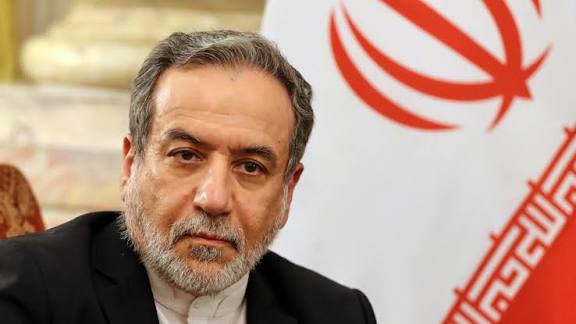
Image: Open Source Intel X @Osint613
By Open Chronicle with Agencies
TEHRAN – Iranian Foreign Minister Abbas Araghchi has leveled a formal accusation of “complicity in aggression” against the United Kingdom, denouncing the British government’s decision to allow the United States to utilize its military bases for operations in the ongoing Middle East conflict.
The diplomatic firestorm erupted following a tense Saturday telephone conversation between Araghchi and his British counterpart, Foreign Secretary Yvette Cooper.
"In the past hour we've heard Irans foreign minister has told the UK that providing military bases for the US will be considered participation in aggression"
Of course it is. Despite what our govt & complicit media are telling us, we've been dragged into this war. pic.twitter.com/7jBkOYCotX
— Saul Staniforth (@SaulStaniforth) March 20, 2026
“Recorded in History”
In a statement released by the Iranian Foreign Ministry today, Araghchi warned that London’s logistical support for Washington would have long-lasting consequences for bilateral relations.
“These actions will definitely be considered as participation in the aggression and will be recorded in the history of relations between the two countries,” Araghchi told Cooper, according to the Iranian readout.
He further asserted that Iran maintains its “inherent right” to defend its sovereignty under Article 51 of the UN Charter, particularly after being targeted by what he described as “blatant aggression” by the U.S. and Israel.
The “Starmer Shift”
The dispute centers on Prime Minister Keir Starmer’s recent policy reversal. Earlier this month, the UK government authorized the U.S. military to use RAF Fairford in Gloucestershire and the joint Diego Garcia base in the Indian Ocean.
The approval is strictly limited to “defensive purposes,” specifically aimed at intercepting Iranian missiles before they can be launched at regional allies. However, this follows a period of intense friction within the “Special Relationship.”
-
Initial Denial: Starmer, a former human rights lawyer, originally denied the request on February 28, citing concerns over international legal frameworks.
-
Trump’s Rebuke: U.S. President Donald Trump publicly criticized the delay, mocking Starmer as “no Winston Churchill” and claiming the refusal forced U.S. bombers to fly “many extra hours.”
-
The Compromise: Faced with mounting pressure and a deteriorating security situation, 10 Downing Street pivoted to allow limited access, emphasizing that the UK is not participating in offensive strikes.
A Region in Flux
The Iranian accusation comes at a moment of extreme regional volatility. While the UK maintains that its role is focused on a “defensive shield” to protect British personnel and allies in Qatar, Jordan, and Cyprus, Tehran views any facilitation of U.S. airpower as a direct act of war.
Foreign Secretary Yvette Cooper reportedly used the call to urge a reduction in regional tensions and called for the reopening of the Strait of Hormuz to stabilize global energy markets. Nevertheless, with Tehran now labeling British soil as a platform for “aggression,” the diplomatic rift between London and Tehran appears wider than ever.