
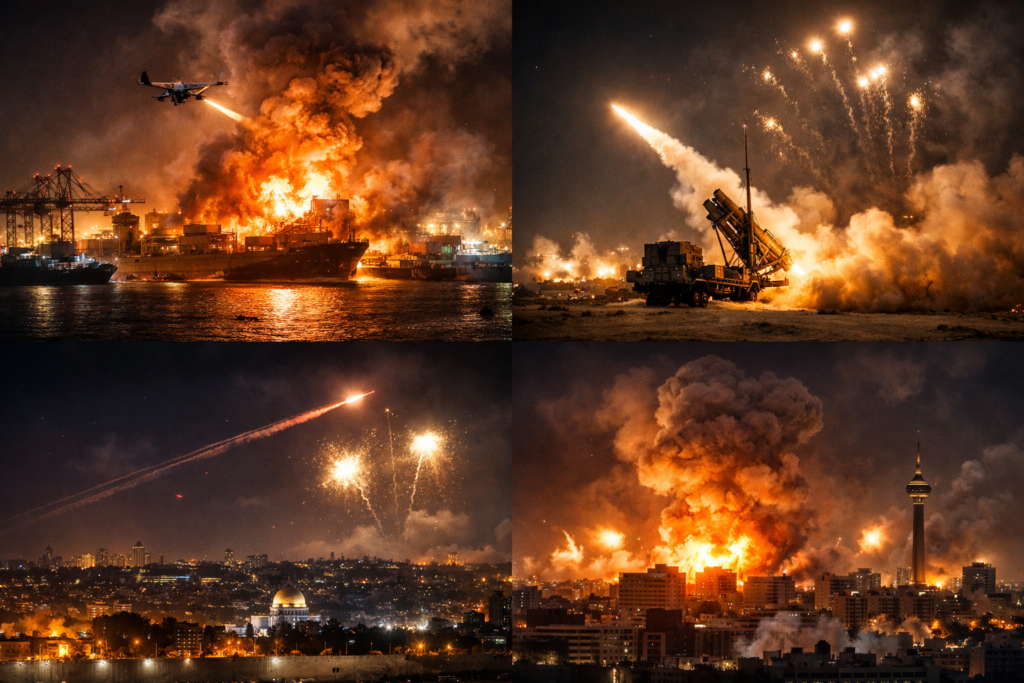
Image Credentials: Image Title: Global News Brief: Key Events and Developments for March 29, 2026 Source: (sora.openai) Date: March 2026. Attribution: This image was created using AI-generated imagery
By Open Chronicle with Agencies
The war involving the United States, Israel, and Iran continues to deepen its human and economic impact as of March 30, 2026, with new data highlighting the devastating toll on civilians, mounting military casualties, and a rapidly worsening humanitarian crisis across the region.
Civilian Death Toll in Iran Reaches New Levels
Iranian authorities reported that at least 237 women and more than 200 children have been killed in US-Israeli attacks over the past 25 days.
According to the country’s Emergency Organization, over 4,000 women and 1,600 minors have also been injured since the war began. The figures point to a widening humanitarian catastrophe, with civilians, particularly vulnerable populations, bearing the brunt of the conflict.
A deadly strike in Isfahan further underscored the trend, killing dozens, many of them women and children, in a residential area.
US Troops Suffer Rising Casualties
The war is also taking a growing toll on US forces. According to reports, more than 300 American troops have been wounded, many suffering from traumatic brain injuries caused by drone strikes and explosive blasts.
The injuries highlight the evolving nature of the battlefield, where one-way attack drones and indirect fire are inflicting significant damage without large-scale ground engagements.
Lebanon’s Children Face Mass Displacement
The humanitarian crisis is particularly severe in Lebanon, where the UNICEF reports that an average of 19,000 children are being displaced every day.
In just three weeks, more than 370,000 children have been forced from their homes, a scale of displacement that reflects the intensity of Israeli airstrikes and the collapse of civilian safety in large parts of the country.
Regional Tensions Continue to Escalate
Across the region, military activity remains intense:
- Drone attacks targeted key infrastructure in Kuwait, including major ports
- Air defenses in Saudi Arabia and the United Arab Emirates intercepted incoming threats
- Missile sirens sounded across Israel amid continued Iranian retaliation
Explosions were also reported in Tehran as US-Israeli strikes persisted.
Expanding Conflict Zones
Multiple theaters remain active and increasingly interconnected:
- In Lebanon, continued airstrikes have killed civilians and damaged infrastructure
- In the West Bank, Israeli raids injured civilians
- In the Strait of Hormuz, tensions threaten global shipping and energy flows
The growing number of flashpoints suggests the war is evolving into a broad regional confrontation.
Diplomatic Efforts Struggle to Contain Crisis
International actors are increasingly calling for de-escalation:
- Wang Yi emphasized the need for US-Iran talks
- European officials, including Friedrich Merz, questioned the effectiveness of continued military escalation
- The G7 urged an end to attacks on civilians and infrastructure
Meanwhile, indirect diplomatic efforts continue, with countries like Pakistan offering to host negotiations.
Global Economic Shockwaves Intensify
The الحرب is sending shockwaves through global markets:
- Brent crude prices have surged above $110 per barrel amid fears of supply disruption
- Gold prices climbed past $4,500 per ounce as investors seek safe havens
- Japan’s bond yields reached their highest level since 1999, reflecting inflation concerns driven by rising energy costs
Disruptions in the Strait of Hormuz, which carries roughly one-fifth of global energy supplies, remain a central concern.
War Beyond the Battlefield
The conflict is no longer confined to military exchanges. It is reshaping societies, displacing populations, straining global markets, and testing the limits of international diplomacy.
With civilians increasingly at the center of the conflict and humanitarian conditions deteriorating rapidly, the trajectory of the conflict suggests a prolonged and deeply destabilizing crisis with consequences far beyond the Middle East.