
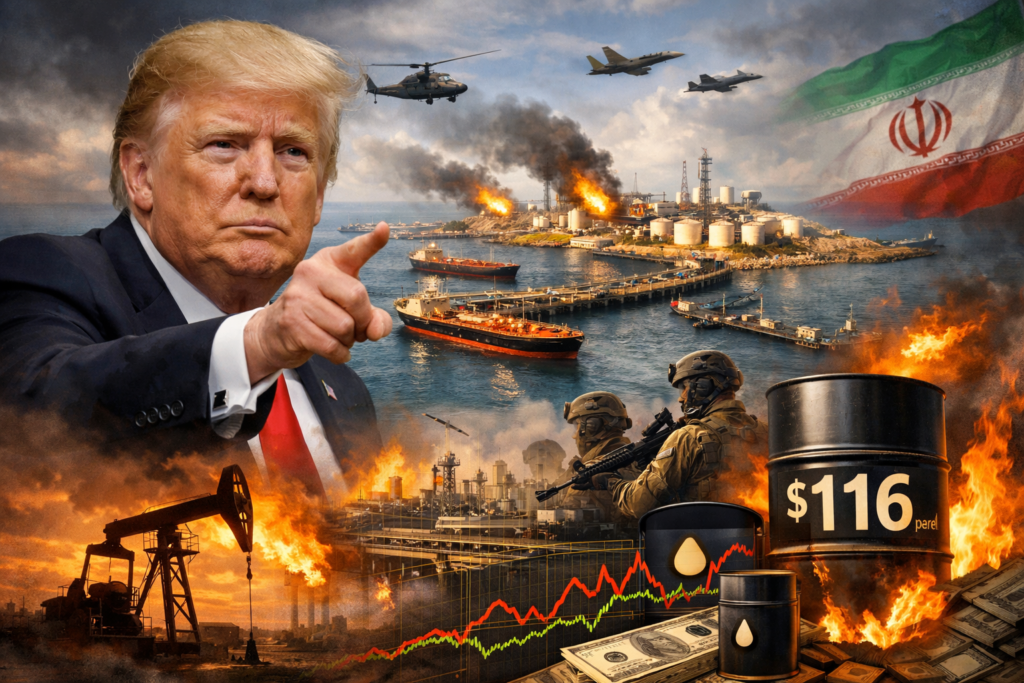
Image Credentials: Image Title: Global News Brief: Key Events and Developments for March 30, 2026 Source: (sora.openai) Date: March 2026. Attribution: This image was created using AI-generated imagery
By Open Chronicle with Agencies
The conflict between the United States, Israel, and Iran deepened on March 30, 2026, as rhetoric intensified, civilian casualties mounted, and strategic ambitions around energy and territory came into sharper focus.
Iran Accuses US of Strategic Shift After Military Setbacks
Iran’s parliamentary speaker, Mohammad Bagher Qalibaf, accused Washington of attempting to achieve its war objectives through a 15-point political and strategic plan after failing to secure results through military force.
He warned that while the United States is publicly signaling openness to negotiations, it is simultaneously preparing for a potential ground invasion. Tehran, he said, is fully prepared to respond decisively to any such move, raising the stakes for a direct land confrontation.
Civilian and Educational Losses Continue to Rise
The human cost continues to grow, particularly within Iran’s education sector. According to official figures, at least 281 students and teachers have been killed since the start of the US-Israeli campaign.
The toll includes 222 students, several young children, and dozens of educators, with an additional 185 individuals injured. These figures underscore the deepening humanitarian crisis and the long-term societal impact of the conflict.
Trump Signals Oil Seizure Strategy
In a striking statement, US President Donald Trump suggested that controlling Iran’s energy resources could become a central objective of the war.
He indicated that the United States could move to seize Kharg Island, a critical export terminal, stating that his “preferred” outcome would be to “take the oil.” The comments, made amid a surge in global oil prices, point to a possible shift from military containment to economic domination.
Brent crude has risen above $116 per barrel, reflecting growing fears over supply disruptions as the conflict threatens key transit routes.
Strait of Hormuz Emerges as Strategic Flashpoint
Trump also stated that the United States is already taking steps to control the Strait of Hormuz, a vital corridor through which a significant portion of the world’s oil supply passes.
Any attempt to dominate this chokepoint would represent a major escalation, with potentially global economic consequences and a heightened risk of confrontation with regional powers.
Regional Attacks and Retaliation Continue
The broader Middle East remains under sustained military pressure:
- Iran launched new missile barrages toward Israel, triggering widespread air raid sirens
- The United Arab Emirates and Saudi Arabia intercepted drones and aerial threats
- Bahrain reported hundreds of interceptions since the war began
- A deadly strike targeted infrastructure in Kuwait, including a power and desalination facility
Meanwhile, explosions continued to be reported in Tehran as US-Israeli strikes persisted.
Lebanon and Gaza Remain Active Fronts
Violence intensified across secondary theaters:
- In Lebanon, Israeli airstrikes killed at least 11 people, while a UN peacekeeping site was also shelled
- In Khan Younis, Israeli attacks killed civilians amid ongoing hostilities
Israeli Prime Minister Benjamin Netanyahu announced plans to expand military operations in southern Lebanon, signaling a prolonged campaign.
Diplomatic and Religious Tensions Surface
The conflict is also triggering diplomatic friction beyond the battlefield. European leaders, including Emmanuel Macron and Giorgia Meloni, condemned Israel’s decision to block Cardinal Pierbattista Pizzaballa from entering a church in Jerusalem during Palm Sunday.
The incident has raised concerns over religious freedom and added a new dimension to international criticism.
Energy and Geopolitical Realignment Underway
In a parallel development, the US allowed a Russian tanker to deliver oil to Cuba, signaling a pragmatic shift in energy policy amid tightening global supply.
The move highlights how the war is reshaping alliances and forcing unexpected adjustments in global energy flows.
A War Expanding Beyond the Battlefield
As military operations intensify and strategic goals evolve, the conflict is increasingly defined not only by airstrikes and missile exchanges but by competition over resources, trade routes, and geopolitical influence.
With the Strait of Hormuz, Kharg Island, and regional infrastructure now central to the confrontation, the war is entering a phase where economic control and territorial leverage may prove as decisive as military force.