
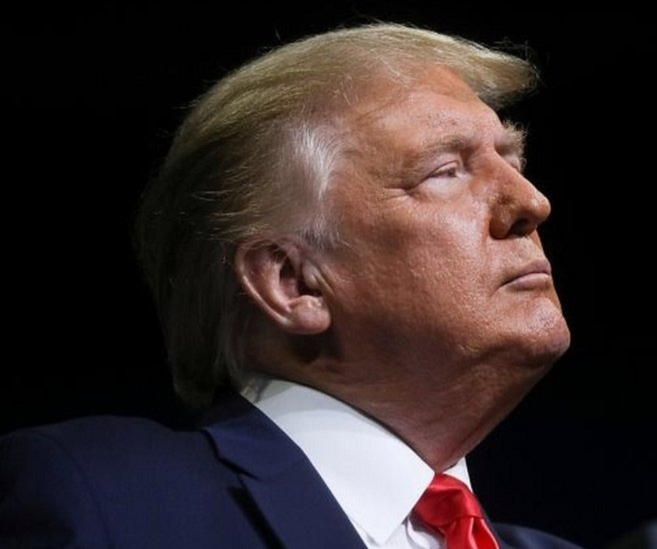
Image: from Mario Nawfal X @MarioNawfal
By Open Chronicle Staff with Agencies
SINGAPORE – Global energy markets were thrown into a fresh tailspin on Thursday, with oil prices leaping more than 7 percent after President Donald Trump vowed to escalate military operations against Tehran. The surge represents the sharpest daily gain in three weeks, as traders brace for a prolonged supply shock and a potential total blockade of the Strait of Hormuz.
By the close of early trading, Brent crude futures soared by $7.65, or 7.6 percent, to settle at $108.81 per barrel. Simultaneously, U.S. West Texas Intermediate (WTI) surged $7.06, or 7.1 percent, reaching $107.18 per barrel.
A Violent Market Reversal
The rally marked a dramatic “U-turn” for the markets. Earlier in the day, both benchmarks had actually dipped by more than $1 as investors held out hope that the President’s primetime address might signal a diplomatic off-ramp or a ceasefire.
Stocks are set to fall sharply on Thursday, while oil prices are surging after President Trump vowed to continue strikes on Iran and offered no new plan to reopen the Strait of Hormuz. https://t.co/xrV8q0Yw0P
— CBS News (@CBSNews) April 2, 2026
Instead, the President doubled down on Operation Epic Fury, declaring that the U.S. would hit Iran “extremely hard over the next two to three weeks.” The absence of a de-escalation timeline or any specific plan to reopen the strategic Strait of Hormuz sent a wave of panic through trading floors from Singapore to London.
“All the Cards” vs. Market Reality
While President Trump insisted during his address that the U.S. holds “all the cards” and that Iran’s infrastructure has been “eviscerated,” energy experts warn that the “war premium” is now firmly baked into global prices.
“Markets reacted to the total absence of diplomatic engagement,” one senior analyst noted. “The President is talking about bringing Iran back to the ‘Stone Age,’ but the collateral damage to the global energy supply chain is what the markets are actually pricing in right now.”
Shipping at a Standstill
The surge is being compounded by a breakdown in maritime logistics:
-
Benchmark Halts: Some traders have reportedly halted all dealings tied to the Dubai crude benchmark due to the extreme physical risks of accessing ports near the Strait.
-
Direct Attacks: Recent reports of cruise missile strikes on tankers, including one leased to QatarEnergy, have made the waterway a “no-go zone” for many international insurers.
-
Strategic Silence: President Trump’s call for other nations to “just take and protect” the Strait for themselves has created a leadership vacuum in maritime security, further driving up the cost of transit and insurance.
The Looming Supply Gap
The International Energy Agency (IEA) warned earlier this week that the “shield” of pre-war oil contracts is beginning to fail, particularly for European economies. As the U.S. prepares to target Iranian electric generating plants, the likelihood of a “dark” Middle East has pushed many analysts to predict that oil could test the $120 mark if the “next phase” of strikes begins as promised.
For American consumers, the President attributed the rising pain at the pump to Iranian “terror attacks,” but on Wall Street, the focus remains squarely on the White House’s next move and the resilience of a “shadow fleet” that continues to defy claims of total annihilation.