
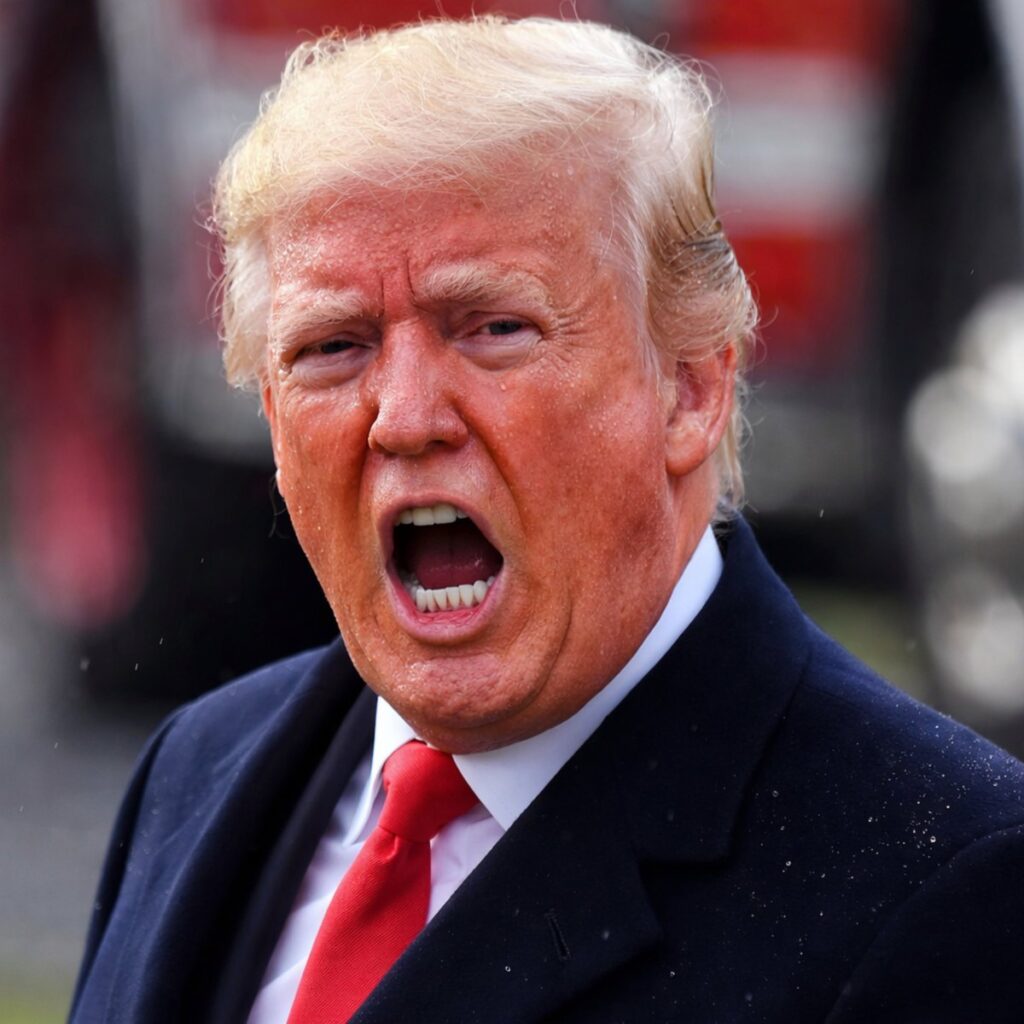
Image: from World NEWS X @World_NEWSHD
By Open Chronicle Staff with Agencies
Friday, April 10, 2026
WASHINGTON/BEIRUT — U.S. President Donald Trump warned overnight that the two-week ceasefire with Iran is on shaky ground, accusing Tehran of doing a “very poor job” of honoring its commitment to reopen the Strait of Hormuz.
JUST IN – Trump: "Iran is doing a very poor job, dishonorable some would say, of allowing Oil to go through the Strait of Hormuz. That is not the agreement we have!" pic.twitter.com/nUZXYUtZHY
— Insider Paper (@TheInsiderPaper) April 9, 2026
The President’s comments on Truth Social underscore the fragility of a truce intended to halt a devastating six-week war that began on February 28 with the assassination of Iranian Supreme Leader Ali Khamenei. As negotiators from Washington and Tehran prepare to meet in Islamabad, Pakistan, on Saturday, the maritime corridor remains at the heart of the global crisis.
🚨NOW: ⚡President Trump just CALLED OUT Iran for disobeying the agreement by constricting the Strait of Hormuz
“Iran is doing a very poor job, dishonorable some would say, of allowing Oil to go through the Strait of Hormuz. That is not the agreement we have!
FAFO IS WAITING 🔥 pic.twitter.com/OebkgDwAix
— vanhoa (@vanhoa2272) April 10, 2026
The “Strait of Hormuz” Bottleneck
Despite the April 8 ceasefire agreement, shipping traffic through the world’s most vital oil artery remains minimal. Iran’s Deputy Foreign Minister, Dr. Saeed Khatibzadeh, claimed the Strait is “open” but insisted that all vessels must seek “guidance” from Iranian authorities.
-
Trump’s Response: “That is not the agreement we have,” Trump posted, signaling that the U.S. views any Iranian interference or “guidance” as a violation of the truce.
-
The “Toll” Controversy: Reports have surfaced that Iran seeks to impose a $1 per barrel transit fee on oil passing through the Strait—a move British Prime Minister Sir Keir Starmer condemned, calling for “toll-free navigation” as a non-negotiable part of the final settlement.
Kuwait Blames Iran for Drone Strikes
Adding to the tension, Kuwait officially blamed Iran and its proxies for a series of overnight drone strikes targeting its Shuwaikh oil complex, government ministries, and power plants. While the Iranian Revolutionary Guard denied involvement, the attacks have fueled fears that Iran is using its regional proxies to maintain pressure on U.S. allies during the ceasefire window.
Netanyahu Opens Lebanon Track
In a parallel diplomatic development, Israeli Prime Minister Benjamin Netanyahu announced he has approved direct talks with the Lebanese government, set to begin next Wednesday in Washington.
-
The Goal: Netanyahu stated the talks would focus on “disarming Hezbollah” and establishing “peaceful relations.”
-
The Conflict: The move comes after a week of intense Israeli bombardment of Beirut that killed over 300 people on Wednesday alone.
-
The “Truce” Dispute: Netanyahu maintains there is no ceasefire in Lebanon, whereas Iran and Pakistan argue that Lebanon is covered under the original 10-point truce plan.
The Path to Islamabad
A U.S. delegation led by Vice President JD Vance is scheduled to arrive in Islamabad tomorrow to begin formal negotiations for a permanent peace. The talks are expected to be contentious, with the U.S. demanding the total elimination of Iran’s uranium stockpile and Iran demanding the withdrawal of all U.S. forces from the Middle East.
Since the war began on February 28, the United Nations estimates that thousands have been killed and over 1.2 million people have been displaced in Lebanon. As the 1,250-kilometer front remains locked in a tense “hold,” the world’s focus remains on whether the Islamabad talks can turn a two-week reprieve into lasting stability.