
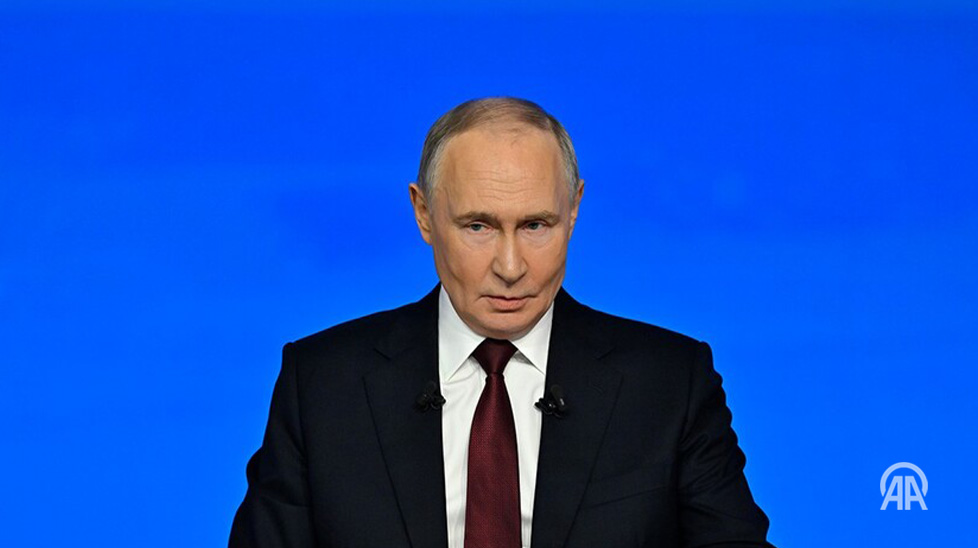
Image: from Anadolu English X @anadoluagency
By Open Chronicle Staff with Agencies
Thursday, April 9, 2026
MOSCOW/KYIV — Russian President Vladimir Putin has unilaterally declared a 32-hour ceasefire in Ukraine to observe the Orthodox Easter weekend, according to a decree released by the Kremlin on Thursday. The temporary pause is scheduled to begin at 4 p.m. on Saturday, April 11, and last until the end of Sunday, April 12.
The announcement follows a week of diplomatic maneuvering. Ukrainian President Volodymyr Zelenskyy had previously proposed a holiday truce through U.S. mediators, specifically suggesting that both sides cease targeting each other’s energy infrastructure. This sector has faced renewed attacks in recent months as the war enters its fifth year.
Zelensky said that Ukraine will support the Easter ceasefire announced by Putin
“We proposed a ceasefire during the Easter holidays this year and will act accordingly. People need an Easter without threats and real movement toward peace, and Russia has a chance not to return to… pic.twitter.com/8o6bD6thPM
— NEXTA (@nexta_tv) April 10, 2026
Terms and Expectations
The Kremlin’s statement emphasized that while Russian forces have been ordered to “cease hostilities in all directions,” they remain in a high state of readiness.
“Troops are to be prepared to counter any possible provocations by the enemy, as well as any aggressive actions,” the Kremlin noted. “We assume that the Ukrainian side will follow the example of the Russian Federation.”
As of late Thursday, there has been no formal response from Kyiv. Historically, such unilateral declarations have been met with skepticism; a similar 30-hour ceasefire declared by Putin last Easter was largely ignored, with both nations trading accusations of violations within hours of its commencement.
A War in the Shadow of Global Shifts
The timing of the ceasefire comes at a critical juncture in the 1,250-kilometer (800-mile) front-line conflict:
-
Stalled Negotiations: U.S.-led peace talks have effectively hit a stalemate, with Washington’s diplomatic and military focus shifting toward the escalating conflict in the Middle East.
-
Battlefield Slowdown: Analysts from the Institute for the Study of War (ISW) note that while fighting remains intense in the Donetsk region, the overall pace of Russian advances has slowed. This is partially attributed to Russia’s loss of access to Starlink satellite terminals and its own internal bans on the Telegram messaging app, both of which were vital for coordinating drone strikes.
-
Energy Warfare: Ukraine has recently ramped up drone strikes on Russian oil ports and refineries, contributing to a spike in global energy prices—a tactic intended to pressure Moscow’s economy during the Middle East crisis.
Orthodox Easter 2026
Orthodox Easter, which falls on April 12 this year, remains one of the few cultural touchstones shared by both populations. While the Kremlin presents the move as a humanitarian gesture, Ukrainian officials have previously characterized short-term truces as “hypocritical” tactical pauses used by Russia to regroup and resupply.
With the international community’s attention elsewhere, the success of this 32-hour window will serve as a bellwether for whether any “comprehensive settlement” remains possible in a war that has defined European security for half a decade.