
Image: from Visegrád 24 X @visegrad24
Open Chronicle | With Agencies
Paris — European leaders have accelerated plans for a multinational naval mission to secure shipping in the Strait of Hormuz, signaling continued concern over global trade stability despite Iran declaring the waterway open during the current ceasefire.
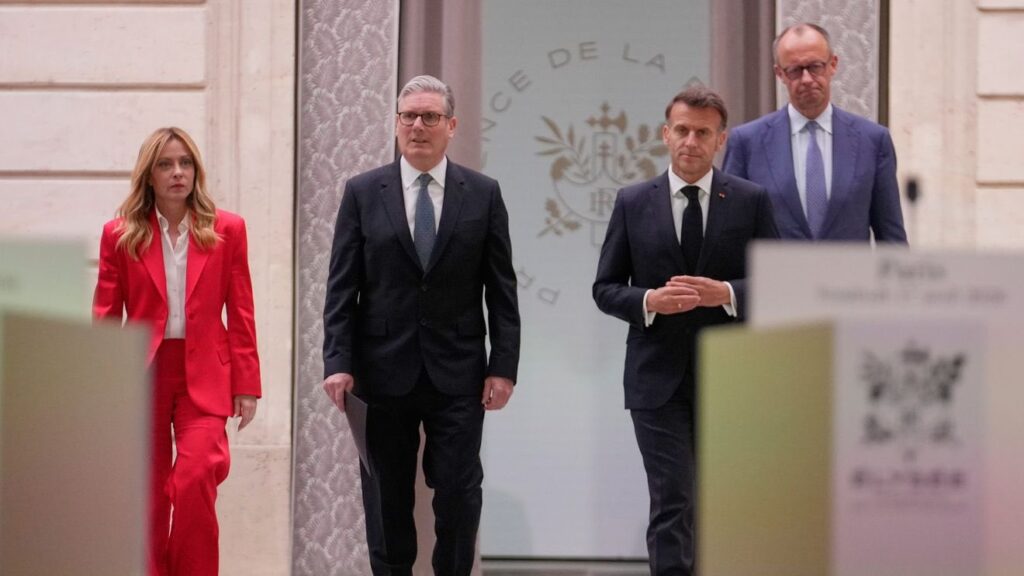
The initiative was discussed at a high-level meeting in Paris co-chaired by Emmanuel Macron and Keir Starmer, bringing together representatives from 49 countries, many attending via video conference.
🇬🇧🇫🇷 – EARLIER: VIDEO: Now that the war is basically over and the Straight of Hormuz is already fully opened, UK Prime Minister Sir Keir Starmer has arrived in Paris to co-host talks with French President Emmanuel Macron on reopening the Strait of Hormuz…. pic.twitter.com/DjJga7b5YB
— Belaaz News (@TheBelaaz) April 17, 2026
A Defensive Mission in the Making
🚨 BREAKING: Keir Starmer says the UK will lead a defensive military mission with France to protect shipping in the Strait of Hormuz pic.twitter.com/QUPKaywjou
— Politics UK (@PolitlcsUK) April 17, 2026
European officials described the proposed operation as neutral and defensive, designed to ensure freedom of navigation and prevent further disruptions in one of the world’s most vital trade routes.
Although Tehran has pledged to keep the strait open for the duration of the ceasefire, leaders in Paris emphasized that the situation remains fragile and requires additional safeguards.
Macron welcomed the ceasefire developments involving both Iran and Lebanon, describing them as steps in the right direction. However, he stressed that access to the strait must be “full, immediate and unconditional,” rejecting any attempt to impose restrictions or commercial tolls on passage.
🇮🇹 Italy will provide naval units for Strait of Hormuz mission — Giorgia Meloni
“It's in line with missions we've done in the past” pic.twitter.com/Dj2XCZFttS
— Sprinter Press Agency (@SprinterPress) April 17, 2026
Diverging Approaches With Washington
The European initiative notably excludes the United States, reflecting a strategic divergence between allies.
Donald Trump has maintained that the U.S. naval blockade of Iranian ports will remain in force until a comprehensive agreement with Tehran is reached.
European governments have refused to participate in the blockade, arguing that doing so would effectively draw them into the conflict. Instead, they are seeking an independent framework focused on securing maritime routes without direct involvement in hostilities.
Growing International Support
Starmer confirmed that military planning for the mission is being accelerated, with a follow-up conference scheduled in London to refine operational details. More than a dozen countries have already expressed willingness to contribute naval assets or logistical support.
The scale of participation reflects the global importance of the Strait of Hormuz, through which roughly 20 percent of the world’s oil and liquefied natural gas supplies typically pass.
Weeks of disruption have already had far-reaching consequences, including stranded vessels, rising energy prices, and tens of thousands of seafarers caught in uncertainty.
Broader Strategic Concerns
European leaders highlighted that the stakes extend beyond energy markets. Giorgia Meloni pointed to the importance of maintaining the flow of fertilisers, which are essential for global food security.
She indicated that Italy would be prepared to contribute to a future mission, focusing on ensuring safe navigation and potentially assisting in mine detection efforts.
Meanwhile, Friedrich Merz warned that failure to contain the crisis could lead to a broader and more complex global conflict. He suggested that Germany could support the operation, including through mine clearance capabilities, and expressed openness to eventual U.S. participation.
A Fragile Path Forward
Despite Iran’s announcement of reopening the strait, European leaders remain cautious, viewing the current moment as a temporary easing rather than a lasting resolution.
The planned mission reflects a broader effort to restore confidence in global shipping routes while preparing for the possibility of renewed instability once the ceasefire expires.
As diplomatic efforts continue, the success of the initiative will depend on coordination among international partners and the willingness of regional actors to maintain restraint.