
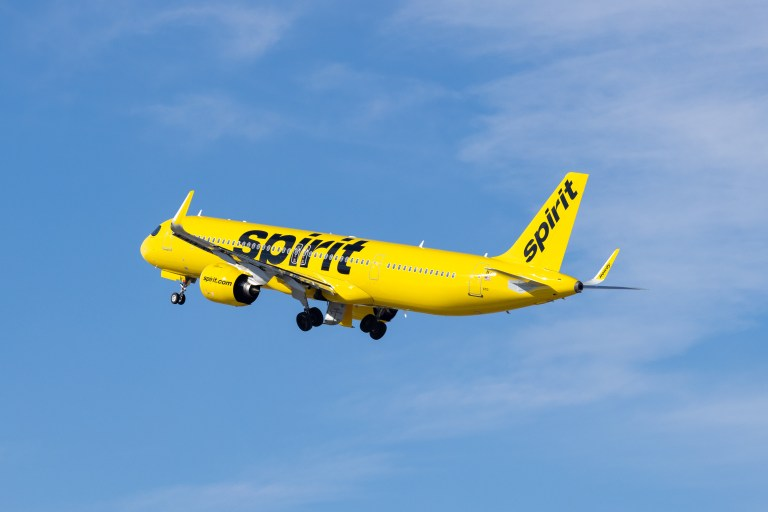
Image: from Disclose.tv X @disclosetv
By Open Chronicle with Agencies
Spirit Airlines announced early Saturday that it has ceased all operations after failing to secure a $500 million federal bailout, marking the abrupt end of one of America’s most prominent budget carriers.
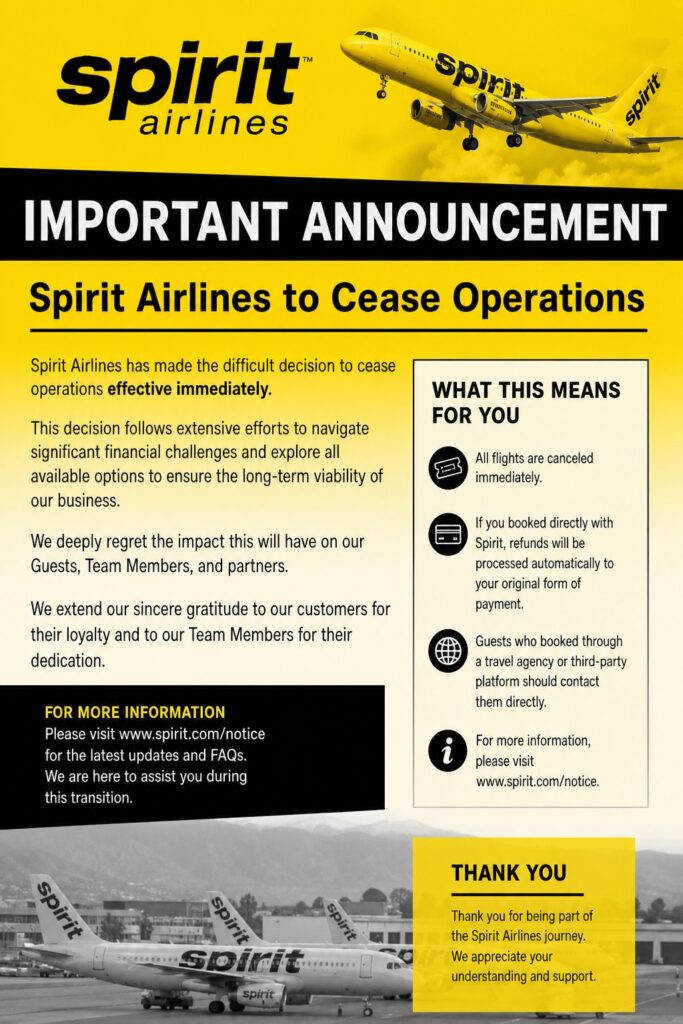
In a statement, parent company Spirit Aviation Holdings confirmed it had begun an immediate and orderly wind-down. All flights were cancelled, and passengers were advised not to go to the airport. The airline said refunds would be automatically processed for tickets purchased directly, while those booked through third parties should contact their providers.
The airline’s final flight landed overnight at Dallas-Fort Worth International Airport, where air traffic controllers bid farewell to the crew in a moment that underscored the sudden collapse of the carrier.
Spirit’s shutdown follows years of financial instability. The airline filed for bankruptcy twice since 2024 and had already accumulated losses exceeding $2.5 billion since 2020. In 2025 alone, it cut nearly 4,000 jobs and eliminated hundreds of routes in an effort to stay afloat.
Executives pointed to surging fuel costs, driven in part by the ongoing Iran conflict, as a decisive factor. Rising oil prices significantly increased operational expenses, leaving the airline unable to sustain its low-cost model.
However, Sean Duffy disputed that explanation, arguing that Spirit’s struggles predated the recent geopolitical tensions. He said the airline had been in severe financial difficulty for years and that its business model was no longer viable.
The Trump administration had explored a bailout plan that would have granted the U.S. government a 90% stake in the airline. Despite intensive negotiations, the deal ultimately fell apart due to opposition from key creditors, including major financial firms.
Officials indicated that disagreements with bondholders prevented a final agreement, leaving Spirit without the funding needed to continue operations. The airline’s cash reserves had dwindled rapidly in the final days of negotiations.
Spirit’s collapse highlights broader pressures facing the aviation sector. Rising energy costs have forced airlines to increase fares and cut unprofitable routes. Analysts estimate that U.S. carriers could see fuel expenses rise significantly compared to pre-conflict forecasts.
In response, major airlines such as American Airlines and United Airlines are preparing to expand capacity on routes previously served by Spirit. Both companies have also announced initiatives to support displaced employees, including dedicated hiring programs.
Authorities say Spirit has sufficient funds to process refunds, aiming to minimize disruption for affected passengers. Meanwhile, competitors are expected to fill the gap left by the airline’s departure, though concerns remain about reduced competition and potentially higher fares.
Spirit Airlines’ shutdown marks a significant moment in the U.S. aviation industry, signaling the challenges facing low-cost carriers in an environment shaped by rising costs, geopolitical instability, and shifting market dynamics.