
Image: from Open Source Intel X @Osint613
By Open Chronicle with agencies
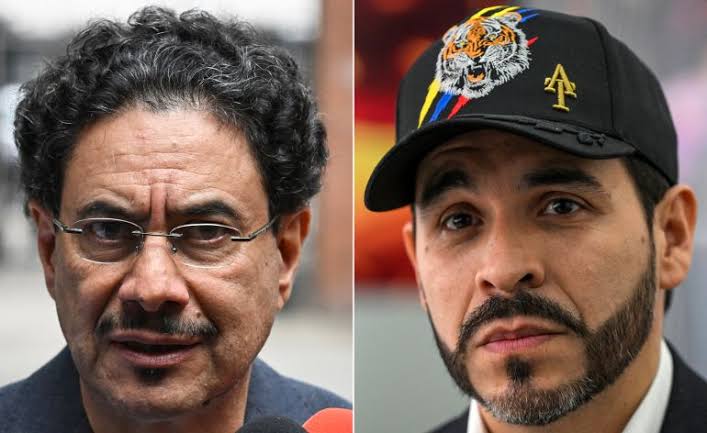
Colombia is set for a highly polarized presidential runoff after right-wing candidate Abelardo de la Espriella emerged narrowly ahead of left-wing senator Iván Cepeda in the first round of voting, setting the stage for a decisive contest that could reshape the country’s domestic policies and international alliances.
With nearly all ballots counted, de la Espriella secured 44 percent of the vote, while Cepeda finished with 41 percent. The result was closer than many polls had predicted and highlighted the deep political divisions that continue to define Colombian society.
The runoff election, scheduled for June 21, will pit two sharply contrasting visions of the country’s future against each other.
A Strong Showing for De la Espriella
De la Espriella, a lawyer, businessman, singer, and outspoken admirer of U.S. President Donald Trump, has built his campaign around promises of restoring security and confronting criminal organizations.
Known by supporters as “The Tiger,” the 47-year-old candidate has presented himself as a political outsider willing to challenge Colombia’s traditional political establishment.
His campaign gained momentum in the final weeks before the election as concerns over rising violence and insecurity intensified across the country.
Drawing comparisons to El Salvador’s President Nayib Bukele, de la Espriella has proposed an aggressive anti-crime strategy that includes the construction of ten mega-prisons and tougher measures against armed groups and organized crime networks.
Cepeda Defends Petro’s Legacy
Iván Cepeda, a prominent progressive senator and close ally of outgoing President Gustavo Petro, campaigned on continuing the government’s social reforms and its controversial “Total Peace” strategy.
The initiative seeks negotiated settlements with guerrilla groups, criminal organizations, and armed factions operating across Colombia.
While the policy was initially promoted as a path toward ending decades of violence, critics argue that some armed groups have used negotiations to strengthen their territorial control and expand their operations.
Despite those concerns, Cepeda continues to enjoy strong support among voters who favor Petro’s social agenda, including increases in the minimum wage and expanded social programs.
Following the first-round results, Cepeda questioned aspects of the vote count and called for further scrutiny by electoral authorities before fully accepting the outcome.
He nevertheless acknowledged that the election would proceed to a second round and pledged to continue campaigning against what he described as the country’s “extreme right.”
Security Dominates the Campaign
The election comes at a time of growing security concerns throughout Colombia.
A decade after the landmark peace agreement between the government and the Revolutionary Armed Forces of Colombia (FARC), violence has once again intensified in several regions.
Armed groups have expanded their activities, while drone attacks, clashes between rival factions and targeted political violence have become increasingly common.
The campaign itself was marked by instability. Last year, presidential hopeful Miguel Uribe Turbay was fatally shot during a political rally, an incident that shocked the nation and reinforced fears about political violence.
For many voters, the election has become a referendum on whether Colombia should continue pursuing negotiated peace agreements or adopt a tougher security-focused approach.
Implications for Relations with Washington
The outcome could also significantly influence Colombia’s relationship with the United States.
The Trump administration has adopted a more assertive approach toward Latin America, encouraging regional governments to intensify efforts against organized crime and narcotics trafficking.
A victory for de la Espriella would likely bring Bogotá closer to Washington on security issues and align Colombia more closely with conservative governments in the region.
A Cepeda victory, by contrast, would likely preserve Petro’s emphasis on diplomacy, social reform, and negotiated conflict resolution, potentially creating friction with U.S. priorities.
A Divided Nation Faces a Decisive Choice
Political analysts believe the runoff remains highly competitive, although de la Espriella may benefit from support flowing from voters who backed other conservative candidates in the first round.
The result reflects a country divided between demands for stronger security measures and support for progressive reforms aimed at addressing long-standing social inequalities.
As Colombians prepare to return to the polls later this month, the election has evolved into one of the most consequential political contests in recent years, with implications extending well beyond Colombia’s borders.