
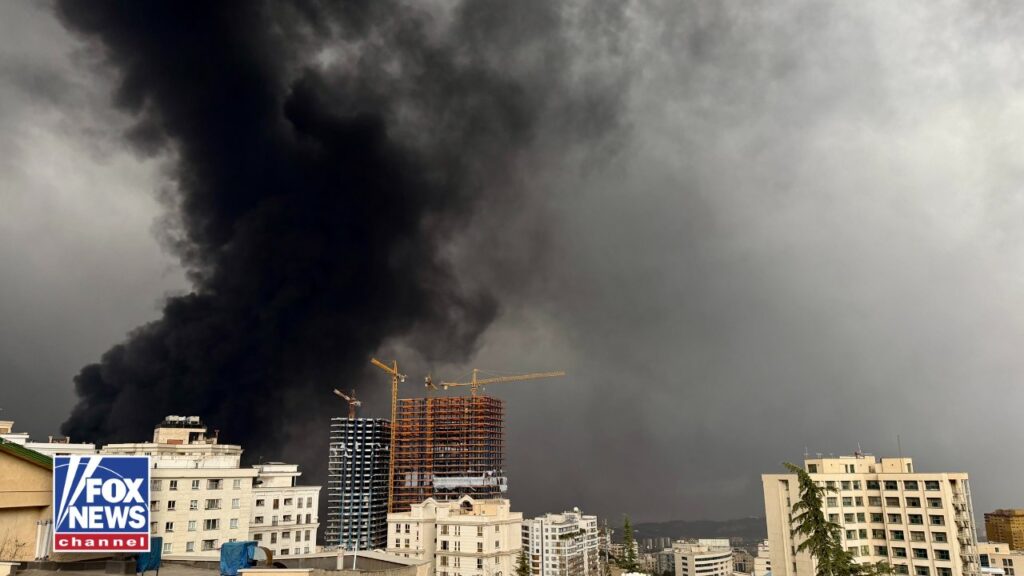
Image: from Fox News X @FoxNews
By Open Chronicle with agencies
A new wave of military confrontation between Israel and Iran has raised fears of a broader regional conflict, as both countries exchanged missile strikes on Monday despite ongoing diplomatic efforts led by the United States.
The escalation began after Iran launched a barrage of missiles toward Israeli targets in retaliation for Israeli airstrikes carried out a day earlier in southern Beirut. Israel responded by targeting military facilities across western and central Iran, marking one of the most significant direct exchanges between the two regional rivals since the fragile ceasefire established earlier this year.
Explosions were reported in several Iranian cities, including Tehran, Tabriz, and Isfahan. Israeli officials stated that the strikes focused on military infrastructure and missile-related facilities. Among the targets was the Mahshahr petrochemical complex in southwestern Iran, where local authorities confirmed that parts of the facility suffered damage.
Iran’s Islamic Revolutionary Guard Corps claimed that Israel used air-launched ballistic missiles during the operation. Iranian officials described the attacks as further evidence of what they called ongoing Israeli aggression in the region.
🚨 Energy infrastructure has been hit, raising fears that the conflict is entering a far more dangerous phase.
Israeli strikes have reportedly targeted the Karun Petrochemical Complex and areas around Mahshahr in Khuzestan Province, one of the Islamic Republic’s most important… https://t.co/Y2FouOUVll pic.twitter.com/cQT4Yv6a5E
— The Iran Watcher 🇮🇷 (@TheIranWatcher) June 8, 2026
Missile Attacks Reach Israel
The Israeli military reported that it intercepted multiple missiles launched from Iran. Air raid sirens sounded across northern and central Israel, including parts of Tel Aviv, as missile defense systems were activated.
Iranian officials said the attacks targeted strategic military locations, including the Ramat David Air Base near Nazareth. Israeli authorities stated that all identified threats were engaged by defensive systems, though assessments of any damage were still ongoing.
At the same time, Israel reported the launch of a missile from Yemen, marking the first such incident since the truce established in April. Yemen’s Houthi movement later claimed responsibility and announced plans to intensify restrictions on Israeli-linked maritime traffic in the Red Sea.
Trump Seeks to Preserve Negotiations
The latest confrontation comes despite repeated efforts by U.S. President Donald Trump to prevent further escalation.
In comments to the Financial Times, Trump insisted that ongoing hostilities would not derail negotiations between Washington and Tehran.
“It’s not going to have any impact on the deal,” Trump said. “I call the shots. I call all the shots. He doesn’t call the shots.”
The remarks appeared directed at Israeli Prime Minister Benjamin Netanyahu, with whom Trump reportedly spoke by telephone on Sunday. According to U.S. officials, Trump urged Netanyahu to avoid further military action, arguing that negotiations were close to producing a breakthrough.
Reports suggest Trump warned that additional strikes could jeopardize a potential agreement designed to end the broader conflict and restore stability in the region.
Regional Tensions Continue to Rise
Despite diplomatic efforts, the conflict remains deeply tied to developments in Lebanon. Israel has continued military operations against Hezbollah positions, arguing that the group remains an active threat despite previous ceasefire arrangements.
Iran has repeatedly stated that any long-term settlement with the United States must also address the situation in Lebanon. Hezbollah, meanwhile, has rejected U.S.-brokered proposals and continues to insist that Israeli forces withdraw from Lebanese territory before any broader settlement can be achieved.
The renewed exchange of strikes has intensified concerns among international observers that the region could slide back into full-scale conflict.
Economic Impact Felt Worldwide
The latest hostilities immediately affected global energy markets. Brent crude oil prices rose more than three percent in early trading, climbing above $96 per barrel as investors worried about potential disruptions to energy supplies.
The Strait of Hormuz remains a central point of concern. The strategic waterway handles roughly one-fifth of global oil and liquefied natural gas shipments, and any threat to navigation there has significant implications for international markets.
Although negotiations aimed at reopening and stabilizing shipping routes continue, repeated military exchanges between Iran, Israel, and their regional allies have complicated efforts to achieve a lasting agreement.
Uncertain Path Forward
While both Washington and Tehran continue to signal that diplomatic channels remain open, the latest round of missile attacks highlights how fragile the current situation remains.
Trump has repeatedly expressed confidence that a deal can be reached, insisting that diplomacy remains preferable to further military escalation. Iranian officials have maintained that sanctions relief, access to frozen assets, and recognition of their strategic interests remain essential components of any agreement.
For now, however, the exchange of strikes between Israel and Iran has underscored the volatility of the region, leaving the future of both the ceasefire efforts and the broader peace negotiations increasingly uncertain.