
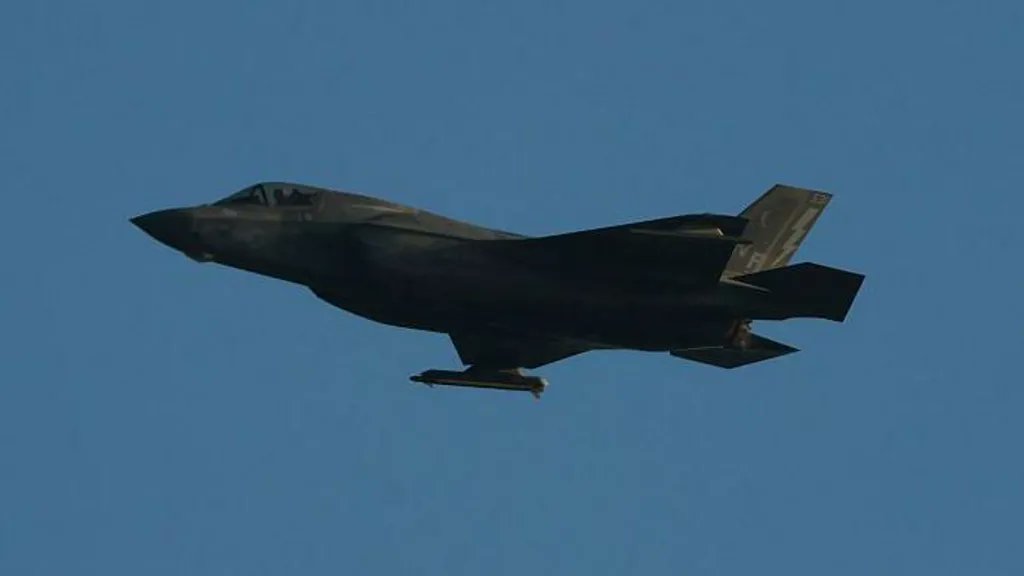
Image: from 24_7Reflections X @ColonSimeJphd8
By Open Chronicle with agencies
The United States has launched a major new wave of military strikes against multiple targets inside Iran, dramatically escalating tensions in the Middle East as diplomatic efforts between Washington and Tehran appear increasingly fragile.
U.S. Central Command (CENTCOM) confirmed on Wednesday that American forces had begun attacking “multiple targets in Iran,” describing the operation as a response to what it called Iran’s “unwarranted and continued aggression.”
The announcement was quickly followed by reports from Iranian state media of powerful explosions across the southern province of Hormozgan. The state-run Mehr News Agency said blasts were heard in the strategic port city of Bandar Abbas, the coastal town of Sirik, and the nearby city of Minab.
🇺🇸⚔️🇮🇷 – An Iranian fighter jet is airborne over Tehran.
CENTCOM says it began launching additional "self-defense strikes" against multiple targets in Iran around 5 p.m. ET on June 10, on Trump's orders, calling it a response to "Iran's unwarranted and continued aggression."… pic.twitter.com/duQRn4qvyb
— 🔥🗞The Informant (@theinformant_x) June 10, 2026
Explosions Reported Across Southern Iran
Iranian media indicated that the latest attacks are part of a broader day of military activity across the country. Earlier on Wednesday, air defense systems were reportedly activated outside Fars city after a series of explosions were detected. Residents also reported anti-aircraft activity over western Tehran, while distant detonations were heard near Kish Island in the Persian Gulf.
The extent of the damage caused by the strikes has not yet been officially confirmed, and Iranian authorities have not released information regarding possible casualties or the specific facilities targeted.
The renewed U.S. operations come amid a rapidly worsening confrontation that intensified after the recent crash of a U.S. Army AH,64 Apache helicopter near the Strait of Hormuz. President Donald Trump has repeatedly blamed Iran for the incident, describing it as the justification for a stronger military response.
Hegseth Promises “Strong and Clear” Action
Just hours before the strikes began, U.S. Defense Secretary Pete Hegseth warned that American forces would target what he described as “key facilities” inside Iran.
Speaking outside U.S. Central Command headquarters in Tampa, Florida, Hegseth said the military was fully prepared to carry out extensive operations.
“Central Command will be busy tonight because President Trump said we will be hitting Iran hard, and we will be,” Hegseth said.
He added that Iran still had an opportunity to accept a negotiated settlement but warned that refusal would result in additional military pressure.
“Iran has a chance to make a good deal, a great deal. Instead, they’re going to have bombs dropping on key facilities in Iran from the United States of America,” he stated.
According to Hegseth, the Pentagon’s objective is to create conditions that will secure the kind of agreement sought by the Trump administration, emphasizing that the planned strikes “will be strong” and “will be clear.”
Trump Links Offensive to Apache Incident
President Trump also reinforced his administration’s position during remarks from the Oval Office, confirming that the United States would resume military action because negotiations with Tehran had not produced sufficient progress.
“We’re going to be attacking them, attacking them very hard,” Trump told reporters, citing the alleged Iranian involvement in the downing of the U.S. Apache helicopter.
“Based on the helicopter, I guess we have the right to do that,” he added.
The president expressed frustration with the pace of the diplomatic talks, arguing that Iran had failed to take advantage of what he described as a favorable agreement.
“I’ve been working with Iran for a number of months,” Trump said. “They should sign the deal. It’s a good deal. I don’t know what they’re doing.”
Regional Tensions Continue to Rise
The latest U.S. strikes represent one of the most significant escalations between Washington and Tehran in recent months and raise fresh concerns that the crisis could evolve into a broader regional conflict.
Bandar Abbas and the surrounding Hormozgan province occupy a strategic position near the Strait of Hormuz, one of the world’s most important maritime routes for oil exports. Any prolonged military confrontation in the area could have implications far beyond the Middle East, affecting global energy markets and international shipping.
While U.S. officials insist the operation is intended to increase pressure for a diplomatic settlement, Iranian leaders have repeatedly warned that continued military action will be met with retaliation. With both sides maintaining hardline positions, prospects for an immediate de-escalation remain uncertain.