
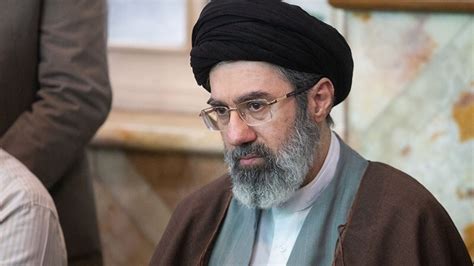
Image: from The New Region X @thenewregion
By Open Chronicle with agencies
The United States has officially lifted its naval blockade of Iran following the implementation of a landmark agreement aimed at ending months of conflict across the Middle East, while Iran’s Supreme Leader, Mojtaba Khamenei, has claimed that Washington pursued the accord “out of desperation.”
US Central Command confirmed that the blockade had been removed in accordance with President Donald Trump’s directive, although American naval assets will continue operating in the broader region. The move marks one of the first practical steps under the newly signed Memorandum of Understanding (MoU) between Washington and Tehran.
Shortly after the announcement, Khamenei publicly addressed the agreement for the first time. He revealed that he approved the deal despite holding a different personal view, explaining that he accepted it after receiving assurances from Iranian President Masoud Pezeshkian that Iran’s national interests and sovereignty would be protected throughout the process.
According to Khamenei, Trump employed every available form of pressure to secure the agreement. While acknowledging that direct negotiations between Iran and the United States would continue, he stressed that future talks should not be interpreted as acceptance of Washington’s positions.
The statement carried particular significance because Khamenei has largely remained out of public view since assuming leadership following the death of his father and predecessor, Ayatollah Ali Khamenei, during the US-Israeli strikes on Iran that triggered the regional conflict earlier this year.
President Trump did not directly respond to the criticism. Instead, he reiterated on social media that he expects the ceasefire to be respected on all fronts, including between Israel and Hezbollah in Lebanon, while emphasizing the importance of maintaining conditions necessary for ongoing diplomatic negotiations.
The agreement contains 14 key provisions designed to de-escalate tensions and create a framework for a broader settlement. Among the most notable measures are the reopening of the Strait of Hormuz, commitments preventing Iran from obtaining nuclear weapons, and the creation of a proposed $300 billion reconstruction and economic development fund for Iran. The accord also establishes a 60-day period during which both sides are expected to negotiate a comprehensive and permanent agreement.
Although a formal signing ceremony had originally been scheduled in Switzerland, Pakistani officials acting as mediators confirmed that the agreement had already been finalized remotely. Nevertheless, American and Iranian representatives are expected to meet in Switzerland in the coming days to begin technical discussions on implementation.
US Vice President JD Vance confirmed that the deal is now in force and that the 60-day negotiation period has officially begun. He indicated that further talks would focus on technical and nuclear-related issues, though he did not provide a specific timetable for the next round of discussions.
The agreement has generated considerable political debate in Washington. Critics within the Republican Party have questioned whether the deal grants excessive concessions to Tehran, particularly regarding sanctions relief and the reconstruction fund.
Senator Bill Cassidy described the agreement as one of the most serious foreign policy mistakes in recent decades, arguing that Iran’s regional influence remains largely intact and that the crisis demonstrated the effectiveness of Tehran’s leverage over global energy routes.
The administration has rejected those criticisms. Vance argued that sanctions relief and financial benefits will remain conditional on Iran meeting its obligations, including addressing concerns over enriched uranium stockpiles and support for regional proxy groups.
The vice president also delivered unusually sharp criticism of some members of the Israeli government who have publicly opposed the agreement. He warned that continued attacks against civilian areas, particularly in Lebanon, could undermine the peace process and damage broader regional stability.
Despite the agreement’s implementation, tensions remain high. Israeli and Hezbollah forces have continued exchanging strikes in recent days, with reports of casualties in Lebanon. Israeli officials maintain that their campaign against Hezbollah remains distinct from the broader conflict with Iran, while Hezbollah has openly rejected elements of the US-Iran agreement.
The coming weeks are expected to test whether the ceasefire can hold and whether the two longtime adversaries can transform the temporary accord into a lasting diplomatic settlement capable of reshaping the security landscape of the Middle East.