
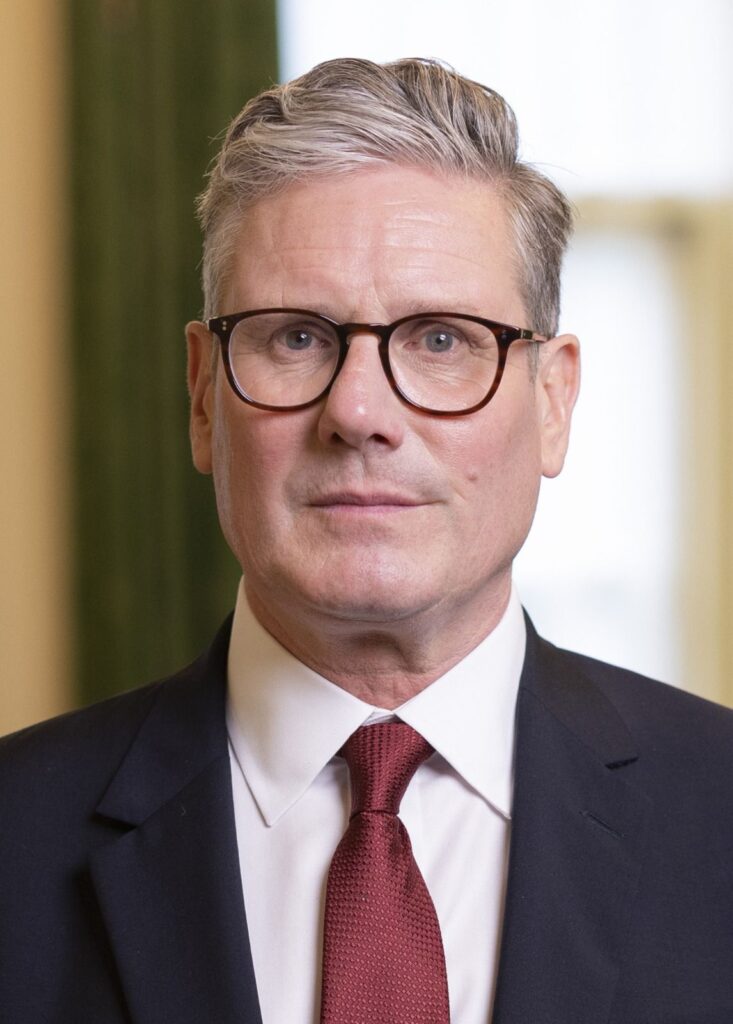
Image: from Politics UK X @PolitlcsUK
By Open Chronicle with agencies
British Prime Minister Keir Starmer announced his resignation on Monday, bringing an end to a transformative but increasingly contested period at the helm of the Labour Party and the British government.
In a speech delivered outside Downing Street, Starmer said he would step down as Labour leader and Prime Minister after acknowledging that members of his parliamentary party no longer believed he was the right person to lead Labour into the next general election.
However, he pledged to remain in office until a successor is elected, ensuring what he described as an orderly transfer of power.
🚨 BREAKING: Keir Starmer gets emotional as he resigns as Prime Minister
"I shall spend more time on the most important job. Being the best husband I can to my fantastic wife Vic… and being best dad I can to my beautiful children, who have been my pride and joy" pic.twitter.com/3OaOMTqPLQ
— Politics UK (@PolitlcsUK) June 22, 2026
End of a Political Chapter
Reflecting on Labour’s landslide victory in the July 2024 general election, Starmer described entering Downing Street as the proudest moment of his life and defended his government’s record.
He highlighted economic growth, rising wages, increased investment, improvements to public services, expanded workers’ rights, higher defence spending, and anti-poverty measures as key achievements of his administration.
Starmer also pointed to what he described as Labour’s successful effort to rebuild trust on economic management, national security, and international relations after years in opposition.
“I inherited a Labour Party that was politically, financially, and morally bankrupt,” he said.
“We were told that a majority at the general election was impossible. But we proved those people wrong because we changed our party.”
The departing prime minister argued that Labour had restored Britain’s international standing, strengthened ties with European allies, and maintained strong support for Ukraine amid the ongoing conflict with Russia.
Accepting Labour’s Verdict
Despite defending his record, Starmer acknowledged that many Labour lawmakers had concluded new leadership was needed ahead of the next election.
“The question my party is asking now is whether I am best placed to lead us into the next general election,” he said.
“I have heard the answer of my parliamentary party to that question. And I accept that answer with good grace.”
Starmer confirmed that he had informed King Charles III of his decision earlier in the day.
Under the timetable proposed by Starmer, nominations for the Labour leadership contest will open on 9 July, with the process expected to conclude before Parliament returns from its summer recess in September.
Burnham Emerges as Front Runner
Attention has already turned to the contest to replace Starmer.
Andy Burnham, who recently returned to Parliament after winning the Makerfield by-election, has confirmed he will seek the Labour leadership.
In a significant boost to Burnham’s campaign, former Health Secretary Wes Streeting announced that he would support Burnham rather than pursue his own candidacy.
Burnham is widely viewed as the leading contender to become both Labour leader and Britain’s next prime minister.
Promise of Stability
Starmer emphasized that he would remain fully committed to governing until the transition is complete and pledged his support to whoever succeeds him.
“I will do everything I can to ensure an orderly handover of power,” he said.
“I will also give my successor my full and unequivocal support.”
He expressed confidence that the next Labour leader would inherit a country that is “far stronger and fairer” than the one he took over in 2024.
Personal Reflections
The outgoing prime minister concluded his speech with a deeply personal reflection on the sacrifices of public life.
Thanking colleagues, civil servants and Labour supporters, he reserved special praise for his wife, Victoria Starmer, and their children.
“When I leave the biggest job in the country,” he said, “I shall spend more time on the most important job.”
“Being the best husband I can to my fantastic wife, Vic, who has been a rock by my side through good times and bad. And being the best dad I can to my beautiful children, who are my pride and my joy.”
Starmer’s departure marks the end of a remarkable political journey that saw him rebuild Labour after years in opposition, return the party to power, and become the first Labour prime minister in more than a decade. His resignation now opens a new chapter for both the party and the United Kingdom.