
Image: from Russian Market X @runews
By Open Chronicle with Agencies
Ukraine launched another large-scale drone attack against Russia overnight, targeting oil infrastructure and military facilities near St. Petersburg as Kyiv expands its long-range campaign deep inside Russian territory.
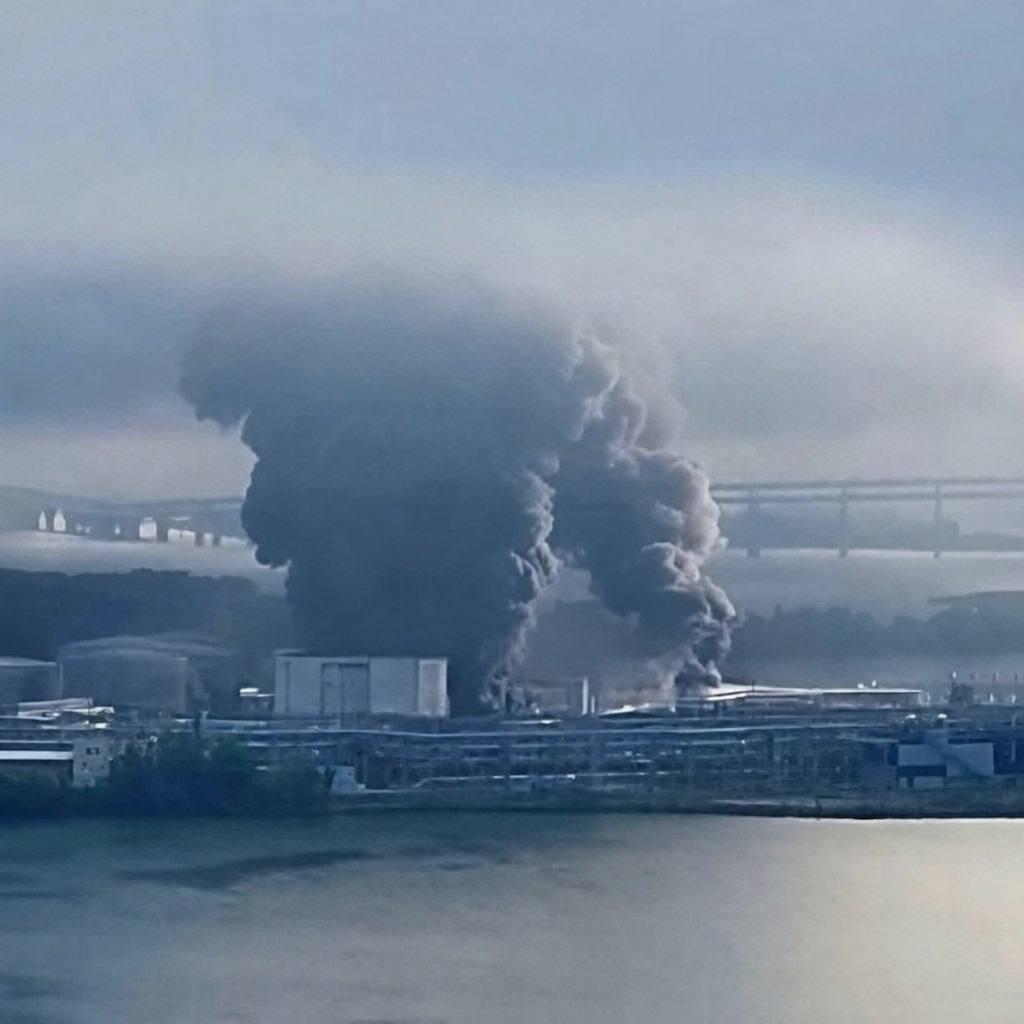
Russia’s Defence Ministry said nearly 500 long-range drones were involved in the assault, while Moscow’s mayor said around 200 were aimed at the capital. Videos circulating online appeared to show large smoke plumes rising from an oil facility in St. Petersburg’s port.
Ukrainian drones hit Russian oil sites more than 850 km inside Russia on Saturday. pic.twitter.com/VSvlLOg0lv
— Polymarket Intel (@PolymarketIntel) July 4, 2026
Oil and Military Sites Hit
Ukrainian President Volodymyr Zelenskyy said the attack successfully struck oil infrastructure in the St. Petersburg port as well as military targets near the Kronstadt naval base.
The operation is part of Ukraine’s intensifying effort to damage Russian fuel supplies, disrupt military logistics and bring pressure to regions far from the front line.
Ukraine has increasingly targeted refineries, oil terminals, defence industry facilities and logistics hubs inside Russia, using long-range drones to strike infrastructure that supports Moscow’s war effort.
Fuel Shortages Spread
The campaign is already creating pressure inside Russia.
Several regions have reported fuel shortages, with videos showing long queues at gas stations. In Russian-occupied Crimea, authorities have declared a state of emergency over fuel shortages and introduced curfews amid power outages caused by Ukrainian strikes.
Ukraine has also used medium-range drones to target Russian supply lines into occupied Crimea, seeking to weaken Moscow’s ability to sustain operations on the peninsula and across southern Ukraine.
Putin Signals Control
Amid the attacks, Russian President Vladimir Putin made a rare appearance in uniform during a visit to what was described as a military position, in an apparent attempt to show that he remains in command of the war effort.
At the same time, Russia claimed to have captured Kostiantynivka, a key defensive hub in Ukraine’s eastern Donbas region. However, the claim remains disputed, with analysts warning that Moscow has previously announced control over cities before fully securing them.
Battlefield Gains Come at Heavy Cost
Even if Russia has advanced around Kostiantynivka, analysts say the broader battlefield situation remains difficult for Moscow.
Konrad Muzyka, director of Rochan Consulting, said Russia is advancing only slowly and may have lost more territory overall than it gained in May.
A recent assessment by the Center for Strategic and International Studies estimated that Russia has suffered around 1.4 million casualties since the beginning of the war, including up to 450,000 deaths. Ukraine’s casualties were estimated at between 525,000 and 625,000.
War Moves Deeper Into Russia
The latest strike underlines how Ukraine’s drone campaign is changing the geography of the war.
What began as a primarily front-line conflict is increasingly reaching Russian ports, refineries, air bases and energy networks hundreds of kilometres from Ukraine’s borders.
For Kyiv, the strategy is clear: weaken Russia’s war machine, disrupt fuel supplies and force ordinary Russians to feel the cost of a conflict the Kremlin has long tried to keep distant from daily life.