
By Open Chronicle News Desk with Agencies
Israel’s Iron Dome air defense system was activated on Sunday after fragments from an Iranian ballistic missile entered the airspace near Eilat, marking the first operational use of the system against an Iranian aerial threat since the ceasefire that came into effect on April 7.
According to Israeli and Jordanian officials, the incident did not result in casualties or significant damage, although it underscored the continued fragility of the regional security situation despite months of relative calm.
Multi-layered interception
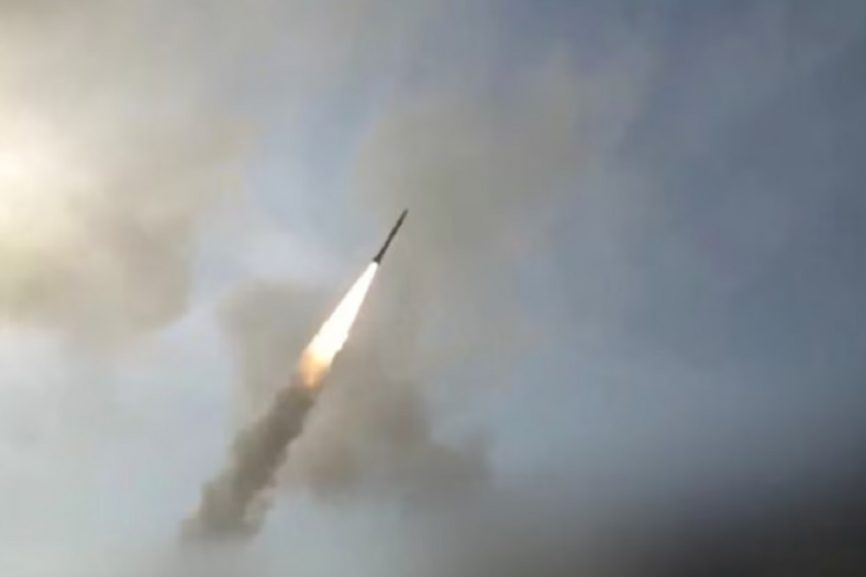
The incident began when Iran launched a ballistic missile toward Jordan, close to the Israeli border.
The missile’s primary warhead was intercepted by the United States Navy’s Aegis ballistic missile defense system before it could reach its intended trajectory. However, debris and fragments from the destroyed missile continued to travel through the region.
As some of the fragments approached Israeli territory near Eilat, the Israel Defense Forces (IDF) activated the Iron Dome air defense system to intercept the remaining threats.
The successful interception highlighted the integration of American and Israeli missile defense capabilities, with multiple defensive layers working together against aerial threats.
Jordan intercepts additional missiles
Jordan’s Armed Forces confirmed that they intercepted three missiles during the incident.
According to Jordanian state media, military officials stated that the interceptions prevented any casualties or material damage inside the kingdom.
Jordan has repeatedly emphasized that it will not allow its airspace to be used as a corridor for attacks against neighboring countries and has continued strengthening its air defense posture amid heightened regional tensions.
Conflicting reports over missile fragments
Initial media reports suggested that interception debris had fallen in the northern area of Eilat.
However, Israeli military officials later clarified that the situation remained under review.
One IDF source told local media that Eilat itself had not been struck by any missile, adding that investigators were assessing whether any shrapnel had landed within Israeli territory.
A second military source later stated that no missile fragments ultimately fell inside Israel, contradicting earlier reports and indicating that preliminary information may have been inaccurate.
Authorities stressed that no injuries were reported during the incident.
First Iron Dome interception since April ceasefire
The activation of Iron Dome is particularly significant because it represents the first time the system has been employed against an Iranian aerial threat since the ceasefire agreed on April 7.
That agreement brought an end to weeks of direct military exchanges between Israel and Iran, substantially reducing cross-border hostilities.
Although the ceasefire has largely held, Sunday’s incident illustrates that regional security remains highly sensitive and that missile defense systems continue to play a crucial role in protecting civilian populations.
No immediate indication of retaliation
Despite the unusual nature of the incident, Israeli defense sources indicated there was no immediate expectation of military retaliation.
Officials characterized the event as involving indirect, low-level debris rather than a successful strike against Israeli territory.
The measured response suggests Israeli authorities are seeking to avoid further escalation while continuing to monitor developments closely.
Regional defenses remain on alert
The episode once again demonstrated the increasingly coordinated missile defense architecture operating across the Middle East.
American naval assets, Jordanian air defense forces, and Israeli interception systems all played roles in preventing the ballistic missile from causing casualties or damage.
Security analysts note that such cooperation has become increasingly important as ballistic missile and drone threats continue to shape the region’s strategic landscape.
Although Sunday’s incident ended without injuries, it serves as another reminder that the security environment across the Middle East remains volatile, with military forces maintaining a high level of readiness despite ongoing diplomatic efforts to preserve the ceasefire.