
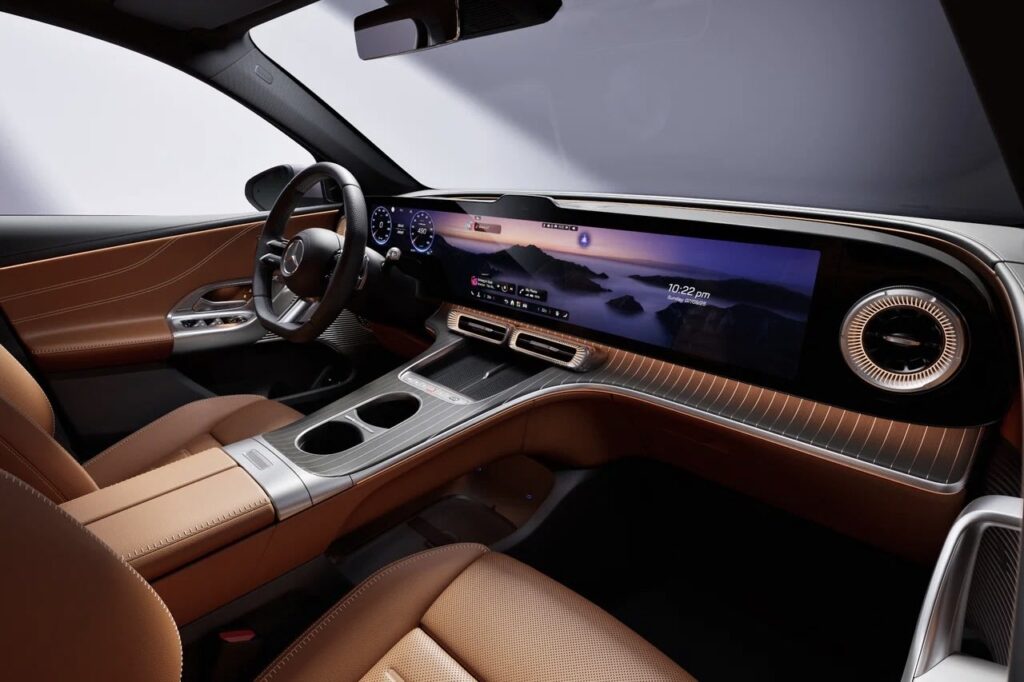
Image: from GetCarNews X @GetCarNewsCom
By Open Chronicle with agencies
After years of embracing increasingly digital interiors, Mercedes-Benz has acknowledged that the automotive industry may have pushed touchscreen technology too far.
The German luxury carmaker has confirmed it will reintroduce more physical controls into future vehicles after receiving growing feedback from customers who found fully digital interfaces less intuitive and, in some cases, more distracting.
Mercedes-Benz Chief Executive Officer Ola Källenius said the company had become too focused on introducing new technology, sometimes at the expense of everyday usability.
Putting the driver first again
Speaking about the evolution of vehicle interiors, Källenius admitted that manufacturers had occasionally prioritised innovation over the customer experience.
“Sometimes you get a bit ahead of your time and create technology for the sake of technology itself, and then you might forget a little about the customer,” he said.
According to the CEO, Mercedes will now restore what he described as the “most sensible and necessary” physical buttons, particularly for controls that drivers use frequently while keeping their attention on the road.
The decision represents a significant shift for one of the industry’s most technology-driven manufacturers.
Physical controls return in new models
The change is already visible in the latest Mercedes-Benz CLA, which replaces the touch-sensitive volume slider on the steering wheel with a traditional physical control.
Rather than abandoning digital displays altogether, Mercedes intends to strike a better balance between touchscreen interfaces and tactile controls.
The company says future interiors will continue to feature advanced digital technology while restoring buttons and switches where they improve convenience and safety.
A broader industry rethink
Mercedes is far from alone in reconsidering the all-touchscreen approach.
Several major manufacturers, including Volkswagen, Hyundai and Porsche, have also begun reintroducing physical controls after years of replacing them with digital menus.
Meanwhile, Scout Motors, Volkswagen Group’s new American off-road brand, has built much of its design philosophy around traditional switches and knobs, arguing that drivers continue to value tactile interaction.
The shift suggests that the automotive industry is entering a new phase in which digital innovation is increasingly balanced with ergonomic design.
Safety concerns influence design
The return of physical controls is also being encouraged by safety organisations.
The European New Car Assessment Programme (Euro NCAP) has announced that certain essential vehicle functions should remain accessible through physical controls rather than requiring drivers to navigate touchscreen menus.
Safety experts argue that tasks such as adjusting volume, activating hazard lights or operating climate controls can often be performed more quickly and with less distraction using traditional buttons.
As a result, manufacturers that eliminate key physical controls may face lower safety ratings in future vehicle assessments.
Digital technology remains central
Despite the renewed emphasis on buttons, Mercedes has no intention of abandoning digital innovation.
Large infotainment displays, connected vehicle technologies and increasingly sophisticated software will remain central to the company’s future product strategy.
Källenius also reaffirmed Mercedes-Benz’s commitment to improving voice-controlled systems, an area where manufacturers including Tesla and Rivian continue investing heavily.
The goal, he said, is not to reverse technological progress but to ensure that technology genuinely improves the driving experience rather than complicating it.
A changing philosophy of automotive design
The industry’s renewed appreciation for physical controls reflects a broader shift in automotive design philosophy.
Over the past decade, manufacturers competed to install ever larger dashboard displays while reducing the number of traditional buttons and switches. Minimalist interiors became symbols of technological sophistication, particularly in electric vehicles.
Today, however, customer feedback suggests that many drivers still value the speed, precision, and familiarity of tactile controls.
Mercedes-Benz’s decision to restore selected physical buttons signals that the next generation of vehicle interiors may focus less on replacing traditional interfaces and more on combining digital innovation with practical usability.
As automakers continue redefining the modern cockpit, the future appears increasingly likely to blend advanced software with the simple satisfaction of pressing a real button.