
Image: Dr Balmukunda Regmi X @BalmukundaDr
By Open Chronicle with agencies
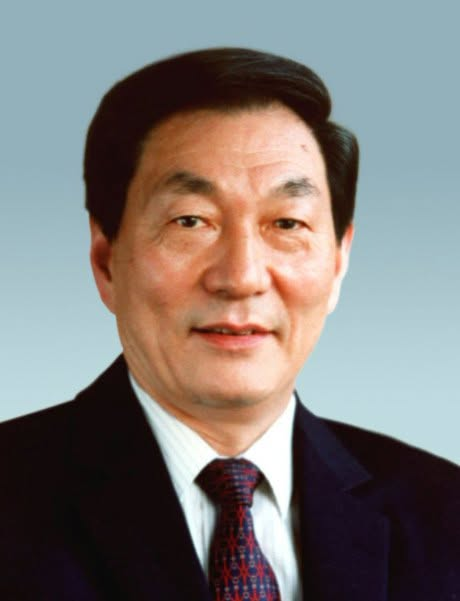
Zhu Rongji, the former Chinese premier who became one of the most influential architects of China’s economic transformation, has died at the age of 97.
An official obituary released by China’s state news agency Xinhua on Wednesday confirmed his death, marking the passing of a political figure closely associated with the reforms that helped reshape China from a heavily state-controlled economy into an increasingly important participant in global trade.
Zhu served as China’s premier from 1998 until 2003, following seven years as vice premier with responsibility for economic affairs.
His years at the highest levels of government coincided with some of the most consequential economic changes in modern Chinese history, including sweeping reforms of state-owned enterprises, efforts to modernise the financial system and China’s entry into the World Trade Organization in 2001.
He also played an important role during the 1997 Asian financial crisis and the handover of Hong Kong from British to Chinese sovereignty.
From engineering to economic policymaking
Zhu was born in 1928 in Changsha, the capital of China’s Hunan province.
He studied electrical engineering at Tsinghua University, one of China’s most prestigious universities, graduating in 1951 before entering the civil service.
His early career involved regional and national economic policy, gradually establishing the expertise that would eventually make him one of the country’s most prominent economic administrators.
Zhu’s rise to national prominence accelerated during a period when China was struggling with the difficult consequences of economic liberalisation.
The reforms initiated under Deng Xiaoping had produced rapid economic expansion, but they had also generated inflation, financial instability and growing pressure on inefficient state enterprises.
Managing those tensions became one of Zhu’s defining political responsibilities.
Taking control of China’s economy
Zhu became vice premier responsible for the economy in 1991.
China at the time faced high inflation, growing debt and substantial losses across the state-owned industrial sector.
Rather than reversing market reforms, Zhu sought to strengthen the institutions necessary to manage them.
He supported greater central control over fiscal policy, attempted to reduce bureaucratic inefficiencies, and pushed for changes within China’s banking and industrial systems.
His reputation developed around a combination of economic pragmatism and administrative discipline.
When Zhu became premier in 1998, China was entering another period of enormous economic uncertainty.
The Asian financial crisis had destabilised economies across the region, while China faced the challenge of restructuring industries employing millions of people.
The painful transformation of state-owned enterprises
One of Zhu’s most consequential legacies was the restructuring of China’s state-owned enterprises.
For decades, SOEs had been central to the Chinese economic system. They were not merely companies. They provided employment, housing and social services for millions of workers.
Many were also inefficient and heavily indebted.
Zhu’s reforms sought to make the sector more commercially viable by closing, restructuring or privatising failing enterprises while concentrating state resources on larger strategically important companies.
The transformation was economically significant but socially painful.
Large numbers of workers lost jobs as inefficient enterprises were reorganised.
Recognising the social consequences, Zhu’s government promoted programmes intended to help laid-off workers find new employment and expanded elements of China’s social security system.
The changes helped establish a more competitive industrial economy, but they also contributed to the enormous social transformation accompanying China’s rapid growth.
Separating government from business
Zhu also pushed for clearer distinctions between government administration and commercial activity.
The traditional system had often blurred the line between ministries, local governments, and the companies they supervised.
Reform sought to give enterprises greater responsibility for commercial decisions while changing the government’s role toward regulation and economic management.
Clearer property rights, corporate restructuring and reduced bureaucratic intervention became important components of the programme.
The reforms were part of a broader effort to prepare China for a more market-oriented economy and deeper participation in international trade.
China’s entry into the WTO
Perhaps no event better symbolised Zhu’s economic strategy than China’s accession to the World Trade Organization.
Negotiations were difficult and politically sensitive.
China had to accept significant changes to trade rules, tariffs and market access in exchange for membership in the global trading system.
Zhu became one of the principal Chinese figures associated with the negotiations.
The process culminated with China’s formal accession to the WTO in December 2001.
The consequences were enormous.
Membership gave Chinese companies greater access to international markets while increasing foreign companies’ access to China.
Manufacturing investment accelerated, exports expanded, and China became increasingly integrated into global supply chains.
Within little more than a decade, China would emerge as the world’s largest exporter of goods and one of the central engines of the global economy.
The official Xinhua obituary described the process leading to WTO membership as involving “arduous negotiations”.
A decision that transformed the global economy
China’s WTO accession would ultimately have consequences far beyond the country itself.
Foreign manufacturers expanded production in China, attracted by its enormous workforce, improving infrastructure and increasingly sophisticated industrial base.
Chinese factories became integral to supply chains serving consumers around the world.
Exports helped drive extraordinary economic expansion inside China.
Millions of people moved from rural areas into rapidly growing industrial cities, while the country’s middle class expanded dramatically.
At the same time, China’s emergence as a manufacturing powerhouse intensified competition for industries in the United States, Europe and elsewhere.
More than two decades later, the consequences of China’s integration into the global trading system remain central to debates over trade, industrial policy and relations between Beijing and Washington.
Navigating the Asian financial crisis
Zhu’s economic leadership was also tested by the Asian financial crisis that erupted in 1997.
The crisis began in Southeast Asia before spreading through financial markets across the region.
Currencies collapsed, companies failed, and several governments required international assistance.
China avoided many of the most severe consequences.
Beijing maintained the stability of the renminbi rather than pursuing a competitive devaluation, a decision that helped prevent additional pressure on neighbouring economies.
Zhu was closely involved in China’s economic response.
Xinhua credited him with helping the country navigate the crisis while maintaining economic stability.
The episode strengthened his reputation as a crisis manager.
Hong Kong’s historic handover
The same year brought another historic event.
On July 1, 1997, sovereignty over Hong Kong was transferred from Britain to China after more than 150 years of British rule.
Zhu played a role in Beijing’s efforts surrounding the transition and the preservation of Hong Kong’s status as a major international financial centre.
The timing was particularly challenging because the Asian financial crisis began almost immediately after the handover.
Hong Kong faced intense financial pressure, including attacks against its currency and stock market.
According to the official obituary, Zhu helped China “resolutely safeguard the prosperity and stability of Hong Kong as an international financial centre”.
Fiscal and financial reform
Zhu’s influence extended well beyond industrial restructuring.
He promoted reforms intended to strengthen China’s fiscal and financial institutions and improve central government control over economic policy.
China’s rapid economic transformation had created a system in which local governments and financial institutions frequently operated with considerable autonomy.
Beijing increasingly recognised that continued growth required stronger financial supervision and more effective macroeconomic management.
Zhu advocated reforms intended to improve banking discipline, control financial risks and strengthen government revenues.
When economic conditions weakened, his government also adopted more proactive fiscal and monetary policies to maintain growth.
Infrastructure investment became an important tool for supporting domestic demand.
Elements of this strategy would later become familiar features of Chinese economic policy.
Reputation for fighting corruption
Zhu also became known for his outspoken opposition to corruption and bureaucratic inefficiency.
Rapid economic growth had created enormous opportunities for officials and business interests to profit from their positions.
Zhu frequently presented corruption as a threat not only to economic efficiency but also to the legitimacy of government institutions.
His public image was consequently different from that of many senior Chinese officials.
He developed a reputation for direct language, impatience with bureaucracy, and willingness to confront difficult economic problems.
That reputation contributed significantly to his standing both inside China and among foreign observers.
Reform came with high social costs
Zhu’s legacy is nevertheless inseparable from the costs of China’s economic transformation.
Restructuring state enterprises eliminated large numbers of jobs that had once been considered secure.
Workers accustomed to the traditional “iron rice bowl” system increasingly faced market competition and economic uncertainty.
China’s rapid growth also contributed to widening inequality between regions, industries, and social groups.
Coastal cities prospered rapidly while many interior and rural regions developed more slowly.
The country’s transformation therefore produced both extraordinary economic expansion and profound social disruption.
Zhu’s government attempted to address some of those consequences through employment programmes and social security reforms, but the transition remained difficult for millions of families.
China at the beginning of a new century
By the time Zhu left office in March 2003, China was very different from the country he had helped govern at the beginning of the previous decade.
Its economy was increasingly integrated into international markets.
Private enterprise had expanded.
State companies had undergone extensive restructuring.
Foreign investment had accelerated.
China had joined the WTO.
And the country was beginning the extraordinary export-driven expansion that would make it one of the world’s dominant economic powers.
Zhu did not create that transformation alone.
It emerged from reforms spanning several generations of Chinese leadership and from the work of millions of businesses, workers and officials.
But his premiership coincided with a decisive stage in the process.
Life after the premiership
After retiring as premier in March 2003, Zhu largely withdrew from frontline politics.
According to Xinhua’s obituary, he continued to support China’s central leadership during the eras of Hu Jintao and Xi Jinping.
The official account said Zhu remained concerned with the development of “socialism with Chinese characteristics” and continued to support efforts involving party discipline and the fight against corruption.
His public appearances became relatively infrequent compared with his years in government.
His legacy, however, remained closely associated with the economic transformation of the 1990s and early 2000s.
Beijing remembers a major reform era figure
China’s official obituary praised Zhu in language traditionally reserved for senior figures in the Communist Party and state.
Xinhua described him as “an outstanding member of the Communist Party, a long-tested and loyal Communist fighter, an outstanding proletarian revolutionary and statesman, and an exceptional leader of the party and the state”.
The tribute highlighted his work on economic system reform, state-owned enterprises, social security, macroeconomic management, and China’s WTO negotiations.
Beyond the official language, Zhu’s death closes another chapter in the generation of Chinese leaders responsible for managing the country’s transition toward a hybrid economic system combining extensive state control with market mechanisms and global commerce.
A legacy that reaches far beyond China
Few economic decisions made during Zhu’s premiership remained confined to China.
The restructuring of Chinese industry helped create companies capable of competing internationally.
The opening of markets encouraged enormous flows of foreign investment.
WTO membership accelerated China’s integration into global supply chains.
Those developments helped transform China into an economic superpower.
They also contributed to profound changes in manufacturing, employment and trade across the United States, Europe and Asia.
Many of the economic tensions defining international politics today, including disputes over tariffs, industrial subsidies, supply chains and technological competition, can be traced partly to the transformation that accelerated during Zhu’s years at the centre of Chinese economic policy.
Zhu Rongji therefore leaves behind more than the legacy of a former premier.
He belonged to a generation of policymakers who presided over one of the fastest and most consequential economic transformations in modern history.
The China that entered the twenty-first century under his premiership was increasingly connected to the global economy.
The China that emerged from those reforms would eventually become one of the principal forces shaping it.