
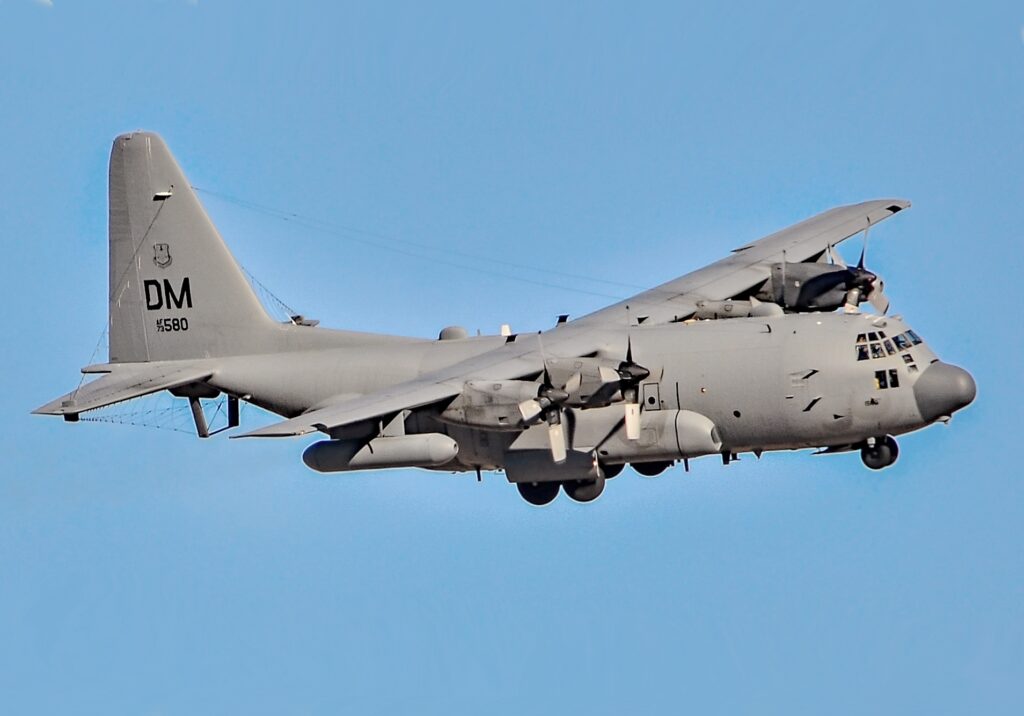
Image: 73-1580 Lockheed EC-130H Compass Call over Nellis AFB By Tomás Del Coro, CC BY 4.0, (Wikipedia)
By Open Chronicle Staff with Agencies | December 23, 2025
SAN JUAN, Puerto Rico — The U.S. military buildup in the Caribbean reached a new technological milestone this weekend with the arrival of the EC-130H Compass Call at Luis Muñoz Marín International Airport. The deployment of this rare electronic warfare (EW) platform signals a shift toward neutralizing Venezuela’s integrated air defense systems (IADS) and command structures.
The arrival was confirmed by local aircraft spotters who identified the aircraft’s distinctive antenna arrays. The EC-130H joins a massive assembly of hardware under the “Southern Spear” initiative, which now includes the USS Gerald R. Ford carrier strike group and F-35B Lightning II fighters.
Arriving in Porto Rico, one of the rare EC-130 "Compass Call", an electronic attack variant of the Hercules. Only 14 builtpic.twitter.com/oRB8r5h79h
— Air Safety #OTD by Francisco Cunha (@OnDisasters) December 22, 2025
What is the “Compass Call”?
The EC-130H is a heavily modified version of the C-130 Hercules transport plane. Unlike standard bombers, its “payload” consists of high-powered energy beams designed to disrupt the electromagnetic spectrum.
-
Signal Disruption: It can find, track, and jam enemy radios, radars, and even cell phone networks.
-
Blinding Defenses: By scrambling the signals used by surface-to-air missiles (SAMs), the Compass Call creates “safe corridors” for friendly aircraft to operate within.
-
Psychological Warfare: The aircraft can also be used to broadcast messages over hijacked enemy frequencies.
The Electronic “Fog of War”
The Caribbean is increasingly becoming a hazardous zone for civil aviation due to intense electronic interference. Both the U.S. Navy and the Venezuelan military have reportedly engaged in GPS spoofing and jamming.
-
U.S. Tactics: Warships are jamming signals in their immediate vicinity to protect against drone attacks or precision missiles.
-
Venezuelan Tactics: The Maduro administration has reportedly jammed signals around oil refineries, power plants, and military bases to prevent GPS-guided strikes.
“Whether jamming is due to the U.S. or Venezuelan forces, it really doesn’t matter: You don’t want an aircraft going in there,” warned Gen. Willie Shelton, former head of U.S. Air Force Space Command.
Growing Aerial Armada in Puerto Rico
The EC-130H is just one piece of a rapidly expanding logistical and combat puzzle in the region:
| Aircraft Type | Role | Base Location |
| EC-130H Compass Call | Electronic Attack / Jamming | Puerto Rico |
| EA-18G Growler | Carrier-based EW Jets | USS Gerald R. Ford |
| KC-130J Hercules | Aerial Refueling (Tanker) | Puerto Rico |
| HC-130J Combat King II | Search and Rescue (CSAR) | Puerto Rico |
| E-3 Sentry (AWACS) | Battle Management/Radar | MacDill AFB (Florida) |
Tactical Context
While the U.S. maintains that these deployments are part of a “pressure campaign” against the Maduro regime and drug cartels, the presence of the Compass Call suggests preparation for kinetic operations. By suppressing the “eyes and ears” of the Venezuelan military, the U.S. gains a significant advantage in any potential confrontation, allowing its forces to operate with near-impunity in contested airspace.