
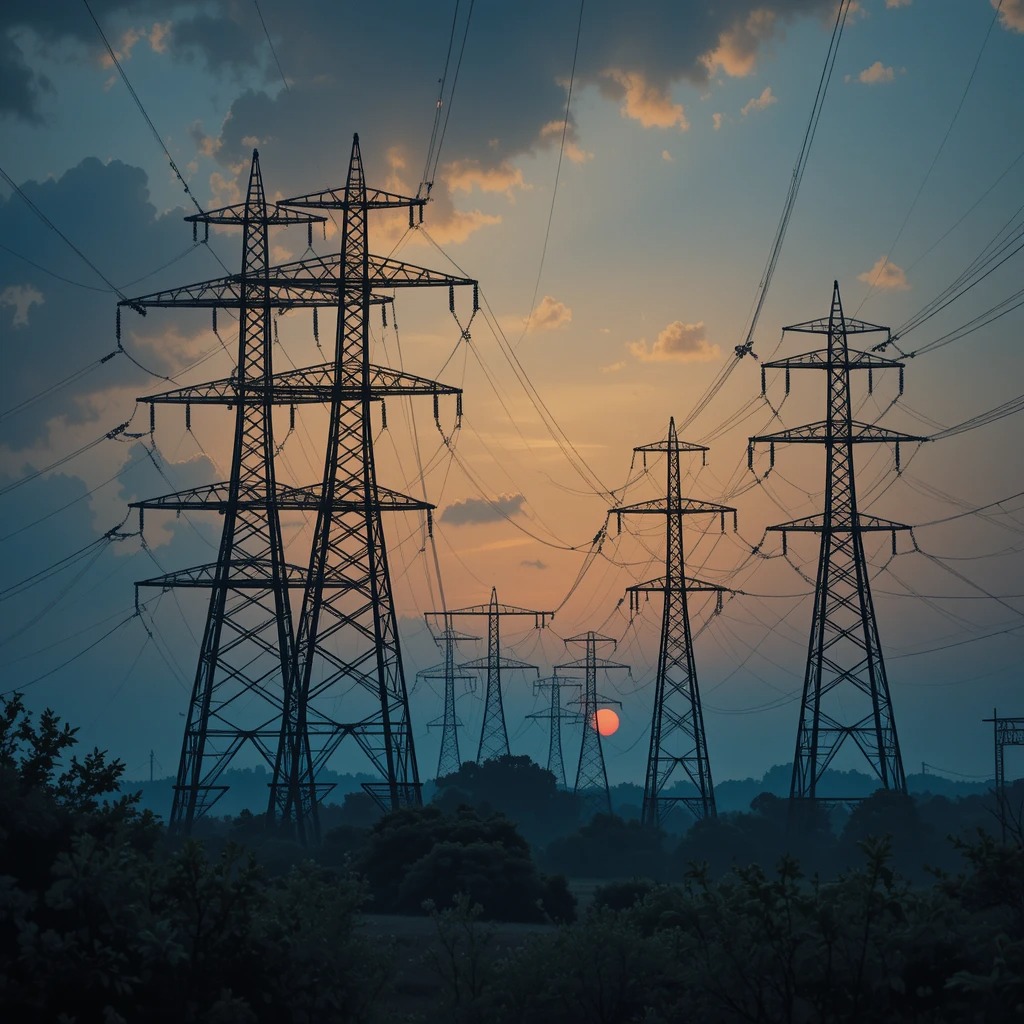
Image Credentials: Image Title: Cyberattack Fears Highlight Vulnerability of Power Grids After Iberian Blackout Source: AI-Generated Image (aiease.ai) Date: April 2025 Attribution: Created by AI-generated imagery (aiease.ai), and it does not depict a real-world scene.
April 29, 2025 — Open Chronicle International Desk Staff Writer with Agencies
The Hague/Madrid/Lisbon—As Spain and Portugal recover from a sweeping power outage that left millions in the dark, cybersecurity experts in the Netherlands are sounding the alarm on the growing threat of cyberattacks targeting critical infrastructure. They warn that what unfolded in Iberia could one day be the result of digital sabotage.
Although Spanish authorities have ruled outa cyberattack as the cause of Monday’s blackout, blaming weather-related factors instead, cybersecurity professionals remain cautious. Among them is Dave Maasland, director of Dutch cybersecurity firm ESET, who issued a stark warning: “A cyberattack on power infrastructure is not science fiction.”
“Attacks on power supplies are possible and have already caused disruptions in the past,” Maasland said, citing Russian-linked cyberattacks on Ukraine’s power grids in 2015 and 2016, as well as a thwarted attack in 2022 amid the war with Russia.
He described the malware used in such attacks as akin to a “digital hand grenade”, designed not just to disable systems but to cause lasting damage, making recovery exponentially harder.
Though Monday’s outage in Spain and Portugal is now believed to have stemmed from atmospheric and technical factors, it triggered widespread speculation in its early hours. Experts caution that cyberattacks could mirror such failures, blurring the line between technical fault and malicious interference.
“A power network can fail for a variety of reasons, including human error or faulty equipment,” Maasland added. “But sometimes, the fear of a cyberattack may itself be a weapon—used to sow panic and chaos.”
Preparing for the Unexpected
In the Netherlands, the National Cyber Security Centre (NCSC) has taken the incident seriously, using it as a wake-up call for the government and public. Through its “Denk Vooruit” (“Think Ahead”) campaign, the NCSC is urging Dutch citizens to prepare emergency kits that include bottled water, non-perishable food, cash, and blankets, enough to sustain a household for up to three days without power.
The Dutch Red Cross echoed this guidance, noting that even short-term outages can lead to public disorder and panic.
“The risk of a blackout may seem distant, but it’s closer than we think,” said a Red Cross spokesperson. “A little preparation goes a long way.”
Broader Concerns Over Infrastructure Security
The Iberian blackout, which struck major cities such as Madrid, Barcelona, and Lisbon, has reignited a broader conversation across Europe about the resilience of energy networks in an age of increasing geopolitical tension and technological sophistication.
While Monday’s event does not appear to have been a cyberattack, experts and officials alike agree: the line between natural failure and coordinated sabotage is thinning, and Europe must be ready for both.
At a Glance:
-
Cyberattack ruled out in Iberian blackout, but experts still wary
-
Netherlands urges preparedness for potential infrastructure disruptions
-
ESET and NCSC highlight cyber risks to power grids
-
Emergency kits and public readiness campaigns are recommended across the EU