
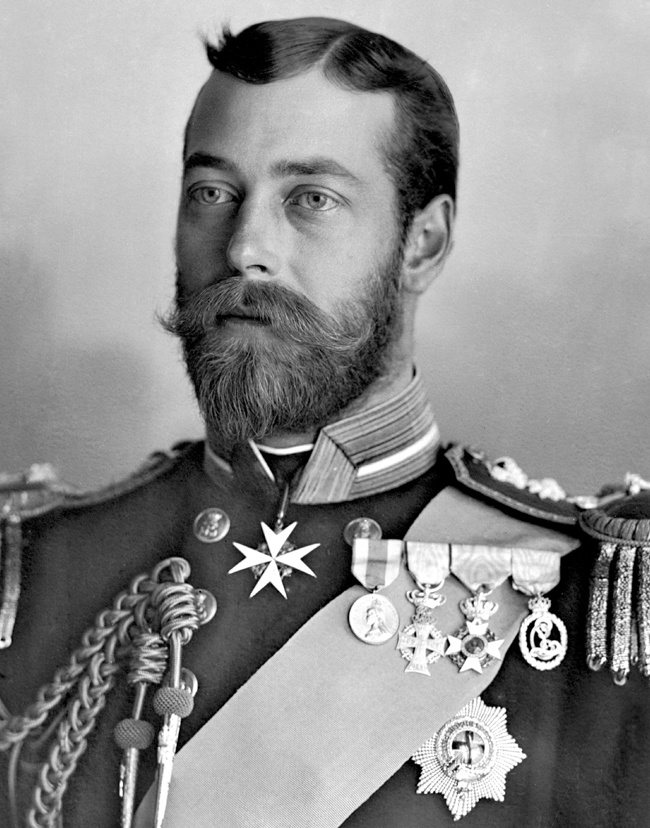
Image: King George V (1865-1936), when Duke of York in uniform of a British naval captain – Por James Lafayette , Domínio público, (Wikipedia)
By Open Chronicle Staff | History Magazine
In the spring of 1919, as Europe began to reckon with the aftermath of the Great War, a unique and poignant sporting event unfolded in Britain. Known as the King’s Cup, this one-of-a-kind competition marked more than just the return of athletic rivalry—it was a ceremonial rebirth of sportsmanship, international camaraderie, and national healing.
A Game for a Wounded World
The end of World War I in November 1918 left a world scarred—physically, emotionally, and socially. In Britain, sports such as rugby and football (soccer) had been suspended during the war years. When the 1919-20 season began, it brought with it not just the resumption of competitive fixtures but also a powerful symbol of hope and restoration.
Among the many post-war competitions was the King’s Cup, a special tournament endorsed by King George V. Designed to welcome the return of peace and pay tribute to the military forces of the British Empire, the King’s Cup brought together not only servicemen from the United Kingdom but also from the Dominions—Australia, New Zealand, South Africa, and Canada.
The Rugby Revival
The rugby variant of the King’s Cup was particularly ambitious. It was launched under the guidance of the Army Rugby Union and General Harrington, once Chief of Staff to Field Marshal Haig. The tournament became the first international rugby competition ever played in Britain and perhaps the world’s earliest multinational team sports tournament, predating football’s FIFA World Cup by more than a decade.
Seven teams took part: Australia, New Zealand, South Africa, Canada, the Royal Air Force, and the British Army (called “Mother Country”). Rugby had served as a crucial morale-booster in the trenches during the war, and now it was expected to help rehabilitate both soldiers and civilians. Every match carried emotional weight, as many of the players were war veterans, some still recovering from the trauma of the front.
The final, played at Twickenham Stadium on April 16, 1919, saw New Zealand defeat the Mother Country team 9-3. A follow-up match against France served as a diplomatic postscript, with the New Zealanders once again victorious, defeating the French side 20-3. The tournament did more than crown a champion; it heralded the arrival of rugby as a truly global game and set a precedent for international sportsmanship in the wake of a global crisis.
Football’s Parallel Path
At the same time, a football edition of the King’s Cup also captured public attention. This version, held in London during the 1919-1920 season, celebrated the return of competitive association football. It was a localized tournament among London-based clubs, intended to re-establish the sport’s place in post-war British life. Chelsea FC won the tournament, a notable achievement that contributed to the re-emergence of football after years of silence.
While not an official continuation of the FA Cup, the Football King’s Cup held immense symbolic value. It reaffirmed the monarchy’s support for sport, embodied the optimism of peace, and provided players and fans alike with an outlet for joy and distraction amid national mourning and economic instability.
More Than a Trophy
The King’s Cup of 1919 stood as a confluence of sport, politics, and healing. Its legacy lies not only in the matches played, but in the values it reinforced, resilience, unity, and imperial pride. It gave Britain and its dominions a shared story, one not of trenches and loss, but of pitch and perseverance.
The ripple effects were lasting. The rugby tournament shaped future international formats, laying the groundwork that would one day influence the Rugby World Cup. The football event catalyzed the re-establishment of professional leagues, eventually leading to the global football juggernaut we know today.
A hundred years on, the King’s Cup remains a forgotten jewel in the crown of sport’s role in world history—a moment when balls replaced bullets, and cheering replaced mourning.