
Image: Visegrád 24 X@visegrad24
By Lucas Reid | Staff Writer with Agencies
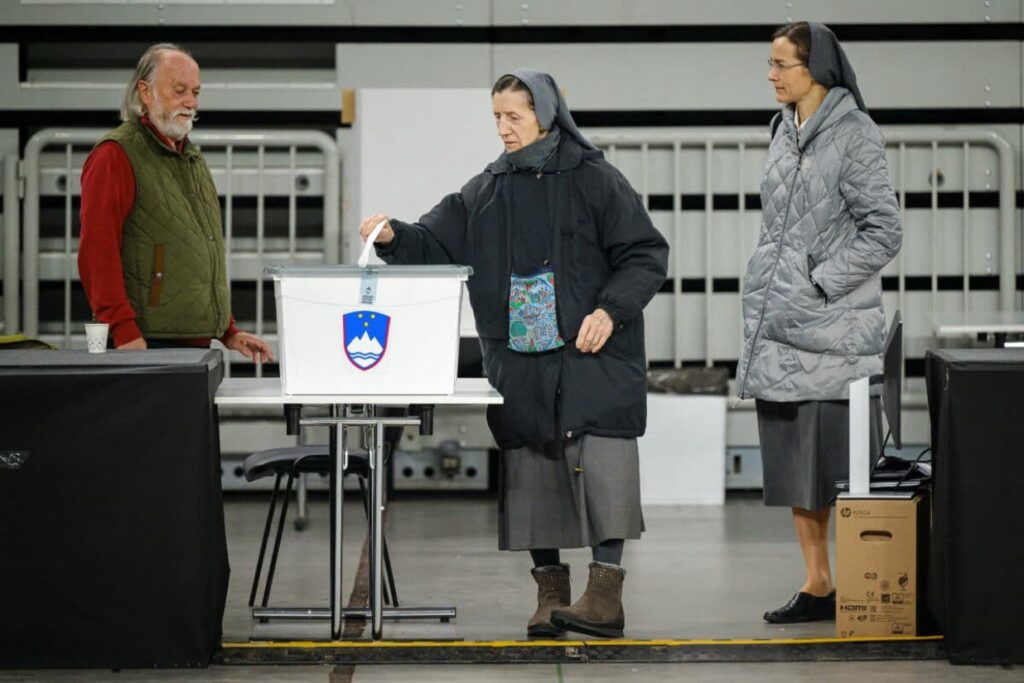
Slovenian voters have suspended a controversial law legalising assisted dying, with around 53 percent voting against it in a referendum held on Sunday, November 24, 2025. The outcome means Slovenia’s parliament is barred from revisiting the same legislation for at least the next 12 months.
The law, initially approved by parliament in July 2024 following a referendum that supported assisted dying, would have allowed lucid, terminally ill patients to receive medical assistance to end their lives if their suffering was deemed unbearable and all treatment options had been exhausted. It also included provisions for patients whose treatment had no reasonable prospect of recovery but excluded cases related to mental illness.
The repeat referendum was triggered after a civil group, backed by the Catholic Church and the conservative parliamentary opposition, collected more than 46,000 signatures—surpassing the 40,000 needed to demand a new vote. Ales Primc, head of the NGO Voice for the Children and the Family, which spearheaded the “no” campaign, celebrated the outcome, saying that “solidarity and justice” had prevailed. He criticised the law as promoting government health, pension, and social reforms “based on death and poisoning.”
Public opinion on the issue was deeply divided. Supporters of the law, including Prime Minister Robert Golob, argued that it allowed individuals the right to choose a dignified end to life. Golob had urged citizens to back the law so that “each of us can decide for ourselves how and with what dignity we will end our lives.” A number of voters, particularly those facing terminal illnesses, echoed this sentiment. Romana Hocevar, a stage-four cancer patient, said she supported assisted dying to avoid prolonged suffering, citing her personal experiences with her parents’ illnesses.
Opponents, however, framed the legislation as a threat to life. Marija Unuk, who voted against the law, stated she supported a “culture of life, not the culture of death.” The Catholic Church also condemned the law, claiming it violated the principles of the Gospel, natural law, and human dignity.
Voter turnout reached 40.9 percent, just above the threshold needed for the law to be suspended. While some polls had previously suggested a majority in favour, the influence of advocacy groups and religious institutions helped sway the final result.
Across Europe, assisted dying remains a contentious issue. Countries such as Austria, Belgium, the Netherlands, and Switzerland permit terminally ill patients to receive medical help to end their lives, while others maintain strict prohibitions. In France and the United Kingdom, debates over right-to-die legislation continue, reflecting broader tensions over ethical, legal, and social dimensions of assisted dying.
Slovenia’s latest referendum highlights the ongoing challenge of balancing individual autonomy with ethical and cultural concerns in end-of-life care, leaving the issue unresolved for at least the next year.