
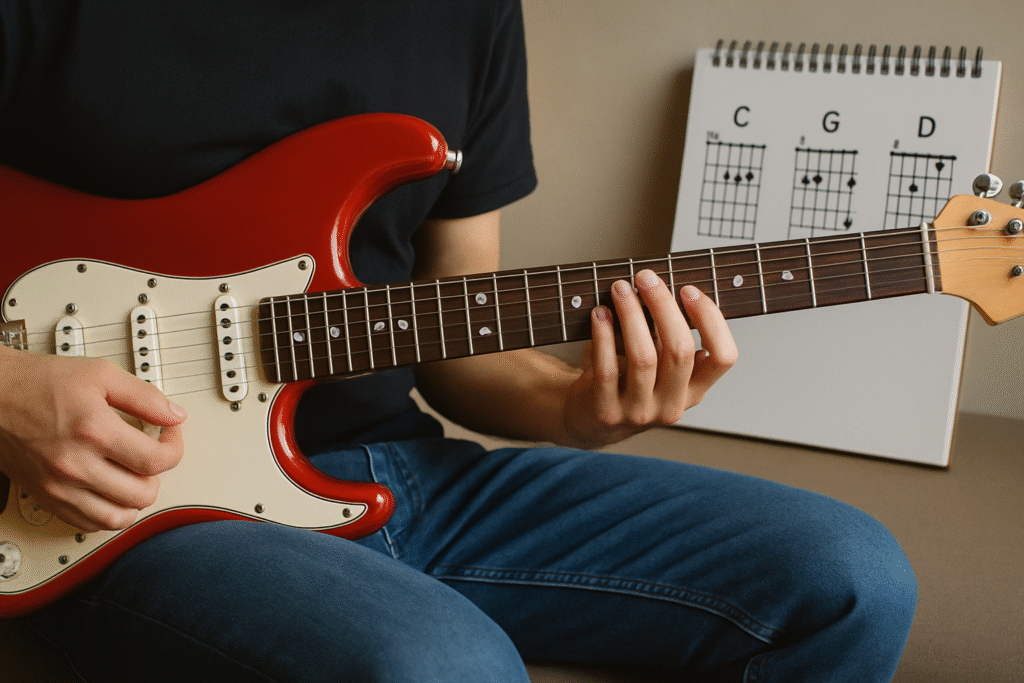
Image Credentials: Image Title: Image Credentials: Image Title: 5 Essential Chords for Electric Guitar Beginners Source: (sora.openai) Date: November 2025. Attribution: This image was created using AI-generated imagery (sora.openai) and does not depict a real-world scene.
Learning to play electric guitar is a lifelong adventure that blends creativity, technique, and personal expression. For those looking to start this journey on the right foot, it’s crucial to begin with the basics, and that includes learning a few essential chords. These basic chords are not only the foundation of many songs but also the key to developing the musical dexterity needed for progression.
In this article, we will explore five essential chords every aspiring David Gilmour should know. These chords form the backbone of countless melodies and will help you develop the skills and understanding required to move forward musically.
1. E Major Chord
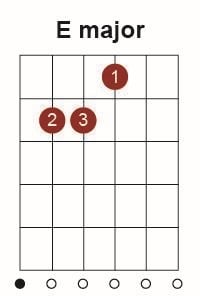
The E major chord is one of the first chords many guitarists learn. It’s an open chord, meaning it uses some of the guitar’s open strings, creating a rich, full sound.
How to play E Major:
-
Place your index finger on the first fret of the third string.
-
Place your middle finger on the second fret of the fifth string.
-
Place your ring finger on the second fret of the fourth string.
Strum all six strings when playing this chord.
The E major chord is fundamental in rock, blues, and many other styles, serving as an excellent introduction to the guitar’s sonic landscape.
2. A Major Chord
Following E major, A major is another essential open chord. This chord is often used in combination with E major and D major in countless songs.
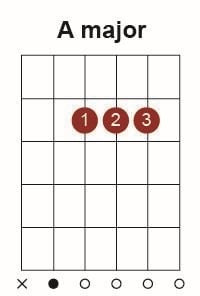
How to play A Major:
-
Place your index finger on the second fret of the fourth string.
-
Place your middle finger on the second fret of the third string.
-
Place your ring finger on the second fret of the second string.
When playing this chord, avoid strumming the two lowest strings and strum only the other four.
Practicing this chord helps you develop the ability to position your fingers compactly, which is crucial for more complex chords later on.
3. C Major Chord
Though a bit more challenging, the C major chord is essential in any guitarist’s repertoire. It helps develop finger flexibility and precise positioning.
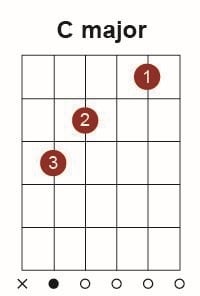
How to play C Major:
-
Place your index finger on the first fret of the second string.
-
Place your middle finger on the second fret of the fourth string.
-
Place your ring finger on the third fret of the fifth string.
When strumming C major, start from the fifth string, avoiding the sixth string.
This chord is widely used across genres, from pop to rock, and is an excellent foundation for learning chord progressions and harmony.
4. G Major Chord
G major is another vibrant chord and one of the most recognizable on the guitar. It requires a bit more finger stretching, but it is essential for developing finger strength and dexterity.
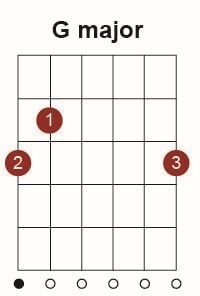
How to play G Major:
-
Place your index finger on the second fret of the fifth string.
-
Place your middle finger on the third fret of the sixth string.
-
Place your ring finger on the third fret of the first string.
The G major chord is used in a wide variety of music and styles and is fundamental for playing many popular songs.
5. D Major Chord
The D major chord is a bright, cheerful chord frequently used in songs across many genres.
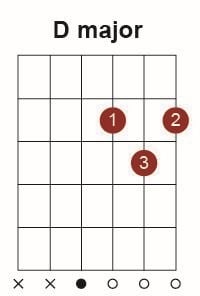 How to play D Major:
-
Place your index finger on the second fret of the third string.
-
Place your ring finger on the third fret of the second string.
-
Place your middle finger on the second fret of the first string.
When playing this chord, only strum the top four strings, avoiding the two lowest ones.
The D major chord is great for practicing sound clarity, precision, and dynamics, and it’s also a good chord for learning control over volume on the electric guitar.
Practical Tips for Beginners
-
Practice regularly: Regular practice is key to success on the guitar. Spend time each day practicing chords and transitions between them.
-
Use a metronome: This will help you develop a sense of rhythm and timing, which is crucial when playing with other musicians or accompanying songs.
-
Make smooth chord transitions: Practice moving from one chord to another smoothly. Start slow and gradually increase speed as you gain confidence.
-
Mind your posture: Good posture not only helps you play better but also prevents discomfort and injury.
-
Record yourself: Listening to recordings of your playing can reveal areas for improvement and help you track your progress.
Conclusion
Learning and mastering these five basic electric guitar chords marks the beginning of a lifelong musical journey. With practice, these chords will become second nature, allowing you to explore different songs and styles.
Remember, the guitar is a personal expression instrument, so don’t be afraid to experiment with different techniques and sounds. Learning to play guitar requires patience and discipline, but the rewards are immeasurable.
GuitarWorldX
Lessons, gear, techniques, artists, guitar legends and the stories shaping the world of guitar.
Return to GuitarWorldX ›