
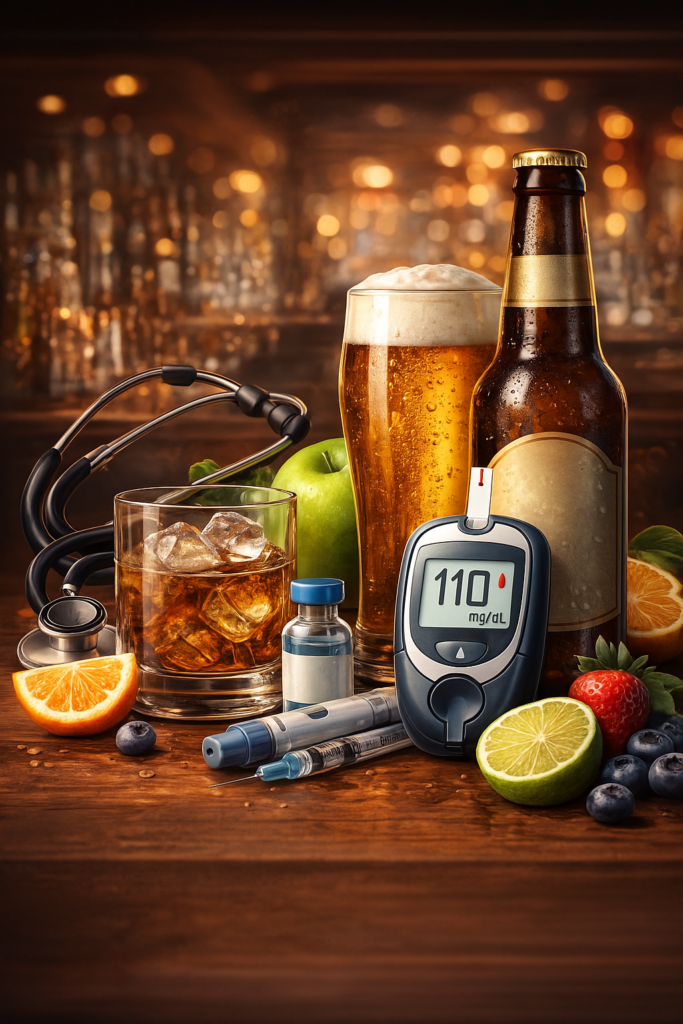
Image Credentials: Image Title: 🍷 Alcohol and Diabetes: What You Need to Know to Stay Safe Source: (sora.openai) Date: December 2025. Attribution: This image was created using AI-generated imagery (sora.openai) and does not depict a real-world scene.
By Isabella Harper | Staff Writer
Managing diabetes requires careful attention to diet, exercise, and daily habits. Introducing alcohol into this routine adds a layer of complexity, as it can have a significant and often unpredictable impact on blood sugar levels and overall health.
People with diabetes must understand the specific ways alcohol interacts with their body and their medication to make safe, informed choices.
The Unpredictable Impact on Blood Sugar
Alcohol’s effect on blood sugar is dual and complicated:
1. Increased Risk of Hypoglycemia (Low Blood Sugar)
For individuals taking insulin or medications that stimulate insulin production, drinking alcohol can significantly increase the risk of developing hypoglycemia (low blood sugar), sometimes hours after consumption.
-
The Liver Blockade: Normally, the liver acts as a safety net, releasing stored glucose into the bloodstream if blood sugar levels drop too low. Alcohol, however, temporarily blocks the liver from performing this crucial function.
-
Delayed Effect: Because the liver’s ability to release glucose is impaired, blood sugar can continue to fall too low, leading to dangerous hypoglycemia that may occur late into the night. Alcohol can also mask the typical warning signs of low blood sugar, making it harder to recognize when something is wrong.
2. Risk of Hyperglycemia (High Blood Sugar)
Conversely, some alcoholic drinks contain high amounts of sugar, which can cause a rapid spike in blood sugar. Sweet cocktails, liqueurs, and certain beers can quickly push blood sugar levels too high, further complicating the goal of maintaining a healthy range.
Health and Medication Interference
Alcohol presents several other challenges for diabetes management:
-
Weight Gain: Alcohol is calorie-dense. Regular consumption can lead to weight gain, which is known to make blood sugar control more difficult, especially for people with type 2 diabetes.
-
Medication Interference: Alcohol can change how diabetes medications work, increasing the risk of side effects. For instance, mixing alcohol with certain blood sugar-lowering drugs can elevate the risk of long-term liver problems. Always consult your healthcare provider about the risks of mixing alcohol with your specific medication regimen.
-
Long-Term Complications: Chronic, excessive alcohol use can reduce the body’s response to insulin (insulin resistance), making blood sugar control much harder. It also increases the chances of developing health issues that diabetes already makes more likely, such as heart disease and nerve damage.
Safely Drinking Alcohol with Diabetes
If you choose to drink, following these guidelines can help you stay safe:
| Action | Why It’s Important |
| Check Blood Sugar Before Drinking | Alcohol can mask the symptoms of low blood sugar, so you need a baseline reading to ensure you are starting at a safe level. |
| Never Drink on an Empty Stomach | Eating food helps slow the absorption of alcohol and keeps blood sugar steadier. |
| Monitor Before Bed | Check your blood sugar before going to sleep to prevent dangerous nocturnal hypoglycemia. |
| Limit Intake | Health experts suggest no more than one drink per day for women and two drinks per day for men. (One drink is defined as a small glass of wine, a can of beer, or a shot of spirits). |
| Stay Hydrated | Choose non-alcoholic, zero-sugar mixers, and alternate alcoholic drinks with water or diet soft drinks. |
| Communicate with Your Doctor | Be open with your healthcare provider about your alcohol consumption so they can help you adjust your diabetes management plan safely. |
By understanding the risks and practicing proactive management, individuals with diabetes can minimize the dangers associated with alcohol consumption and stay on track with their health goals.
References
-
American Diabetes Association (ADA). The guidelines for moderate drinking (no more than one drink per day for women and two drinks per day for men) are consistent with ADA recommendations.
-
Source: American Diabetes Association. (General information on alcohol and diabetes management and guidelines on moderate consumption).
-
-
Centers for Disease Control and Prevention (CDC) or similar Public Health Authorities. The definition of a “standard drink” (e.g., 12 oz beer, 5 oz wine, 1.5 oz spirits) and the emphasis on general health advice align with major public health bodies.
-
Source: Centers for Disease Control and Prevention (CDC) or other National Health Institutes. (Information on standard drink sizes and general moderation advice).
-
-
Key Medical Textbooks/Clinical Guidelines. The detailed explanation of the physiological mechanism, specifically how alcohol blocks the liver’s gluconeogenesis (glucose release), is standard medical knowledge.
-
Source: Major Clinical Endocrine/Diabetes Guidelines or Medical Textbooks. (Physiological explanation of alcohol’s effect on liver function and hypoglycemia risk).
-