
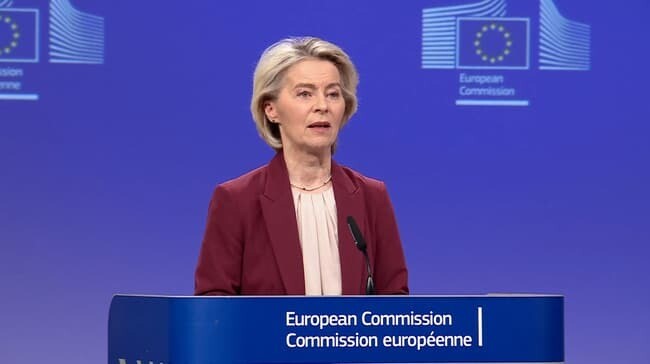
Image: from BFM X@BFMTV
By Open Chronicle Staff with Agencies
In a significant diplomatic retreat, European Commission President Ursula von der Leyen informed EU leaders on Thursday that the signing of the long-awaited EU-Mercosur trade agreement will be postponed until January. The deal, which was originally slated to be inked this Saturday in Brazil, has hit a major roadblock as France and Italy successfully pushed for more time to address domestic agricultural concerns.
The decision to delay follows intense pressure from a group of EU member states led by France and Italy. According to diplomatic sources, von der Leyen acknowledged the difficulty in meeting the specific demands of these nations, particularly regarding “reciprocal guarantees” and safeguards for European farmers.
The delay was largely sealed by a high-level diplomatic intervention:
- The Meloni-Lula Call: Italian Prime Minister Giorgia Meloni reportedly called Brazilian President Luiz Inácio Lula da Silva to ask for “patience,” explaining that extra time was needed to secure the support of the agricultural sector.
- South American Consent: President Lula has agreed to present Italy’s request for a delay to the Mercosur leaders’ summit this weekend. Diplomats indicate that the South American bloc is willing to wait until January to ensure a smoother ratification process.
EU officials are now aiming for a mid-January resolution. This timeline is strategically designed to precede the European Parliament’s first plenary session of 2026. By securing a stronger consensus now, the Commission hopes to avoid potential challenges at the EU’s top court, which could have tied the deal up in legal limbo for years.
“Delaying the deal for a few weeks while serious issues affecting beef farmers are worked out could be worth it in the end,” said Ireland’s Europe Minister Thomas Byrne, reflecting the hesitant stance of countries with large cattle industries.
While some see the delay as a pragmatic step to save the deal, others expressed frustration at Europe’s hesitation. German MEP Bernd Lange, a staunch supporter of the pact, remarked, “I hope that our partners in Latin America will have the patience to deal with this tentative and hesitant EU.”
The immediate consequence of this postponement is that a vote among EU ambassadors, which was scheduled for this Friday to greenlight the agreement, will also be pushed back.
The “green light” for Mercosur is now expected in early 2026. This gives von der Leyen and her team a few weeks to finalize the technical safeguards demanded by Paris and Rome, aiming to turn a 25-year negotiation into a finalized reality before the geopolitical landscape shifts further.