
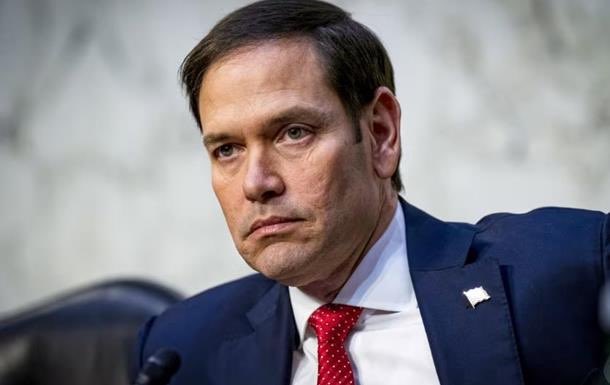
Image: The Ukrainian Review X@UkrReview
By Open Chronicle News Desk with Agencies | January 7, 2026
US Secretary of State Marco Rubio is set to meet senior officials from Denmark and Greenland next week, as tensions rise over Washington’s increasingly explicit ambitions toward the Arctic island. The talks come amid mounting concern in European capitals that the Trump administration is prepared to test the limits of the transatlantic alliance in pursuit of what it frames as a vital national security objective.
Rubio confirmed plans for the meeting after reports emerged that the administration has renewed internal discussions about acquiring Greenland, a self-governing territory of Denmark that occupies a strategic position between North America and Europe. Greenland’s foreign minister has confirmed participation in the talks, marking a rare trilateral engagement on an issue that has rapidly evolved from diplomatic curiosity into a serious geopolitical flashpoint.
President Donald Trump has repeatedly argued that US control over Greenland is essential to counter growing Chinese and Russian activity in the Arctic. The White House has refused to rule out the use of military force, a stance that has alarmed NATO allies and prompted unusually blunt warnings from Copenhagen. Danish Prime Minister Mette Frederiksen has stated that a US takeover of Greenland would amount to the effective end of NATO, describing such a move as incompatible with the alliance’s foundational principles.
According to individuals briefed on a classified Capitol Hill session, Rubio told lawmakers that the administration’s preferred path remains the eventual purchase of Greenland rather than coercive action. Speaking publicly, Rubio said Trump has raised the idea since his first term and noted that previous US administrations have also examined the strategic value of the island. At the same time, he reiterated that any US president retains the option to respond to perceived national security threats using military means, a comment that has done little to reassure European partners.
Diplomatic tensions escalated earlier this week after the White House stated that the US military is “always an option” in relation to Greenland. Rubio declined to say whether the administration would risk damaging NATO to pursue its aims, instead saying such issues would be discussed directly with Danish and Greenlandic leaders during the upcoming meeting.
Denmark’s foreign minister, Lars Lokke Rasmussen, and Greenland’s Vivian Motzfeldt have sought a meeting with Rubio for months, according to Greenland’s government, after earlier requests went unanswered. Their engagement now reflects growing urgency as rhetoric in Washington hardens.
A joint statement by the leaders of France, Germany, Italy, Poland, Spain, and the United Kingdom reaffirmed that Greenland “belongs to its people,” underlining broad European resistance to any attempt at annexation. France’s foreign minister, Jean Noël Barrot, said Rubio had dismissed the idea of a Venezuela-style operation in Greenland, adding that any aggressive move against a NATO member would face overwhelming opposition within the United States itself.
Complicating matters further, Denmark last year approved legislation expanding US access to military bases on Danish territory, building on a 2023 agreement that already granted American forces broad use of airbases. Danish officials have stressed that Copenhagen retains the right to terminate the agreement if the United States attempts to annex Greenland. Nonetheless, the US already operates the Pituffik Space Base in northwestern Greenland, giving Washington an established military footprint on the island.
As Rubio prepares for talks, the episode highlights a widening gap between US strategic assertiveness and European conceptions of sovereignty and alliance solidarity. Whether next week’s meeting eases tensions or deepens mistrust may prove decisive not only for Greenland’s future, but for the credibility of NATO in an era of renewed great power competition.