
Image: from Real News X@DrNeculai
By Open Chronicle News Desk Staff | Jan. 14, 2026
WASHINGTON — A high-stakes White House meeting between the United States, Denmark and Greenland has failed to cool tensions over President Donald Trump’s repeated insistence that Washington must take control of Greenland, a stance that is now triggering alarm across Europe and within NATO.
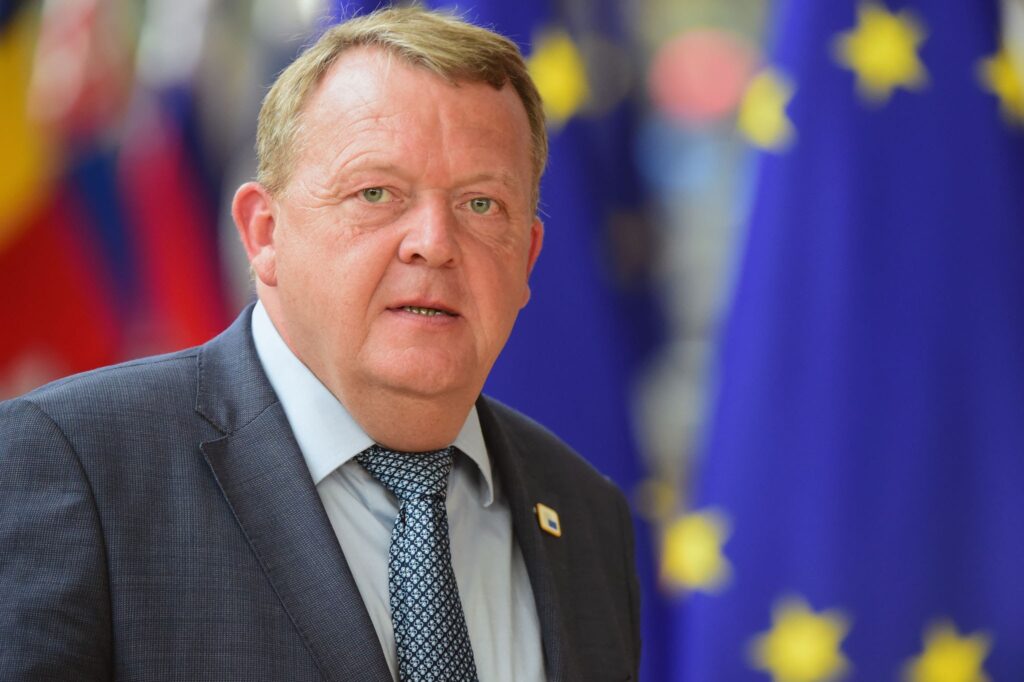
Danish Foreign Minister Lars Løkke Rasmussen emerged from talks on Wednesday with a stark assessment of the US position. Standing outside Denmark’s embassy in Washington after meeting Vice President JD Vance, Secretary of State Marco Rubio, and Greenland’s Foreign Minister Vivian Motzfeldt, Rasmussen said that Washington remained fixed on one goal.
“We didn’t manage to change the American position,” he told reporters. “It’s clear that the president has this wish to conquer Greenland.”
The two-hour meeting resulted in the creation of a US-Denmark-Greenland working group to discuss security, economic, and political issues surrounding the Arctic island. But Rasmussen and Motzfeldt both stressed that the core American demand, US ownership of Greenland, remained unacceptable.
Trump doubles down
President Trump reinforced his position even as diplomats were meeting. On social media and later in remarks to reporters, he argued that anything short of American control of Greenland was unacceptable, citing what he called the growing threat from Russia and China in the Arctic.
“We need Greenland for national security,” Trump said, insisting that Denmark could not adequately defend the vast, mineral-rich territory. He added that NATO should be involved in securing the island, but only under US leadership.
The rhetoric has shaken the transatlantic alliance, with European leaders warning that such claims undermine the principle of sovereignty that underpins NATO itself.
Europe rallies behind Denmark
Denmark and Greenland have repeatedly stated that the island is not for sale and that any security concerns should be addressed through cooperation among allies, not threats of annexation.
In response to the escalating crisis, Copenhagen and Nuuk have announced plans to strengthen their military footprint in and around Greenland, in close coordination with NATO partners. The Danish defense ministry said a series of exercises and deployments will take place throughout 2026 to bolster Arctic security.
Support has also poured in from major European capitals. European Commission President Ursula von der Leyen said Greenlanders could “count on us,” while French President Emmanuel Macron warned that any violation of the sovereignty of a European ally would have unprecedented consequences.
France has also announced it will open a consulate in Nuuk on February 6, a symbolic move that underscores growing European engagement with Greenland.
Greenland shifts its tone
The crisis has also reshaped Greenland’s domestic political messaging. Until recently, leaders in Nuuk had emphasized the island’s long-term goal of independence from Denmark. Now, amid fears of external pressure from Washington, Greenlandic leaders are highlighting unity within the Kingdom of Denmark.
“It’s not the time to gamble with our right to self-determination, when another country is talking about taking us over,” Greenland’s Prime Minister Jens Frederik Nielsen told Sermitsiaq, a Greenlandic newspaper. “Here and now, we are part of the kingdom, and we stand with the kingdom.”
Motzfeldt echoed that position, saying Greenland chooses “the Greenland we know today as part of the kingdom of Denmark.”
Public opinion in the US
The White House stance also appears to be out of step with American voters. A new Reuters Ipsos poll found that only 17 percent of Americans support Trump’s efforts to acquire Greenland. Large majorities of both Democrats and Republicans opposed the use of military force to take control of the island.
Nearly half of the respondents said they disapproved of the US efforts to acquire Greenland, while more than a third said they were unsure.
A crisis far from resolved
While diplomats on all sides described Wednesday’s meeting as respectful and constructive, analysts said it marked only the beginning of what could be a prolonged and destabilizing dispute.
“This is the most important meeting in modern Greenland’s history,” said Noa Redington, a Danish analyst and former adviser to a previous prime minister, reflecting fears in Copenhagen and Nuuk that the US could escalate its pressure.
With a working group set to convene in the coming weeks and military postures hardening on both sides of the Atlantic, the struggle over Greenland has become a defining test of alliance politics, Arctic security and the limits of American power in the Trump era.