
Image: from Menny ALERTA DE RIESGO X@MennyValdz
By Open Chronicle News Desk January 21, 2026
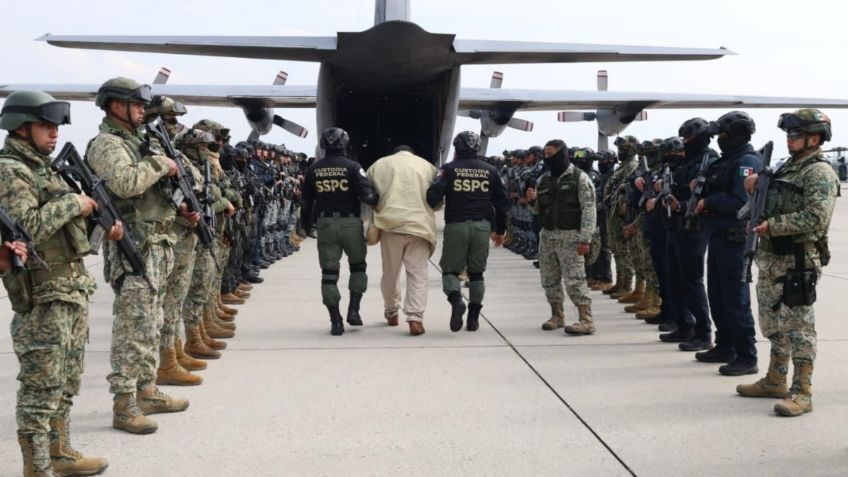
MEXICO CITY – In a move widely seen as an effort to appease the Trump administration, Mexican authorities announced on Tuesday, January 20, the extradition of 37 alleged members of various drug cartels to the United States. This marks the third major transfer of high-profile criminal suspects in the last year, bringing the total number of individuals sent to U.S. custody during the current Mexican administration to 92.
“High-Impact” Criminals Transferred
Mexican Security Minister Omar García Harfuch confirmed the operation via social media, describing the extradited individuals as “high-impact criminals” who represented a “real threat” to Mexico’s national security. The suspects were transported aboard seven Mexican Armed Forces aircraft to various U.S. cities, including Washington, Houston, New York, San Antonio, and San Diego.
Notable figures in this latest batch include:
-
Pedro Inzunza Noriega: Alleged to be the father of the second-in-command of the powerful Beltrán-Leyva cartel. He was arrested in December 2025 following a landmark U.S. terrorism indictment.
-
María del Rosario Navarro Sánchez: Reportedly, the first Mexican citizen to face charges in the U.S. for providing support to a terrorist organization due to her alleged cartel ties.
-
Members of the Sinaloa Cartel, Jalisco New Generation Cartel (CJNG), and the Northeast Cartel (a remnant of the Zetas).
🔥 ABSOLUTE EARTHQUAKE IN U.S.–MEXICO RELATIONS 🔥
Mexico has just transferred 37 cartel suspects to the United States — the third mass handover in a year, bringing the total to 92.
Seven military planes.
Six U.S. cities.
Four major cartels.One message: the pressure campaign is… pic.twitter.com/hVXuIemmzQ
— Richard Miriti (@miriti55453) January 21, 2026
Strategic Diplomacy under Pressure
The extraditions come at a time of heightened tension between the two nations. U.S. President Donald Trump has repeatedly threatened military action against cartels on Mexican soil and has entertained the idea of imposing steep trade tariffs if Mexico does not do more to curb the flow of fentanyl and weapons.
Analysts suggest these “atypical” or expedited transfers are a key tool for President Claudia Sheinbaum’s government to demonstrate collaboration. “As demands from the White House dial up, Mexico needs to resort to extraordinary measures,” noted David Mora of the International Crisis Group.
The U.S. Department of Justice has previously assured Mexican authorities that it will not seek the death penalty for these suspects, a necessary legal condition for extradition under Mexican law.
🇲🇽🇺🇸 MEXICO SENDS 37 MORE CARTEL MEMBERS TO US, 92 TOTAL TRANSFERRED UNDER TRUMP PRESSURE
Mexico's security minister announced another 37 "high impact criminals" flown to the US on seven military aircraft.
That brings the total to 92 cartel members transferred this… pic.twitter.com/dvfzFCZXb4
— Mario Nawfal (@MarioNawfal) January 21, 2026
Context of Previous Transfers
This operation follows two other major transfers over the past year:
-
February 2025: 29 figures were sent to the U.S., including the infamous drug lord Rafael Caro Quintero, wanted for the 1985 murder of a DEA agent.
-
August 2025: 26 high-ranking members were transferred to prevent them from continuing to run criminal operations from inside Mexican prisons.
While President Sheinbaum has firmly ruled out U.S. military intervention, emphasizing that it is “not necessary,” the continued stream of extraditions signals a pragmatic effort to maintain a functional partnership with Washington.