
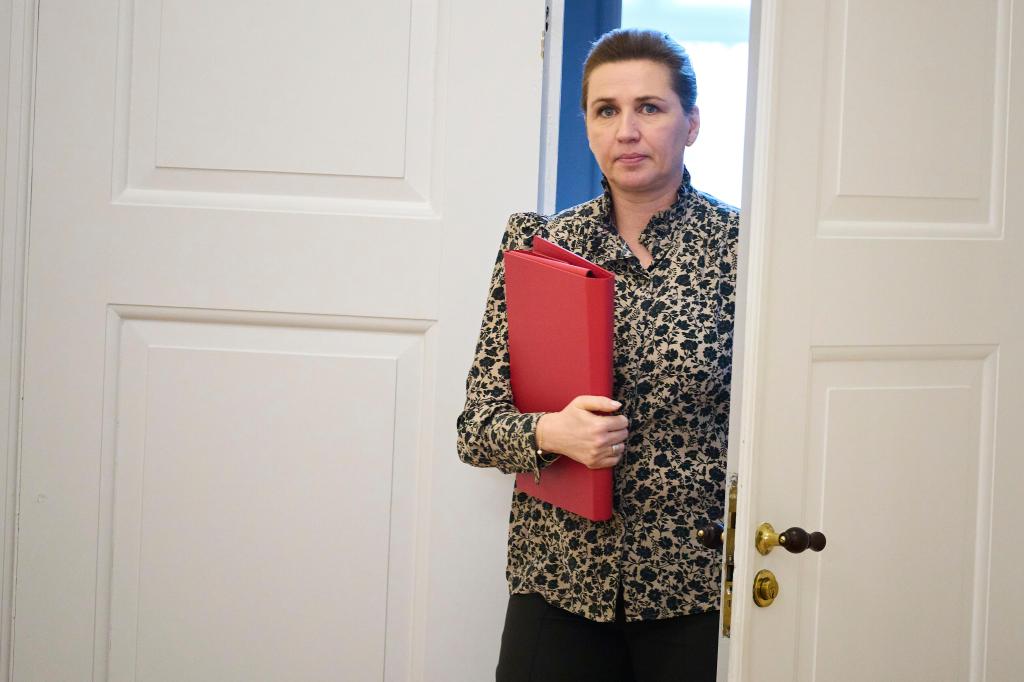
Image: from Orlando Sentinel X@orlandosentinel
By Open Chronicle News Desk
COPENHAGEN — Danish Prime Minister Mette Frederiksen issued a firm response on Thursday, insisting that Greenland’s sovereignty is “not for sale” and remains “non-negotiable.” The statement follows President Donald Trump’s announcement of a “framework” for a potential deal regarding the Arctic territory.
The renewed interest in the autonomous Danish territory surfaced after the White House suggested a strategic arrangement aimed at enhancing North American security and expanding economic cooperation in the Arctic Circle. While the U.S. administration has characterized the proposal as a “great deal for all parties,” the Danish government has moved quickly to shut down any talk of a territorial transfer.
Denmark says its sovereignty is not negotiable after Trump's Greenland about-turn pic.twitter.com/qH8HguXdjk
— euronews (@euronews) January 22, 2026
“Greenland is not Danish. Greenland is Greenlandic,” Prime Minister Frederiksen told reporters in Copenhagen. “I persistently hope that this is not something that is seriously meant. Sovereignty is a fundamental principle that we will not compromise.”
The Greenlandic government (Naalakkersuisut) mirrored this sentiment, stating that while they are open to deepening trade and security ties with the United States, the island remains an integral part of the Kingdom of Denmark with no intention of changing its political status.
The Arctic has become an increasingly contested region, with the U.S., Russia, and China all seeking to expand their influence due to its vast untapped mineral resources and strategic shipping lanes. Analysts suggest that the “framework” mentioned by the Trump administration likely involves long-term leases for military infrastructure or exclusive mining rights rather than an outright purchase, though the rhetoric has already caused a diplomatic stir.
Despite the friction, the U.S. State Department emphasized that Denmark remains one of America’s closest allies, stating that the proposal is part of a “forward-looking vision” for the 21st-century Arctic.