
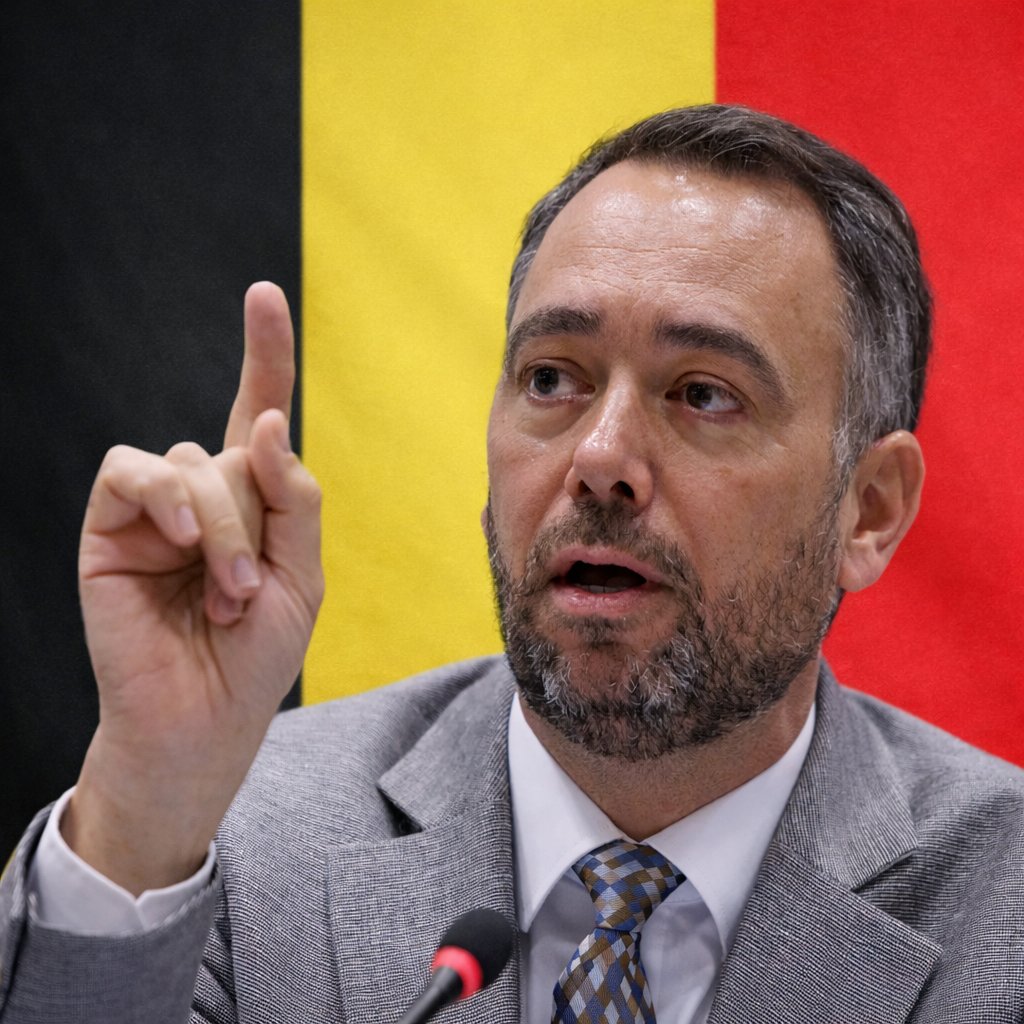
Image: from Ryan Rozbiani X@RyanRozbiani
By Open Chronicle News Desk
A volatile mix of diplomatic confrontations, military incidents, and shifting economic indicators is setting the tone for the opening weeks of 2026, underscoring a world grappling with deepening geopolitical fractures and cautious financial recalibration.
📢🇧🇪 BIG WIN: Belgium Imposes Arms Embargo on Israel
Belgium has barred aircraft transporting weapons or military equipment from using its airspace or making technical stopovers if they are bound for Israel. pic.twitter.com/1b31HkLzNo
— Ryan Rozbiani (@RyanRozbiani) January 24, 2026
Belgium moved into the international spotlight on Friday after confirming an arms embargo targeting Israel. The Belgian Foreign Ministry announced that aircraft transporting weapons or military equipment to Israel are now barred from using Belgian airspace or making technical stopovers. The measure, initiated by Foreign Minister Maxime Prevot, is already in effect and requires operators to submit full transportation details to Belgian authorities. The decision reflects mounting European pressure over Israel’s military actions and signals a firmer stance from Brussels amid the ongoing regional crisis.
An Israeli tank fired at the Lebanese army during a joint field mission with UN peacekeepers in southern Lebanon, according to reports. The incident occurred amid ongoing border tensions, with UN forces present to monitor security and stability in the area.#Israel #Lebanon… pic.twitter.com/jADJR1SLvJ
— Naija 2Cape blog (@naija2cape_blog) January 24, 2026
Tensions also flared along the Israel-Lebanon frontier, where an Israeli tank opened fire on a Lebanese army unit conducting a joint field mission with United Nations peacekeepers near Wadi al Asafir, south of Khiam in the Marjayoun district. Lebanon’s official news agency reported that the fire originated from a newly established Israeli military position in the Hammams area and targeted the vicinity of Lebanese forces operating alongside the UN Interim Force in Lebanon. No casualties were reported, and the Israeli military offered no immediate comment. The incident adds to concerns over miscalculation and escalation along one of the region’s most sensitive borders.
#BREAKING: UK PM Keir Starmer calls US President Donald Trump's remarks about NATO troops in Afghanistan "insulting and frankly appalling".
Starmer has called on Donald Trump to apologise for his "insulting and frankly appalling" comments about British troops in Afghanistan. pic.twitter.com/jFtG11M91I
— Aditya Raj Kaul (@AdityaRajKaul) January 23, 2026
Diplomatic friction intensified between London and Washington after British Prime Minister Keir Starmer sharply criticized remarks by US President Donald Trump regarding NATO’s role in Afghanistan. Starmer described the comments, which appeared to diminish the contribution of allied troops, as insulting and frankly appalling. He said that an apology was warranted, adding that he would expect no less of himself if he had spoken in such a manner. The exchange highlights growing strains within the transatlantic alliance at a time when unity is under pressure on multiple fronts.
🚨 NEW: PENTAGON DROPS 2026 NATIONAL DEFENSE STRATEGY 🚨
This isn’t business as usual.
This is a full America First reset of U.S. military strategy.For the first time in decades, the Pentagon says the quiet part out loud:
🇺🇸 DEFENDING THE HOMELAND COMES FIRST.
Not… pic.twitter.com/p53WS666ct
— Richard Miriti (@miriti55453) January 24, 2026
In Washington, the US Defense Department released its 2026 National Defense Strategy, outlining a significant shift toward homeland security, deterrence through military strength, and increased burden sharing by allies. The strategy signals a more transactional approach to alliances and reflects broader debates over America’s global role under the current administration.
The U.S. Treasury has imposed sanctions on nine vessels and eight related firms accused of transporting Iranian oil to foreign markets, saying the revenue is used to fund security forces and regional proxy groups.
The move follows renewed warnings from President Donald Trump… pic.twitter.com/9Zf2blSxlv
— AnewZ (@Anewz_tv) January 24, 2026
The United States also escalated pressure on Iran by imposing sanctions on nine vessels and eight associated firms linked to Tehran’s so-called shadow fleet. The Treasury Department said the measures were part of a broader response to human rights violations, including the killing of protesters during recent nationwide unrest. Iran, in turn, released figures detailing casualties and damage from the protests, framing the disclosure as a rebuttal to comments by US Vice President JD Vance.
Pedro Sanchez, Spain’s 🇪🇸 PM, rejects an invitation to the so called ‘Board of Peace’
And gives a reality check to all:
‘[The ‘board’] is outside the UN’
‘Has no authority’
‘Does not include Palestinians’
‘The future of Palestine 🇵🇸 is for Palestinians to decide’🇪🇸 🤝 🇵🇸 pic.twitter.com/wkloVNWp2b
— Howard Beckett (@BeckettUnite) January 24, 2026
Elsewhere in Europe, Spanish Prime Minister Pedro Sanchez announced that Spain would not join the US-led Board of Peace, citing concerns over its mandate and the absence of Palestinian representation. In Denmark, Prime Minister Mette Frederiksen said the situation surrounding Greenland remained serious, though Copenhagen and Nuuk were beginning to test a new approach in dealings with the United States.
The Syrian Government is now in full control of Al Hol camp, home to ISIS families and foreign fighters.
It’s chaotic – ISIS cells and STG units loyal to ISIS are fighting STG units.
There’s a confirmed breach. pic.twitter.com/wB9Efv9NeK— ScharoMaroof (@ScharoMaroof) January 20, 2026
Humanitarian alarms continued to sound in the Middle East. The UN agency for Palestinian refugees warned that the occupied West Bank is facing its most severe humanitarian crisis since 1967. In Syria, a UN official confirmed that humanitarian access to the al-Hol camp in Hasakah province has resumed following days of disruption, offering limited relief amid ongoing instability.
❗️ Fitch Türkiye'nin notunu (BB-) değiştirmedi ama görünümü POZİTİF'e yükseltti. https://t.co/vTGzhyut0B pic.twitter.com/BCJnF4zqYw
— 5 0 7 (@e507) January 23, 2026
On the economic front, Türkiye received a rare boost in investor sentiment. Fitch Ratings revised the country’s long-term foreign currency outlook to positive while affirming its BB minus rating. The agency pointed to a sharp rise in foreign exchange reserves, improved reserve quality, and continued tight macroeconomic policies. Gross reserves climbed to 205 billion dollars by mid January, while net reserves excluding swaps rebounded strongly from negative territory in early 2024.
Nvidia H200 Blocked in China
China customs reportedly restricted Nvidia’s H200 chip imports.
Jensen Huang may extend his Shanghai trip to Beijing & Shenzhen. New twist in the US-China chip battle. #Nvidia #China #AI pic.twitter.com/GRgeFAtB5m
— Business Mocker (@business_mocker) January 24, 2026
In Asia, China appeared to take a cautious step toward easing technology restrictions by granting, in principle, approval for major firms such as Alibaba to prepare purchases of Nvidia’s H200 artificial intelligence chips. The move, reported by Bloomberg, coincided with a visit to Shanghai by Nvidia chief executive Jensen Huang and suggests that Beijing may be nearing a decision to permit imports of key AI components.
Taken together, the developments of the past twenty-four hours paint a picture of a world entering 2026 with little strategic calm. Diplomatic trust is fraying, flashpoints remain active, and economic confidence is uneven. As governments recalibrate their positions, the balance between confrontation and cooperation continues to define the global landscape.
NEWS IN BRIEF
- The Defense Department released its 2026 National Defense Strategy (NDS), laying out a sweeping shift in US defense priorities that emphasizes homeland security, deterrence through military strength, and greater burden-sharing by allies.
- The US imposed sanctions on nine vessels and eight related firms tied to Iran’s so-called shadow fleet, escalating pressure on Tehran for the killing of protesters, the Treasury Department said.
- Prime Minister Pedro Sanchez said Spain will not join the US-led Board of Peace, citing concerns about its mandate and lack of Palestinian representation.
- An unsealed State Department memo revealed US officials had no evidence against a Turkish Tufts University scholar beyond an article she co-authored for a student magazine, even as officials moved to revoke her student visa.
- The US military carried out a strike on a vessel allegedly engaged in narco-trafficking in the Eastern Pacific, according to the US Southern Command (SOUTHCOM).
- Australia’s prominent justice advocates demanded that the federal police investigate Israeli President Isaac Herzog for incitement to genocide ahead of his expected visit to Canberra in February.
- Russian President Vladimir Putin said that countries outside the Arctic circle are paying growing attention to the region, asserting that Moscow has long been a leader in its development.
- Iran released figures detailing the scale of damage and casualties during recent nationwide protests, in remarks framed as a response to comments by US Vice President JD Vance on dealing with unrest.
- Danish Prime Minister Mette Frederiksen said the situation surrounding Greenland remained “serious,” but that Denmark and Greenland had “a way” they were beginning to try out with the Americans.
- A planned parliamentary debate on the UK’s deal to hand over the Chagos Islands to Mauritius has reportedly been delayed following backlash from US President Donald Trump.
- The occupied West Bank is experiencing its most severe humanitarian crisis since 1967, the UN agency for Palestinian refugees (UNRWA) warned.
- Lebanese Prime Minister Nawaf Salam reaffirmed his government’s commitment to placing all weapons under state authority during talks with French President Emmanuel Macron in Paris.
- Millions of people across much of the continental US are facing states of emergency as wide swathes of the country brace for a major winter storm.
- Belgium’s Federal Prosecutor’s Office told Anadolu that three supporters of the YPG/SDF terror organization were arrested in Brussels for injuring police officers during demonstrations.
- Trilateral talks between Russian, US, and Ukrainian delegations in Abu Dhabi concluded their first of two days, the White House told Anadolu.
- Russia and China said they were opposed to the “actions and plans of the collective West to militarize” the Asia-Pacific region.
- A UN official said humanitarian access to the al-Hol camp in Syria’s northeastern Hasakah province has resumed, following days of disruption.
- Turkish President Recep Tayyip Erdogan and foreign ministers from Balkan countries discussed relations and regional issues in a meeting in Istanbul.